
What is Ginseng?
Well, you already know that Ginseng is an online English school. But as we talk to more and more people around the world about Ginseng, we’ve learned that more and more people want to know about the word ginseng:
What does it mean?
How do you pronounce it?
Why is it the name of an English school!?!?
Well, ask and you shall receive. Let's get some answers to those questions!
What is Ginseng?

Ginseng Root
Ginseng is a plant! And it's a funny plant because the root—the underground part of the plant—is more famous than the flowers and leaves.
Ginseng has been used in Chinese medicine for centuries to help people relax. Some people even say it improves your memory!
The word ginseng comes from the Hokkien pronunciation (/jîn-sim/)of the Chinese word (人参) for the plant. That literally translates to person-root, because the root often has two “legs” and looks like a person.
How do You Pronounce Ginseng?
First, that G is soft. This means it sounds like an English J, as in jump. G is often—but not always—pronounced this way when it is before either an E or an I.
The first syllable sounds exactly like the word gin, a common alcohol. It also sounds like the first syllable in ginger, another root.
The last syllable sounds exactly like the English word sing. The E is pronounced like a short I sound. (Note: some people pronounce the -seng with a short E sound, but that's not what we say for Ginseng English).
The stress in the word is on the first syllable. So all together, the word ginseng is pronounced jin-sing (IPA: /ˈdʒɪn sɪŋ/).
Why did you name the school Ginseng?
Lots of reasons! Many of the best brands out there are not literal descriptions of what the company does. Think about Google, Nike, Mercedes. This was the type of brand we wanted. We didn't want to be Rob’s Online English School. We wanted something more abstract and suggestive, something evocative.

Early logo for Engma English
The first idea was Engma, the name for this symbol: ŋ. After a while, we decided that this was a little too esoteric and just didn't work for our company.
Ginseng worked better for a couple of reasons:
We first started considering this name because of its sound. It’s one of the only other words in which the letters E-N-G are pronounced /ɪŋ/ like they are in Eng-lish.
Also, ginseng has lots of positive connotations: it's relaxing and it helps your memory. These are two very important things for learning a language!
What about that logo?
Ginseng root is often made into a relaxing tea, so our logo is a steaming cup of tea to help you relax while you learn English with us! As you may have noticed, it’s also our letter G, upside-down!
More about Ginseng English


Learning English on Instagram
Learning English online isn't easy, and your best options are generally actual online classes with real teachers, but Instagram does have some great ESL sites to help you improve your English! Here's a list of our favorite accounts.

The internet is giving us all kinds of fun new ways to learn English from home. Instagram is one platform with a ton of free resources for studying. There are teachers sharing pronunciation videos, grammar charts, new vocabulary words each day.
Below we have assembled a list of the best ones you will find. We looked at accounts that are creating their own content and sharing it regularly. Some of these accounts are in English only, and some others are bilingual, but every account on the list shares content that should be useful, regardless of your first language.
Please share and let us know in the comments if there are other accounts we should add! We will update this list periodically.
Powerful English 🇧🇷
Professor Alves of Powerful English posts a strong mix of explainer videos (in Portuguese), blackboard captures of lexical chunks and illustrations, nicely designed idiom cards, and of course the occasional promotional post. It’s a relatively new account, but quality content from the very start!
English Today 🇮🇩
English Today Bandung posts a variety of content, from general study tips, to illustrated idioms and sayings, to synonyms for developing a more advanced vocabulary. And if you speak Indonesian, check out the videos from Mr. D!
Jessica Sunny side
Jessica Sunny Side intermixes photos from her daily life in Vietnam with English content shared on theme-based days, including Homophonic Monday, Idiomatic Tuesday, Phonetic Wednesday, Phrasal Friday, and Conversational Saturday.
Pronunciation with Emma
Emma is a teacher from England. Each video is very short and focused on a particular challenging word in English. She pronounces the word, shares a specific tip related to its sound, pronounces it once more, and that’s it! A bite-sized way to improve your pronunciation!
English with Benjamin
Benjamin is an English teacher with a great sense of humor and some hilarious facial expressions. He shares a lot of colloquial British phrases and idioms to help you sound like a native speaker. Benjamin clearly enjoys what he’s doing and his positive energy is contagious!
Ginseng English
We had to include our own account! We wouldn’t be doing this if we didn’t think we could produce some of the best content out there. We focus on a variety of bright, eye-catching visuals that teach and engage at the same time.
Tolya English
This is an awesome account. Tolya edits together clips from some of your favorite TV shows—Family Guy, Brooklyn 99, Friends—with his own explanation of practical English phrases that you can use in your daily life.
my little english page
Marine of My Little English Page is a teacher living in Seville, Spain. What sets her account apart is that she focuses a great deal on scheduled live broadcasts that you can tune in for! She also shares a whole lot of quizzes and conversation questions!
Andreina Baroni
Andreina Baroni shares lots of nicely designed graphics that you ought to be saving for reference! Easily confused words (like quiet, quite, quit), historical quotations, and useful phrases for particular situations!
EnglishDom 🇷🇺
Englishdom posts a bit in Russian, but there’s plenty of stuff on their for learners from any country. Their weekly word searches are a really fun way to kill some time and their series of “Other Ways to Say” will keep you from sounding like a broken record!
Easy Peasy English 🇷🇺
This one is good for Russian speakers. Easy Peasy English has a simple formula for their posts, but they do it well. Each post is a vivid photo or still from a familiar movie. Beneath that, they print the translation and phonetic pronunciation of the word.
English Words & Daily Videos 🇯🇵
Doston's well-produced videos are bilingual in English and Japanese. He has a great format. He’ll introduce a phrase and its translation, then explain it for a moment, and then give you some real-world examples, often from familiar movies.
Cambridge University Press Spain 🇪🇸
Cambridge University Press is one of the biggest names in English teaching, but their Spanish language account produces some of their best content. Clear, well-designed graphics and bilingual explanations. Don’t miss this one!
Open English 🇪🇸
Another great bilingual Spanish/English account, Open English posts tons of brightly colored, clear posts featuring high quality photography and clear explanations. One thing that makes them stand out is their emphasis on pronunciation!
Fun & Functional English
This account has a nice consistent visual theme: everything is “written” on a chalkboard, often with fun expressions from your teacher, Nataly, in the corner. Idioms, quotes, activities, and lots of writing tips!
English Worm 🇮🇷
This is a bilingual Persian/English account. Simple posts, alternating pink and blue, with English phrases, sentences, and inspirational quotations. Check them out!
safir language academy mazand 🇸🇦
Safir Language Academy’s Manzadaran branch posts some great bilingual Persian/English content! The strongest thing about this account is variety. You get book recommendations, idioms, practical phrases, inspirational quotes, all in the same place!
Engoo online English 🇨🇳
Engoo’s Taiwanese account is a great Chinese/English bilingual account to follow. Lots of clean, nicely branded content, each with a cartoon illustration and a word or phrase or quiz. A newer account, but they’re starting strong!
Oxford Reading tree korea 🇰🇷
This account has one particular type of post that they share, but it’s a good one. Their posts contain two to three sentences in English with words missing. At the bottom are words you can choose to complete the sentences. These exercises, called cloze exercises are a great way to practice your grammar!
englishism
Englishism shares a diverse selection of quotes (think everyone from Eminem to Dickens), lots of casual British English and slang, and plenty of jokes to keep you laughing while you learn!
Inglês Nativo
This is a simple, consistent account. Phrases in English translated into Portuguese, with the occasional inspirational quote thrown in to keep you motivated. All on bright gradients with nice design.
Save Me Teacher 🇧🇷
Teacher Carla with the ever-changing hair color shares all kinds of practical, funny English tips and phrases. There is a lot of focus on practical, everyday English, rather than idioms and sayings. Also check out her schedule of live classes!
Biga Amerikan Kültür 🇹🇷
The best thing about this account is their nicely designed, informative series of phrasal verbs, each translated into Turkish and accompanied by an example of the word in use. They also share photos of their students in action, a great personal touch!
Avcılar ingiliz Kültür 🇹🇷
This great account out of Turkey shares some inspirational quotes in English, plenty of phrasal verbs translated into English, and lots of fun graphics. They don’t have many followers yet, so let’s change that!
Good vibes english 🇵🇱
This bilingual Polish/English site has the usual English phrases and pronunciation tips, but they also share occasional riddles to get you thinking. Oh, and the best thing about this account? Plenty of food vocabulary!
Studying with Ginseng is easy! Click the FREE DEMO CLASS button to request your demo. Then you will get an email from one of our staff to schedule your class. Then just log in and meet your teacher! | ||
| Request Demo Class | Meet Ginseng Teacher | Schedule First Class! |
| 1 | 2 | 3 |
Confusing words: Rise, raise, and arise

Hi there! Remember me? I'm Yentelman, the blogger who's been helping Spanish students with their English (and even their Spanish!) for quite a few years now. I'm back at Ginseng English to try and teach you the differences between a trio of confusing words. As an English teacher whose mother tongue is Spanish, I am well aware which words students of English struggle with. Been there, done that myself!
Today's confusing words are three common verbs: rise, arise and raise. Look at them. Just look at them. They look like they're actually mocking you, don't they? They are like, "We’re so confusing that you'll never use us right!" Well, let's prove them wrong!

The Sun Also Rises - Ernest Hemingway
Rise

How about the cocktail of the same name? Yeah, I thought so.
Pronounced /raɪz/, its simple past is rose and past participle risen when it's working as a verb. When I try to use this one properly, I always link it to the noun sun. It's a perfect collocation, actually. You may remember it from such books as Hemingway's The Sun Also Rises. You don't? OK, what about the movie, Tequila Sunrise? No? C'mon guys, the one with Mel Gibson? Michelle Pfeiffer? An all-slicked-back Kurt Russell? OK, whatever.
Anyway, the point I am trying to make is that, if you remember rise with sun, it will be easier for you to distinguish rise from the other two verbs that are going to show up here. You can also tell the difference between rise and raise in that the former is an intransitive verb, i.e. it's not followed by a direct object. For example, keeping with the sun topic, in the sentence:
The sun rises in the east.
We can clearly see the verb rise is not followed by an object (a noun or pronoun). If you have no direct object, you need rise, not raise.
Rise can also be used to indicate that something abstract is going up, as for example in
Gas prices are rising again!

I bet it was not the only thing that rose...
This sense can convey a positive meaning when we are speaking, for instance, of moods or expectations.
My expectations rose when the pretty blonde girl at the bar looked at me.
You may have noticed that in the two examples above the meanings of rise were, respectively, "to ascend above the horizon", and "to increase in degree, intensity, or force". I'm crediting Dictionary.com for the meanings, and if you bother to look at the definitions they give of rise, you'll see there are more than 50!
So, you reaaaally need to observe each context properly when you are going to use any of the three verbs in this post. As long as you remember rise is intransitive and you pay good attention to what goes after the verb, you should be good to go. If in doubt, check a good dictionary.
I'll wrap up this section saying that rise can also be a noun. As is the case of the verb, its meaning is related to ascending or increasing. We can also use it to talk about value, prices, or temperature, as in the following example:
Sam couldn't help complaining about the rise in temperature. What did he expect of our holidays in Mount Doom?
Raise
You should be able to easily distinguish raise (/reɪz/) from rise if you just remember raise is transitive, which means it will be followed by a direct object.
The student raised his hand to answer the question.
As you can see in the example, raise is followed by the direct object, his hand. Remember you can find out whether there's a direct object after the verb in a sentence by asking the verb, "what?" What did the student raise? His hand. There you go. We have a direct object, so you need to use raise, not rise.
| Base Verb | Pronunciation | Simple Past | Perfect |
|---|---|---|---|
| rise | /raɪz/ | rose | risen |
| raise | /reɪz/ | raised | raised |
| arise | /əˈraɪz/ | arose | arisen |
Another thing you may have noticed in the above example is the verb is in the simple past, ending in -ed. This could be another hint to help you distinguish between the two confusing verbs. While rise is irregular, raise is regular and both its past and past participle end in -ed. Check out the chart for a conjugation of all three verbs.

A random worker in the USA.
Raise can be a noun, too, especially talking about salaries, as in the following example:
I hate that bastard Pete. He's been given yet another pay rise. It's his third this year, for fuck's sake!
I'd ask you to pardon my French (or my English in this case), but I always try to use real-life examples. Now I think of it, has anybody been given a pay raise in real life? Not here in Spain, that's for sure...
Arise
Last but not least, we have a third verb: arise. Everything seems to hint that there are plenty of similarities with rise: it is also intransitive, irregular (with a past and past participle forms that are very similar to those of rise: arose and arisen) and it's also pronounced similarly: /əˈraɪz/. One would say it's just rise with an a- at the beginning of the word.
And its meaning? While it's true that it can replace rise, meaning "to get up from sitting, lying, or kneeling", this usage is fairly outdated and only used in very formal contexts.
"Arise, Lord Snow!" - Said Queen Daenerys after Jon Snow had bent his knee.

Always. Just in case.
When do we use arise, then? Mainly when we want to convey the meaning of something coming into being, originating or occurring. That "something" will usually be a problem, an occasion, a necessity, a situation or difficulty of some sort, etc. Even in this context, arise is a verb with quite an abstract meaning, indicating that something not only becomes evident but people are also aware of it happening.
The opportunity arose for Rick to purchase a 1554 Spanish shipwreck gold bar.
Exercises
Here are a couple of exercises for you to check whether, after reading this, you have a better understanding of these three verbs:
http://random-idea-english.blogspot.com.es/2010/11/confusing-words-quiz-verbs-rise-raise.html
https://www.quia.com/quiz/287248.html?AP_rand=632983826
https://www.englishclub.com/vocabulary/cw-raise-rise-quiz.htm
Contractions in English
One challenging aspect of learning English is that there are different registers: we have spoken English and written English, formal English and informal English. Some words are okay in every register, but others are only okay in speech. Some only sound right in writing.
Contractions are a big part of distinguishing between these different forms of English. If you ever go to an English-speaking university, you'll find that you can't use can't or don't or isn't in your academic writing. Let's take a look at what contractions are and how they can make your English more or less formal.
What are Contractions?
Contractions are words that combine two or more other words together into a new shortened version, usually using an apostrophe ('). Contractions are very common in spoken English. You have probably heard some of these common contractions: I'm, can't, aren't, don't, didn't.
The apostrophe is small, but important. In writing you must use the apostrophe. You do not pronounce it, but it is important in writing. Notice that the apostrophe represents some letters that are missing from the longer form of the word. For instance, the apostrophe in didn't is in place of the O in did not and the apostrophe in I'm is in the place of the A in I am.
Be careful, because not every word with an apostrophe is a contraction. Possessive nouns in English end with apostrophe -s, (Bob's house, Carla's mom) but these are not contractions.
Why Do We Have Contractions?
Contractions originate in speech. We are lazy when we speak English! When we are speaking quickly, we reduce certain sounds (make them shorter and quieter), and over time we elide them completely (we don't pronounce them at all). So over time, she will becomes she'll, I have becomes I've, going to becomes gonna.
When do we use contractions?
This question has a slightly complicated answer.
We frequently use contractions in spoken English, and you should try to use common contractions in your speech to make your English more fluent. We generally do not use any contractions in formal writing (academic papers, for examples).
In between casual speech and formal written English, there is a gray area: we have more formal spoken English, like presentations and business meetings. We have less formal writing, like emails and letters. In this case, you have more of a choice. Some people use contractions and some do not. In this gray area, we should also talk about different types of contractions!
Standard Contractions
Not all contractions are the same. Some are more standard and acceptable than others. Standard contractions include the following:
Great poem by Shel Silverstein about informal contractions
- there's
- wasn't
- we'd
- we'll
- we're
- we've
- weren't
- won't
- wouldn't
- you'd
- you'll
- you're
- he's
- how'd
- how's
- I'd
- I'm
- I've
- isn't
- let's
- she'd
- she'll
- she's
- shouldn't
- aren't
- can't
- couldn't
- didn't
- doesn't
- don't
- hadn't
- hasn't
- haven't
- he'd
- he'll
- he's
Some Standard English Contractions
You can use these in anything but formal writing. This means they are common in speech, creative writing, emails, text messages, notes, and letters. Try to pay attention when you are reading online. Are there contractions in what you are reading? If there are no contractions, you are probably reading a more formal style of writing.
Nonstandard Contractions
But there are other contractions that are nonstandard. These contractions have evolved more recently and haven't become as acceptable in written English yet. Nonstandard contractions should only be used in very informal situations (text messages with friends, for instance) or to be funny. Here are some examples:
gimme
gonna
gotta
hafta
I'd've
I'm'a
must've
there're
there've
those're
wanna
we'd've
what're
who'd've
why'd
This is not a complete list. People can often get creative and make their own contractions like these, so watch and see if you can identify new contractions!

Should You Still Say "You're Welcome"?
When we study English, one of the first things we learn is that the response to thank you is you're welcome, right? A recent article in The Huffington Post says the :you're welcome" is slowly disappearing.

When we study English, one of the first things we learn is that the response to thank you is you're welcome, right?
A recent article in The Huffington Post says the you're welcome is slowly disappearing, and phrases like no worries, no problem, of course, and sure thing are replacing it. Is it because we are becoming rude? Not according to the writer. Rather, it's that you're welcome doesn't sound humble enough. It sounds like the thanks was necessary and appropriate, like you're tooting your own horn. On the other hand, no problem downplays things, making it seem like it really was no problem.
Since it sounds like you shouldn't say you're welcome all the time anymore, here's some other phrases you can consider using! Some alternatives are "no problem," "no worries," or "you got it." Check the graphic out for more!
Are you already using any of these? Are any new to you?
Other free English Resources


Studying with Ginseng is easy! Click the FREE DEMO CLASS button to request your demo. Then you will get an email from one of our staff to schedule your class. Then just log in and meet your teacher! | ||
| Request Demo Class | Meet Ginseng Teacher | Schedule First Class! |
| 1 | 2 | 3 |
What is a Free Demo Class, Anyway?
Free Demo Class
You may have seen this button on the Ginseng homepage and wondered, what is a "free demo"? What happens if I click this button!? Is it really FREE? Are there any strings attached? What happens next? Well, let me see if I can help to answer your questions!
We think our classes are pretty great, but you can't know that this is true unless you try one out, right?! That is where a free demo class comes in.
Demo is short for demonstration, which means we are showing you something. You might go for a demo, or a test drive, at a car dealership if you're thinking about buying a car, or you could get a free demo of a new computer software that your company is considering buying.
A "demo class" at Ginseng is a short, 30 minute sample of an online class class. You get to meet one of our teachers, see some of our fancy materials, and check out the follow-up emails we'll send you.

So, what happens when I actually click that button?
When you click on this button, you will need to fill out a short form and then I will get an alert from you. But wait, who am I?! Great question.

My name is Sarah, and I work for Ginseng. It is my job to help you with pretty much anything that you need from our online English school! You can ask me anything you want about our school, and I will do my best to help you out!
When I receive your free demo request, I will e-mail you to set up a time to video chat 📹 to learn more about what you are looking for. We can talk on Skype, Google Hangouts, WeChat, WhatsApp, Facetime—you name it!
I'll ask you questions about yourself, like:
- Where are you from?
- How long you've been studying English?
- Why is learning English important to you?
- What part of English do you want to study the most?
- What time is good for you to have classes?
(It's ok if you don't know, or even if you just want to study EVERYTHING!)
It is up to you to choose what you want your free class to be about. It can be focused on just about anything English, such as pronunciation, grammar, writing and conversation! We will also talk about what times are good for your free class.
After we speak, I will talk to our team here at Ginseng and find you the best online English teacher for your educational goals, and your availability.
But wait, is it really free?
Yes! Your 30 minute demo class is completely free. If you like what you see, we would love for you to share Ginseng English with your friends, and maybe even sign up for a class or two!
Ok, Now you've got me curious...
Great! So, take a moment to click the "request demo" button and fill out the form. Soon, you'll be hearing from me! Who knows, we might even become friends!
👇🏽👇🏽👇🏽👇🏽👇🏽👇🏽👇🏽👇🏽👇🏽👇🏽👇🏽👇🏽
Studying with Ginseng is easy! Click the FREE DEMO CLASS button to request your demo. Then you will get an email from one of our staff to schedule your class. Then just log in and meet your teacher! | ||
| Request Demo Class | Meet Ginseng Teacher | Schedule First Class! |
| 1 | 2 | 3 |

If have any questions about Ginseng, e-mail me at sarah@ginse.ng
My name is Sarah and I have 8 years of experience working with international students studying in the United States, most recently at Berklee College of Music in Boston. I share your passion for adventure, and am currently traveling through Asia as part of the Ginseng English Anywhere tour!
Simple Past Tense
The simple past is a very common English verb tense used to talk about actions that happened at a specific time in the past. Read about the rules for using it, how we form it, and tons of example sentences!
The simple past (sometimes called the second verb form) is a very common verb form in English. Almost 20% of verbs in English are in this form. It is the second most common verb form, after the simple present.
Using the Simple Past
The simple past is used for actions that happened at a particular time in the past. They started and finished in the past. When you are telling a story about something that happened in the past, most main verbs will be in the simple past.
Chart for Simple Past Tense in English
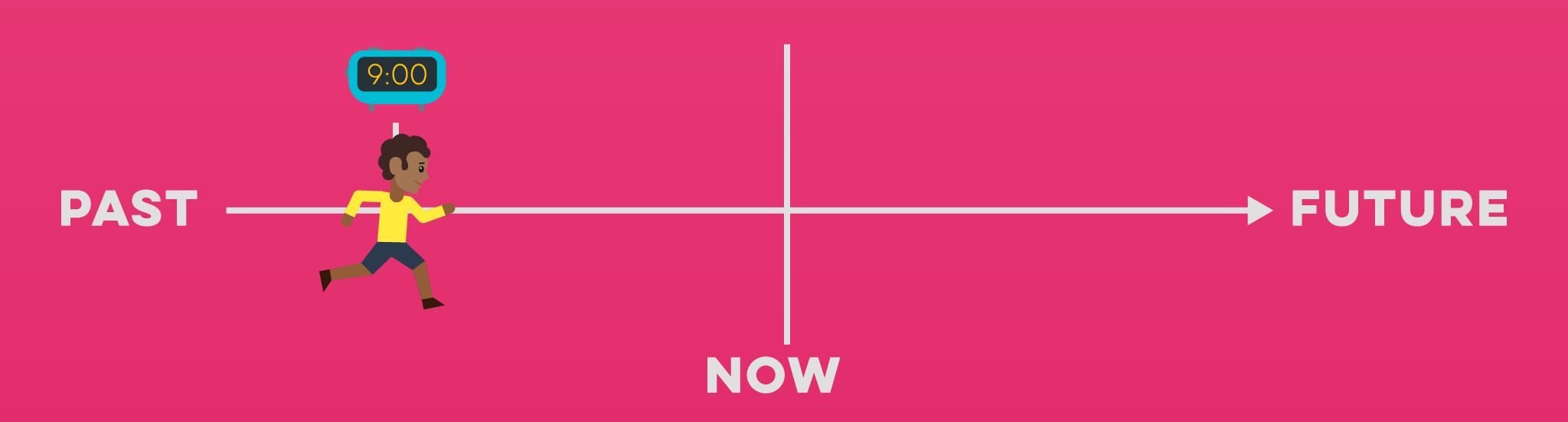
The examples below illustrate the rules we generally follow when using this verb form
Examples
Here are some examples of regular verbs in the simple past:
Magellan landed in the Philippines in 1521.
Susan cooked us an amazing dinner last night!
I wanted a puppy when I was a child.
We needed lots of money to buy the new car.
England defeated Spain in the match last night.
Here are some examples of irregular verbs in the simple past:
Last night I saw a movie.
Back in June, I went to Paris.
I had a party last weekend. All my friends came.
We lost the match by three points.
I found my t-shirt under the bed.
Forming the Simple past Tense
Formula
Regular verbs take -ed to form the simple past tense.
subject + VERBed
In some cases, this requires doubling the last consonant in the word. Irregular verbs do not follow this pattern.
When you use this verb form, you almost always need to identify a specific time in the past when the action happened. Sometimes this tense is referred to as the second verb form.
Conjugation
The table below shows the complete conjugation of the verb work in the simple past:
| Singular | Plural | |||
|---|---|---|---|---|
| 1st person | I | worked. | we | worked. |
| 2nd person | you | worked. | you | worked. |
| 3rd person | he | worked. | they | worked. |
| she | worked. | |||
| it | works. | |||
Notes
Generally, when we use the past tense, it is important that the speaker and listener know the specific time. For example, just saying I went to the movies is unusual.
Other Forms
Negative Sentences
If the verb is a form of be, make a negative sentences in the simple past, by putting not after the verb.
That was not Rebecca.
She wasn’t at school on Tuesday.
We were not excited.
If the verb is not a form of be, put did not before the main verb to make a negative.
We did not feel hungry at dinnertime.
I didn’t go to school yesterday.
They did not want to come.
Questions
Exactly like the questions in the simple present, if the simple past verb is a form of be, move the verb to before the subject to form a question.
Was that girl Rebecca?
Was that pork?
Were they angry?
Where were you?
How was the pizza?
For other verbs, add did before the subject.
Did you like the movie?
Did Claire go home?
Where did you go?
What did you make for lunch?
Passive Voice
To form the passive voice in the simple past, use the verb be in the simple past (was or were) and then the perfect form of the main verb:
The factory was built in 1909.
A new island was discovered.
See our complete guide to the passive voice in English for more details and examples.
More free english resources


The Only Letter in English that is Never Silent
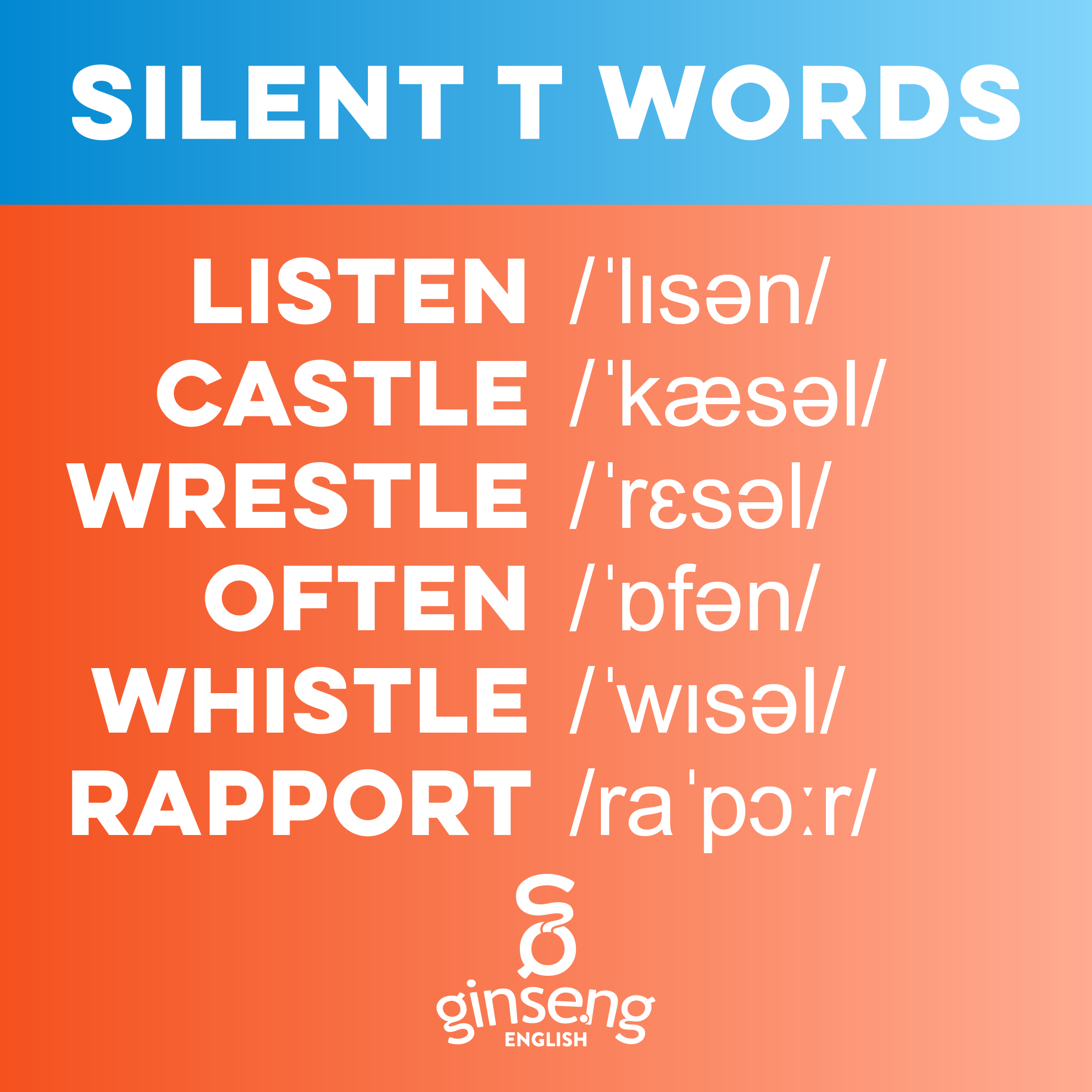
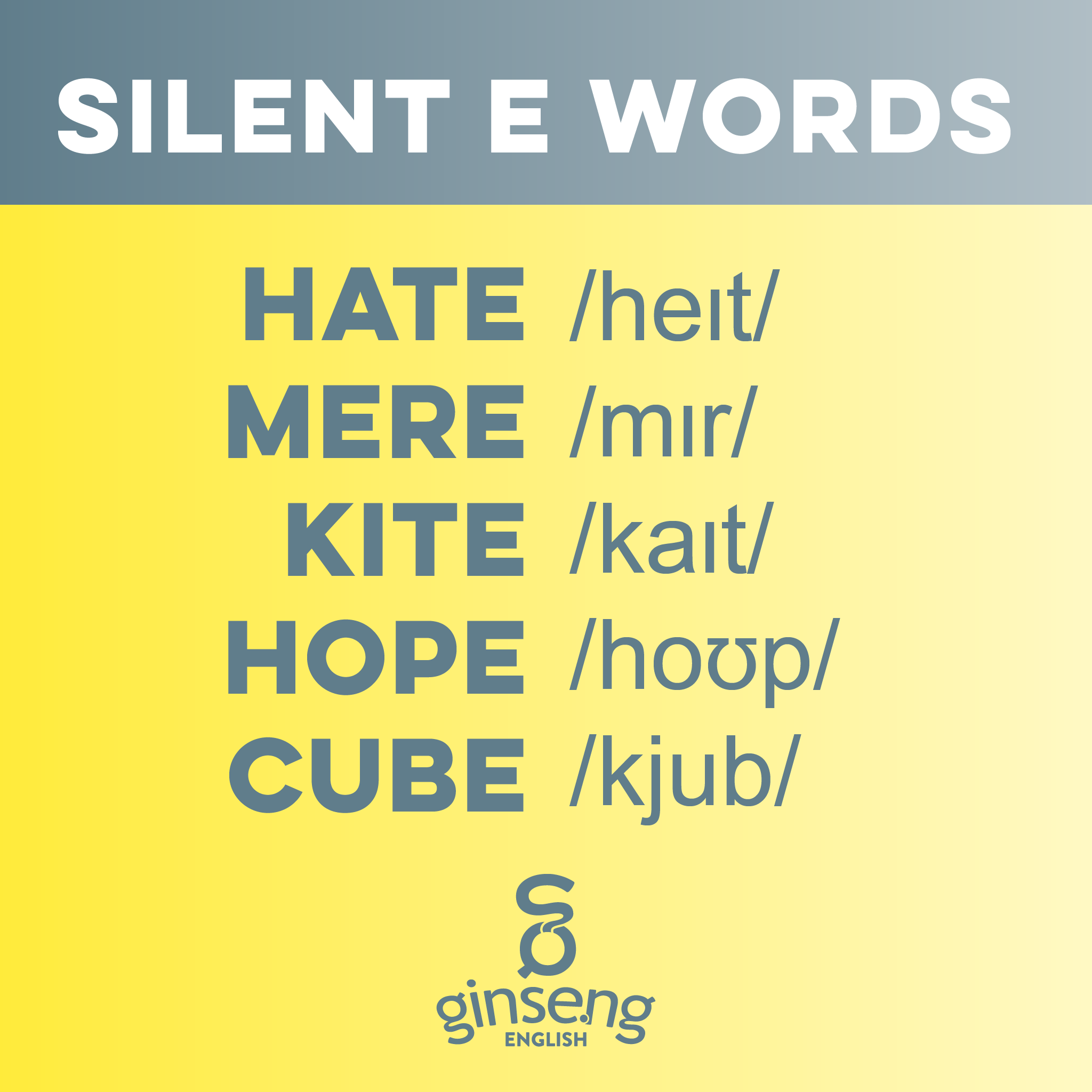
We have talked a whole lot about silent letters in English here. Silent B can make you feel dumb. And that damn silent N is terrible! I don't even walk to talk about silent L, folks. Silent G makes me gnash my teeth! 😵
But, as a recent article in Reader's Digest points out, nearly every letter in the English language is silent sometimes. There is only one letter in the language that is never silent. Can you guess what it is?
The letter is V! There are various very valuable v-words, and that V is never silent!
If you're thinking, "Wait, but what about A!? What about X!?" you can check out Wikipedia's list of silent letters from A to Z. (You might notice that they do have something listed under V, but it's the name of a town in Scotland, which isn't exactly an English word in the way we generally think of things.)
More free English resources

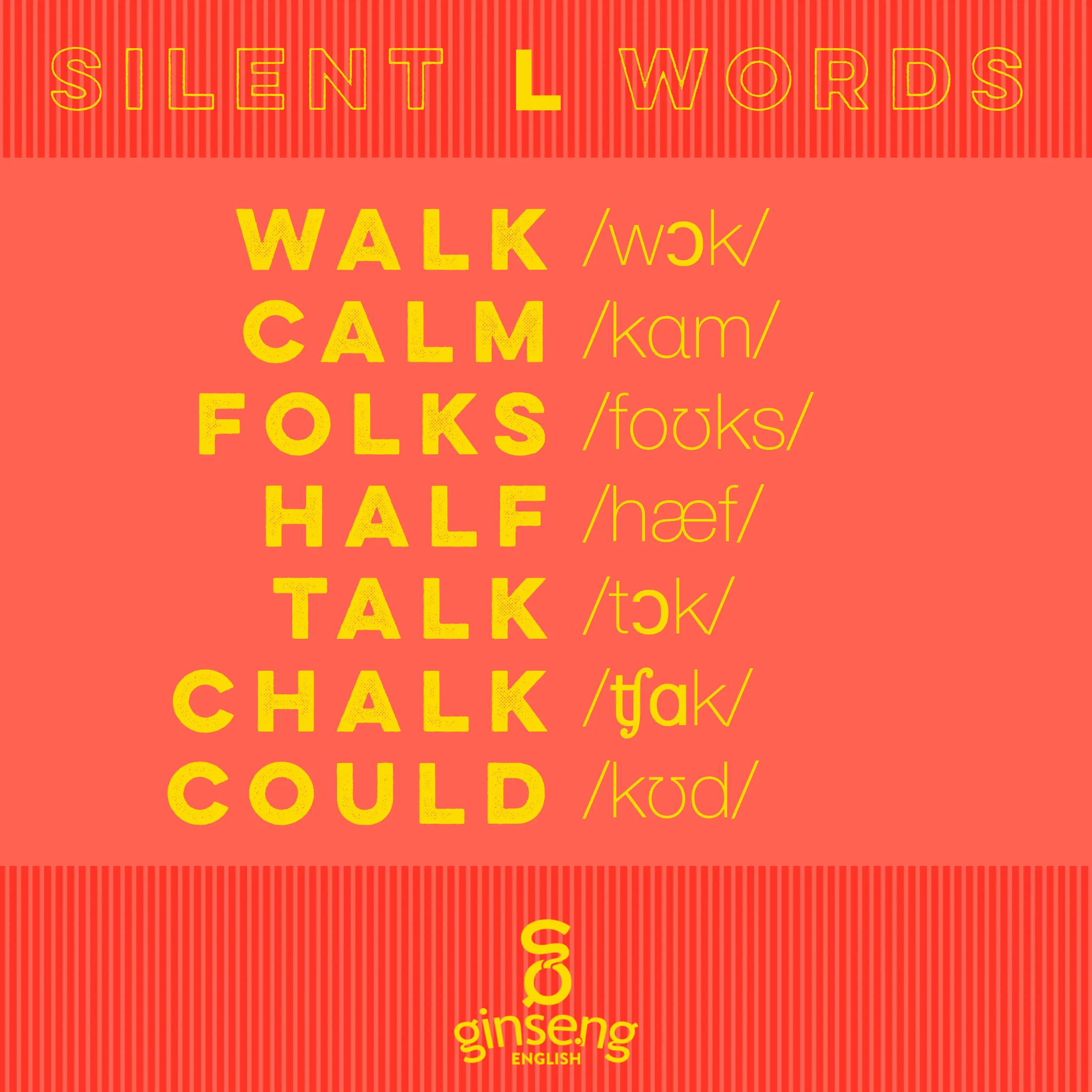
The only letter in English that's never silent

Describing People in English
This article introduces basic vocabulary for describing people in the English language, including adjectives, words for features, and words for clothing items.. This article is appropriate for beginner and low-intermediate ESL students.
If you are studying English online by yourself, a good place to start is by learning how to describe the people around you, your friends, your family, and yourself!
In this post we introduce over 40 vocabulary words for describing people in English, along with 6 sentence frames to use them in. The first three sentence frames are basic (level A1). The other three are a little more advanced (level A2-B1). All of the vocabulary is basic (levels A1 to A2). (If you don't know what A1 and A2 and B1 and B2 mean, learn about the CEFR!)
Note: Reading this article in English will be difficult for A1 and A2 students. We will soon translate this article into many different languages!
What is a Sentence Frame?
Sentence frames are a really useful way to learn how we speak English. A sentence frame is a sentence with an empty slot that many different words can go in for many different situations. For example, if you learn the sentence frame I feel [ADJECTIVE], you can make hundreds of different sentences. All you need to do is learn a new adjective that fits in that slot: I feel hungry. I feel tired. I feel angry. I feel sick. At a basic level, sentence frames are a great way to learn English!
Frame #1 - Basic Sentences for Describing People
The first three sentence frames we will look at are simple sentences. One of the most common ways to describe people is with adjectives: tall, short, fat, skinny, pretty, handsome, ugly. To use these common adjectives in a sentence, try this frame:
The man is [ADJECTIVE].
The man is tall. The man is fat. The man is ugly. The man is in shape. These are all good sentences in English.
It is important to know that The man is another slot that you can change. The woman is tall. My friend is tall. My dad is tall. Jane is tall. She is tall. You can put any person in that slot.
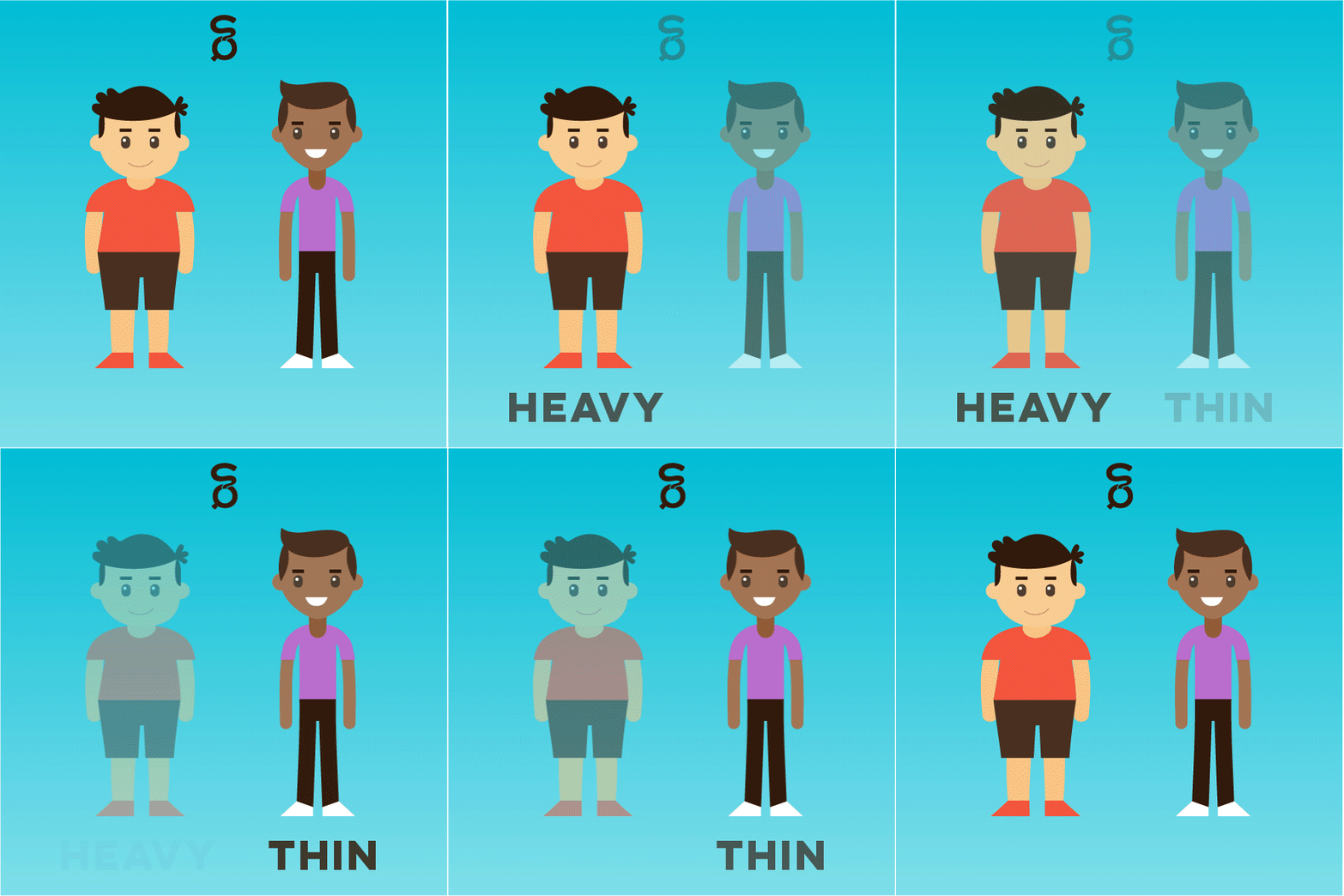
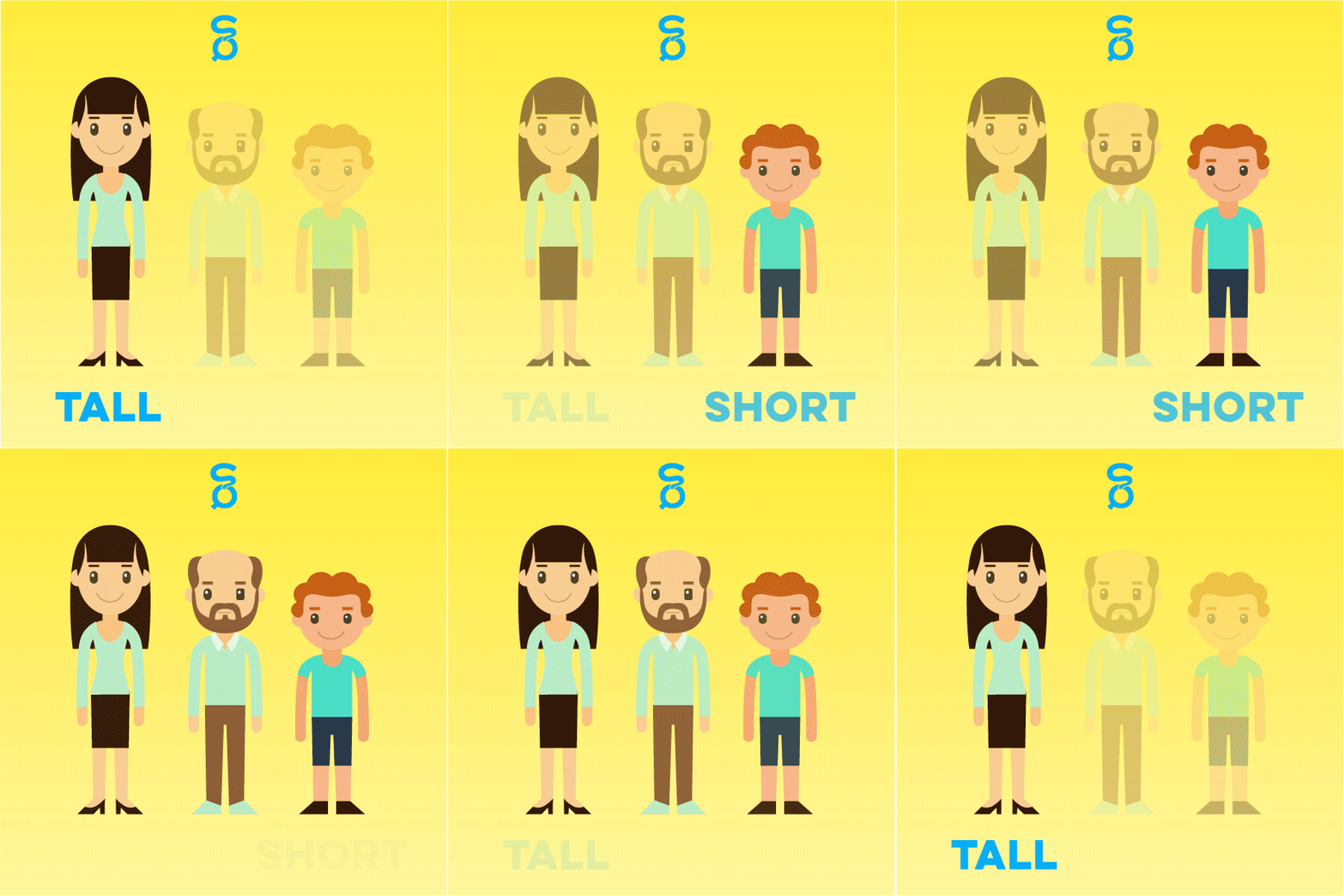
Now let’s take a look at some adjectives describing people that can fit into this slot:
| Word | Pronunciation | Definition |
|---|---|---|
| tall | /tɔl/ | greater in height than the average person; not short |
| short | /ʃɔrt/ | lesser in height than the average person; not tall |
| thin | /θɪn/ | not having lots of extra flesh; not fat |
| fat | /fæt/ | having lots of extra flesh; not thin |
| old | /oʊld/ | having lived many years; not young |
| young | /jʌŋ/ | not having lived many years; not old |
| in shape | /ɪn ʃeɪp/ | healthy and physically strong |
| out of shape | /aʊt ʌv ʃeɪp/ | not healthy or physically strong |
| beautiful | /ˈbjutəfəl/ | attractive; good looking (mainly for females) |
| ugly | /ˈʌgli/ | not attractive; not good looking |
| handsome | /ˈhænsəm/ | attractive; good-looking (usually for males) |
| bald | /bɔld/ | not having hair on the top of the head |


Frame #2 - Basic Sentences Describing Features
The next basic sentence frame for describing people in English focuses on a specific feature: glasses, curly hair, black hair, blue eyes, a mustache, a ponytail. To talk about a person’s features, use this sentence:
The woman has [FEATURE].
With this sentence frame, you can make lots of different sentences:The woman has curly hair. The woman has glasses. The woman has long hair. The woman has a ponytail.
Again, you can change the person slot as well: The man has long hair. My friend has long hair. My sister has long hair. Clara has long hair.
Here are some features (nouns or nouns with adjectives) that can fit into this sentence frame:

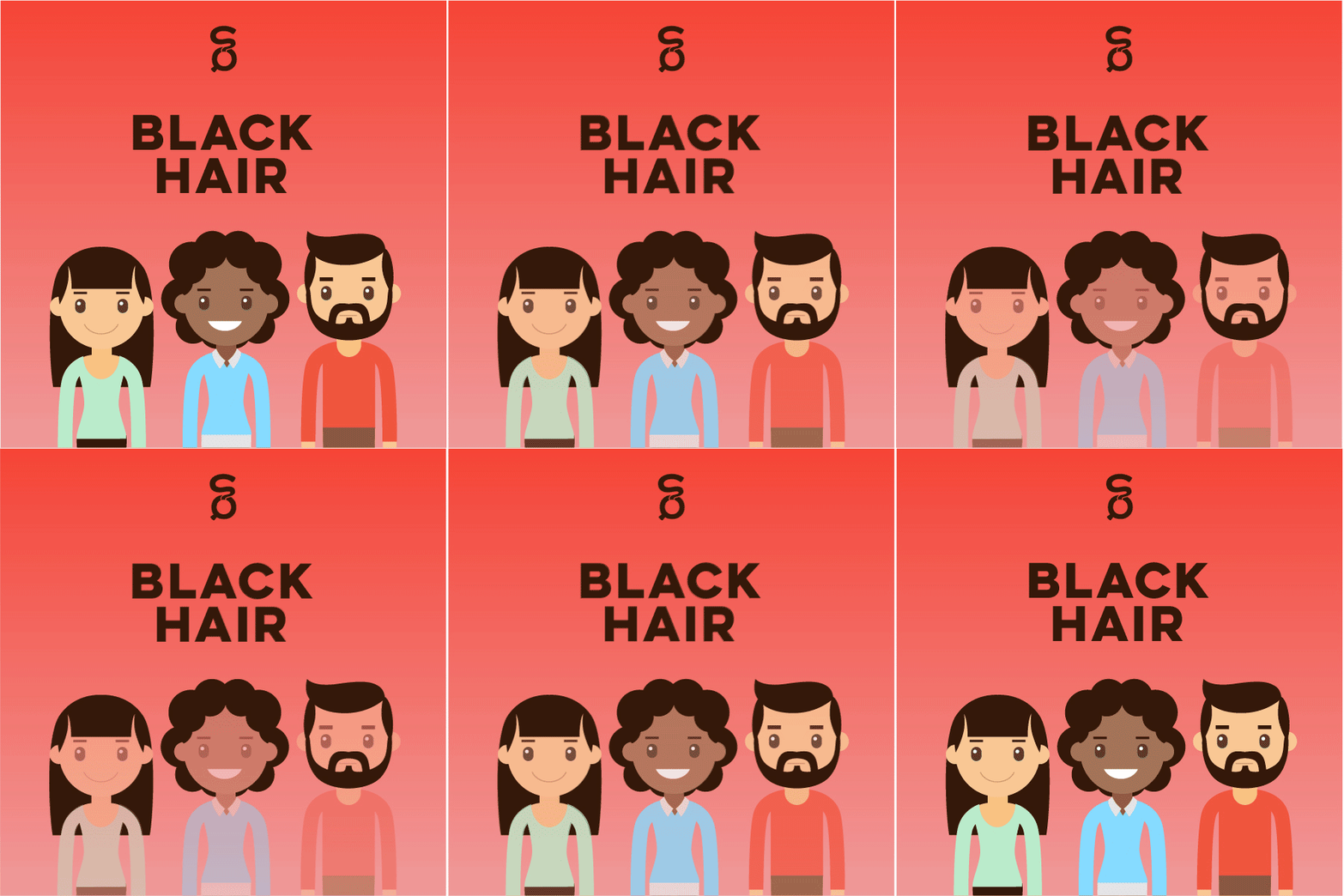


Frame #3 - Basic Sentences Describing Clothes
The last sentence we will talk about for describing people focuses on clothes. Who doesn’t love clothes!? Black shoes! Gray pants! Blue ties! Green skirts! But let’s make complete sentences with them. Here is the sentence frame:
The woman is wearing [CLOTHES].
And here is a list of clothes that can go into this sentence:
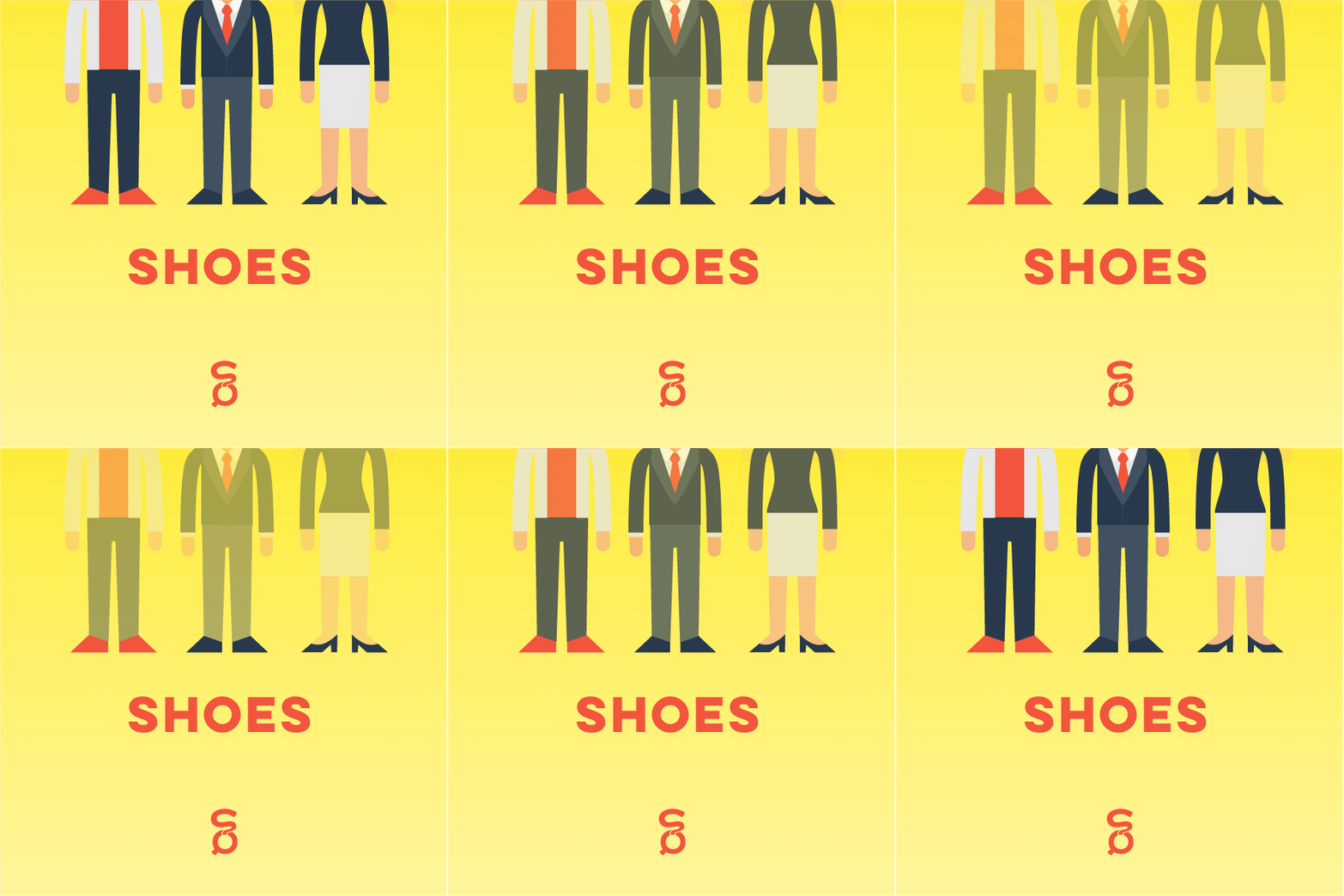

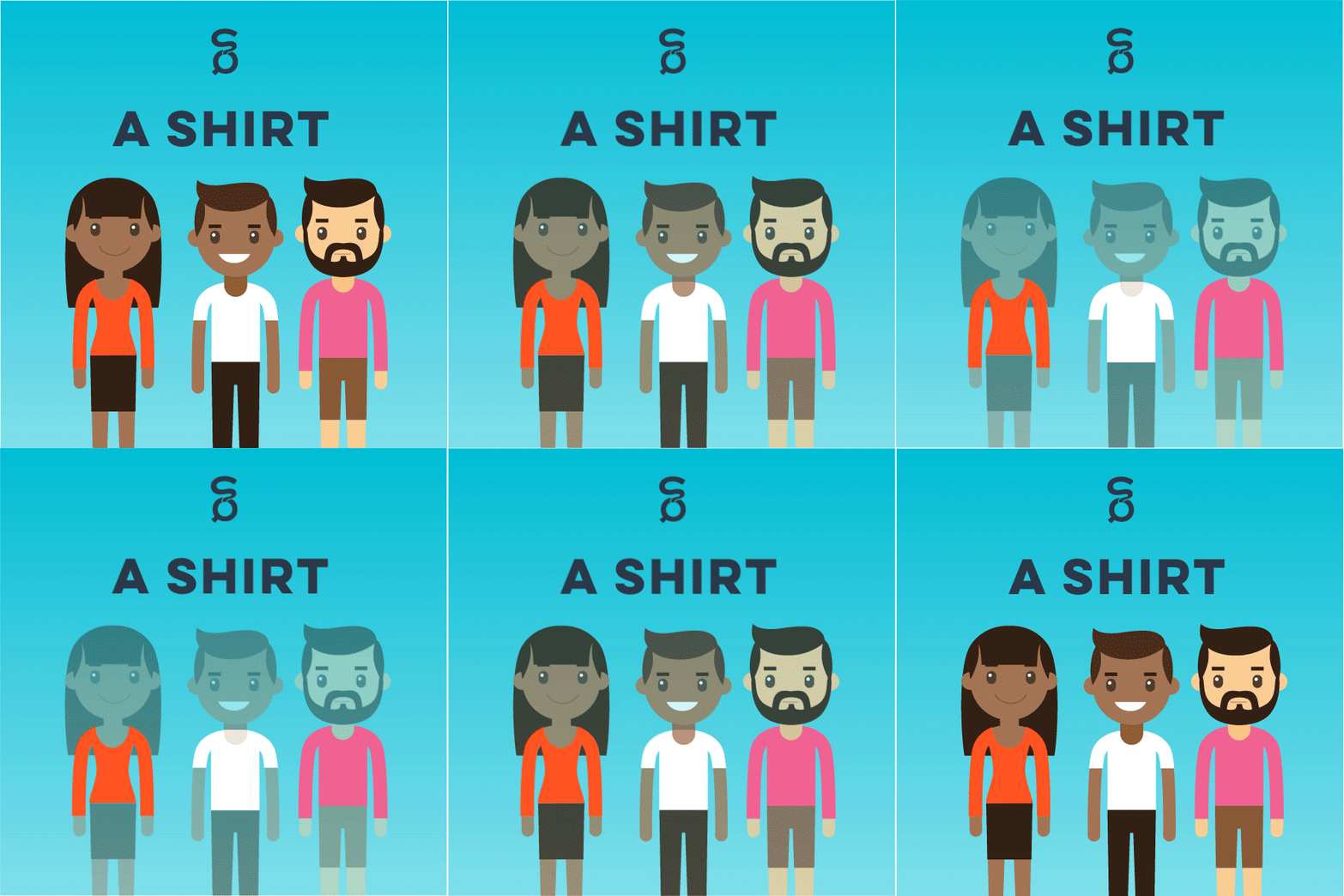


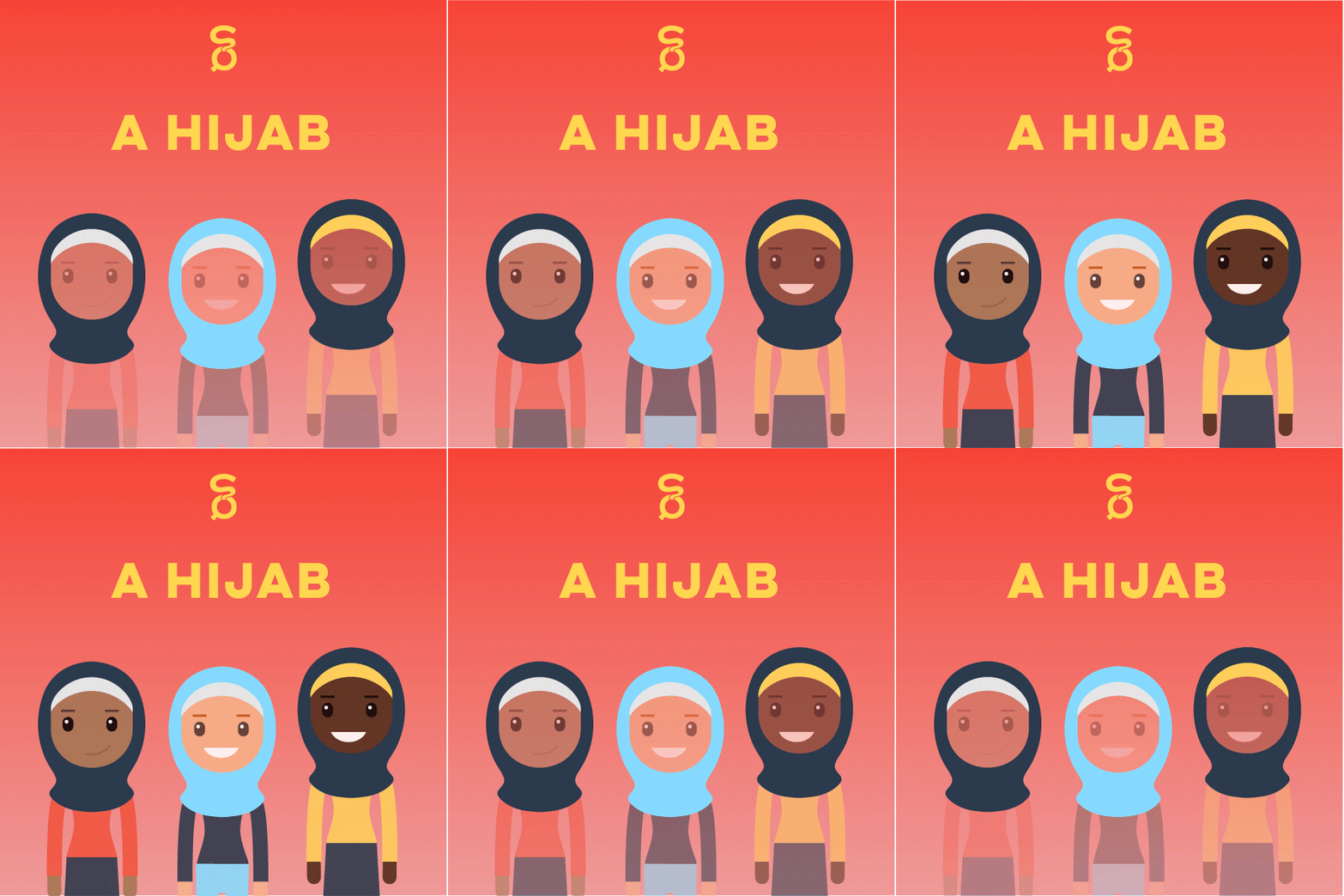

All of these clothing items can be used with color words to be even more descriptive. The woman is wearing black shoes. The man is wearing a yellow tie.
So, those three sentence frames, combined with this vocabulary, allow you to make hundreds of different sentences to describe people. If you are a beginner, and this is mostly new information for you, you can stop here.
But, if you know most of this stuff, and you want to learn some more advanced English sentences, read on!
Complex Sentence Frames Describing People
The first three frames talked about nouns, features, and clothes, in that order, right? The next three frames will be used to talk about the same three things, but in a more complex way. All of the same vocabulary from the sections above can be used with the next three frames, in the same order.
In the first three sentence frames, the main idea of each sentence was describing people. The sentences were about describing people. The thing that I want to tell you about the man is that he is tall. But sometimes we want to describe people in a sentence about something else, and the description is not the most important idea in the sentence. For example, maybe I want to tell you that the man is my neighbor, but I also want to mention that he is tall. These next sentence frames will help in situations like that.
Frame #4 - Adjectives Before Nouns
Let’s use that example. The I want to tell you that the man is my neighbor, and I also want to describe him as tall. I can put the adjective before the noun: The tall man is my neighbor. You can also put any of the other adjectives from above into that slot.
The [ADJECTIVE] man is my neighbor.
The handsome man is my neighbor. The old man is my neighbor. The fat man is my neighbor. And again, the end of the sentence (which we call the predicate) is a slot, too, and you can put different verbs in there: The tall man likes football. The tall man is eating. The tall man has a car.
Frame #5 - Features and With
If you want to talk about someone’s features in that same sentence, we need to use the preposition with. We could say The man with glasses is my neighbor. Any of the other features can go into that same slot:
The man with [FEATURE] is my neighbor.
The man with red hair is my neighbor. The man with a mustache is my neighbor.
Frame #6 - Clothing and in
When we want to talk about clothes, we need another preposition. Instead of with, we use in. The man in the blue shirt is my neighbor. Any of the clothing vocabulary above can go into that same slot:
The man in [CLOTHES] is my neighbor.
The man in the tie is my neighbor. The man in the grey pants is my neighbor. The woman in the red hat is my neighbor.
Wrap-Up
That's it! Study these six sentence frames and the vocabulary, and you can now make hundreds of new sentences to describe people! Check back soon and we'll have a quiz to check what you have learned!
Rob Sheppard is the founder and Chief Executive Teacher at Ginseng. Over the past ten years, he has taught English in Taiwan, South Korea, and his hometown of Boston. Now he teaches online at Ginseng while traveling the world.
You can email Rob at rob@ginse.ng.

More free English Vocabulary Resources
Simple Present Tense
The simple present is the most common and useful verb tense in English. It is used to talk about repeated actions and to describe people or states of being. Read about the rules for using the simple present tense, how we form it, and tons of example sentences!
One of the most important parts of English grammar is verb tenses, and the simple present tense (also known as present simple or present indefinite) is the most common verb tense in English. Over 50% of verbs in English are in this tense, so it's a really important tense to learn. It is used for several different situations.
Using the Simple Present Tense
The simple present can describe actions that happen regularly. This means things we do again and again, things we do every day, every week, every month. This can be routines and habits, and also things that are currently, always, or generally true.
Simple Present Verb Chart
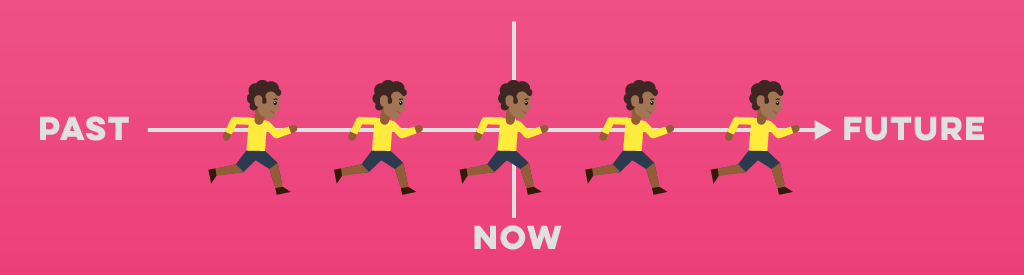
This form is also used to describe feelings, emotions, and our senses. We can also use it for describing people and things in English.
It is important to note that we do not generally use this tense for actions that are happening right now. For this situation we use the present continuous tense. See this article about the difference between simple present and present continuous/progressive.
The examples below illustrate the rules for how we generally use the simple present.
Examples
Here are twelve example sentences showing different ways that we can use the simple present tense:
To state facts:
The earth moves around the sun.
Birds have wings.
Your mother's mother is your grandmother.
To describe habits and routines:
I wake up at 7:00.
I brush my teeth every day.
I take my vacation every August.
To describe people and things:
She has brown hair.
That car is red.
Sally is tall
To describe feelings and opinions:
She is angry.
We are cold.
I smell cookies.
Sarah loves movies.
Forming The Simple Present Tense
Formula
Regular verbs in English take the base form of the verb (the infinitive without to, sometimes called first verb form).
subject + VERB
The exception is the third person singular (he, she, and it), which add an -s.
subject + VERBs
If the word ends in -ch, -sh, -th, -ss, -o, or -z, you usually have to add -es.
Conjugation
The table below shows the verb to work conjugated in the simple present tense.
| Singular | Plural | |||
|---|---|---|---|---|
| 1st person | I | work. | we | work. |
| 2nd person | you | work. | you | work. |
| 3rd person | he | works. | they | work. |
| she | works. | |||
| it | works. | |||
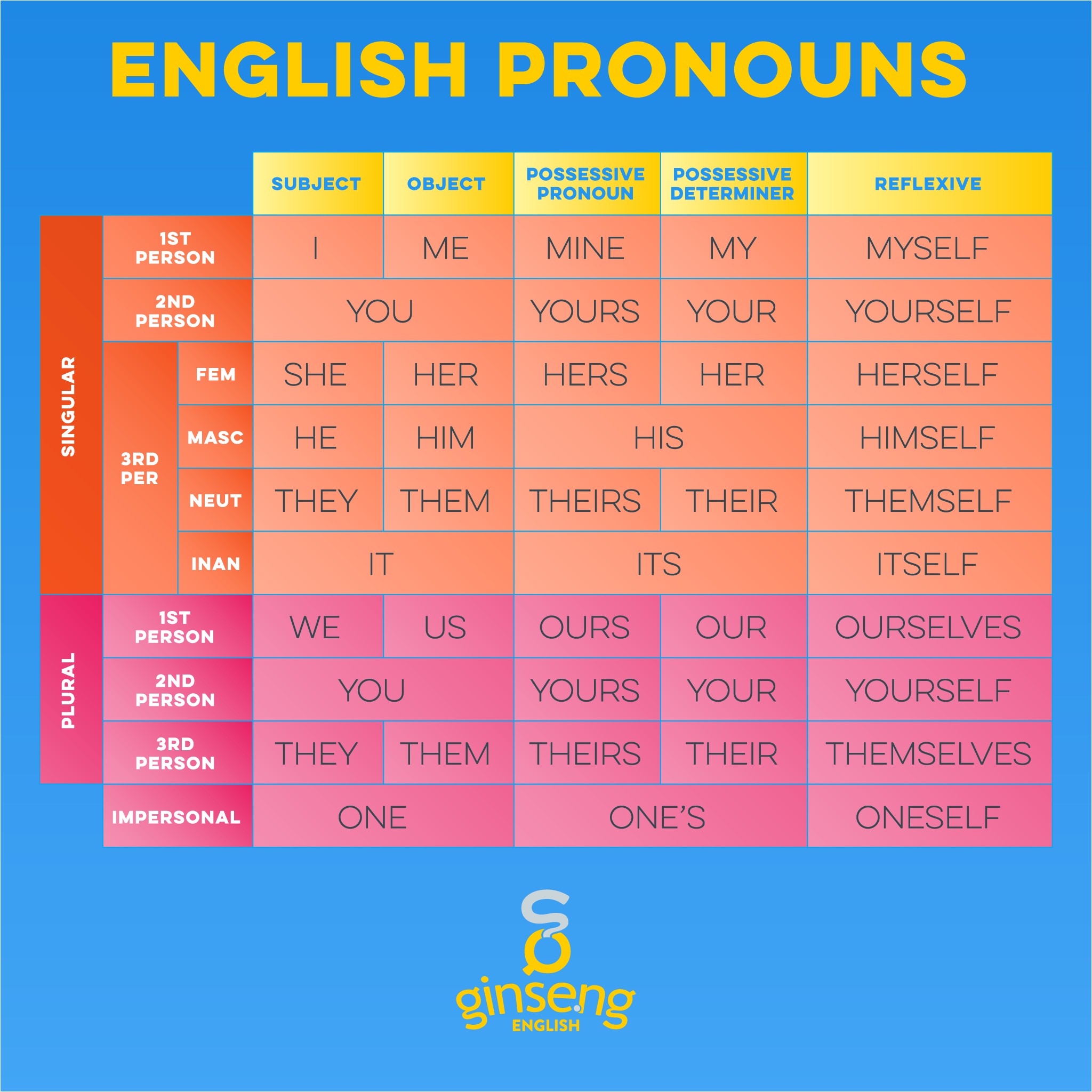
If you don’t know the words I, he, she, it, we, you, and they, you can read more about pronouns.
Other Forms
Negative Sentences
If the main verb is a form of be, simply put not after the verb to make a negative sentence.
That is not pork.
I’m not Rebecca.
If the main verb is not a form of be, use the helping verb, do (or does), then not, then the base form of the verb.
He does not like cheese.
I do not have a lighter.
She doesn’t live near here.
Questions
Many simple present questions use the verb be. If the verb is a form of be, move the verb to before the subject to form a question:
Are you Rebecca?
Is this pork?
Where are you?
What is that?
If the main verb is not be, we need to use a helping verb to make questions. In the simple present, the helping verb is do (or does with he, she, or it).
Does he like cheese?
Do you have a lighter?
What do you think?
Where does she live?
Passive Voice
To make a passive sentence, use be in the simple present (is/are), and then the perfect form of the main verb.
Pineapples are grown in Hawaii.
Ice cream is made with milk.
The New York Times is read around the country.
Notes
Adverbs of frequency are often used with the simple present tense
check out these other free grammar resources:
3 Important Aspects of New Vocabulary
3 Important Aspects of New Vocabulary
A big part of learning English is learning new English vocabulary. Most teachers can tell you that it’s very common for students to study all kinds of new vocabulary words and their definitions. They can pass a multiple choice test or match the words to their definitions in an exercise, but when students try to use these words in sentences, their sentences are confusing or incorrect. That's because a word is more than just its definition, more than just denotation.
There are three very important aspects of a new word that you should be sure to learn: denotation, connotation, and collocation.
Denotation
The denotation of a word is its actual meaning, the definition that you will find in the dictionary. Most students know that this is a very important part of learning new vocabulary, but it is not the only thing you need to know.
Connotation
Connotation is a little more difficult. Connotation is a suggestive meaning, the emotions and feelings that a word is connected with. A word can have positive or negative connotations. For example, the words skinny and slender have the same denotation, but skinny generally has a negative connotation (it sounds like too thin), while slender sounds positive and attractive. Another example: the words woman and lady are synonyms, but lady has connotations of elegance and grace, while woman is more neutral. Female is another synonym, but it connotes biology or science. Your mother is a female, but it would be unusual to use that word to describe her.
Collocation
Include information about connotation and collocation when taking notes on new words.
Collocation is another important aspect of words in a language. Some words usually happen with other words. This is collocation. Many students will learn the word party, which is an easy word to understand. But when they make a sentence, they will say make a party or do a party, translating from their own language. In English, though, party collocates with have. In English we have a party. So just learning what the word party means is not enough. We also need to learn the word's collocates.
More free english resources




Choosing Where to Study Abroad: 7 Thoughts To Guide Your Decision
Choosing Where to Study Abroad: 7 Thoughts to Guide Your Decision

So much to choose from!
Now that you’ve made up your mind to study abroad, you’ll need to decide exactly which English speaking country you want to study in!
You might be thinking something like, “Should I go to Australia where I can hang out with kangaroos?” or “Maybe Canada? That Justin Trudeau is pretty good lookingp…” Or how about Ireland? I do love a glass of properly poured Guinness…” or “Maybe the USA! A cheeseburger sounds aMAAAAzing right now!”
This all sounds great in theory, but it’s important to get past the stereotypes of the countries to determine which one is really the best for you. Let’s talk a little bit more about how to get a realistic picture of the countries you’re considering studying in. Ultimately, it is up to you to decide which country is the best for you, but you’ll want to start by considering the following.
1. Best schools for you
It’s easy to look up what countries have the best colleges in the world, but the more important question is, what countries have the best schools for YOU and your specific area of study? If you are pursuing an engineering degree, what countries have schools that specialize in engineering programs? What is the school's reputation, not only in your country, but in the school’s country? GoAbroad.com and Times Higher Education have useful search tool to compare schools, and rank majors.
2. Competitiveness of Admission

This will vary more from school to school than country to country, and will be something we will talk a lot more in future posts, but it’s important to have realistic expectations when considering schools.
What are the general admission requirements? Do you need a certain TOEFL score, SATs, GREs, IELTS, or something totally different? If you already have a score, or have been studying for a specific test, then most likely you should consider countries that accept that test first.
3. Culture
Aside from a good educational experience, what kind of culture do you want to experience? Think about what country fits your personality, your interests, hobbies, and even your weather preferences. Are you looking for a school that is in a city completely different from yours, or would you like to find a place that has some familiar comforts for when you’re feeling homesick?
Each country is so different that it could take you years to research these questions but this guide about different countries cultures is a good start! Take a look at it and tell us if you agree with what it says about your country!
4. Distance from home

Traveling for daysssss
I’ve had some students who have traveled more than 24 hours from Asia to get to their new school, while others just take a 3-hour flight down from Canada!
Does the thought of traveling all that way to your new school excite you? Or would you prefer someplace that’s closer? Do you plan to travel home for for the holidays? Do your parents hope to come visit? How much are plane tickets? Here’s a fun website that quickly shows you the flight times from one country to another!
5. Price

Budgeting is kind of awful, but necessary!
For most of us, price will play a big factor in this important decision. You’ll definitely want to check on the tuition prices and living expenses in the specific country. What is the exchange rate? Does this specific country offer scholarships or financial aid for international students? GoAbroad.com and Business Insider are just some of many helpful resources for researching the costs of studying abroad, but we’ll also discuss this more here!
6. Visa Requirements

Visas: what a headache!
It’s important to read about the visa requirements for citizens from you country. How hard is it to get a visa to this country? Will you need to travel to renew it periodically? Can you work legally there? NAFSA offers some great resources to start researching this, but look for future blog posts here for many more visa and immigration tips for studying in the US!
7. Popularity
Studying abroad is more popular than ever! That’s great, but what does this mean for you? Well, it means you can choose to study in a place with many people from your country, or you can do your research and study in a place where not many people from you country go.
For example, if there are 10,000 Spaniards studying in Boston, but only 500 studying in Melbourne, do you want to be 1 of 10,000 or 1 of 500? Do you want to be able to take a break, and speak your native language with people who understand your culture sometimes? Or do you want total immersion in English?
For some of us, knowing that we can immediately make friends with other students from our own country while abroad may be a comfort. For others, this may actually be a turnoff because they want to experience as many new things as possible. No pain, no gain, right!? Some students find that if they are surrounded by people speaking their own language, they won’t be motivated or pushed to learn English as quickly.
Take a look at the population of international students in various countries, and consider if you want to be studying with many students from the same or different country as you. This one is a very personal choice, and there’s no wrong answer!
Homework:

We know that this is a lot to consider, and it can be overwhelming at first. But just take it one step at a time! Here’s some homework for you: see if you can narrow down and prioritize the top 3 factors on this list and use the resources provided to get started on your decision process!
Here are some great resources for studying in various English speaking countries!
Hi! My name is Sarah and I have 8 years of experience working with international students studying in the United States, most recently at Berklee College of Music in Boston. I share your passion for adventure, and am currently traveling through Asia as part of the Ginseng English Anywhere tour! I’ll be writing many blog posts about studying abroad, so if you’ve decided to study abroad in the US, then this is the place is for you!
If have any questions about studying abroad, or are interested in scheduling an advising appointment with me, e-mail me at sarah@ginse.ng

Other free resources about studying abroad


Silent G Words
If you’re looking for explanations and examples of words with silent G, you’ve come to the right place. Charts, definitions, word lists, and the history of how silent G became silent.
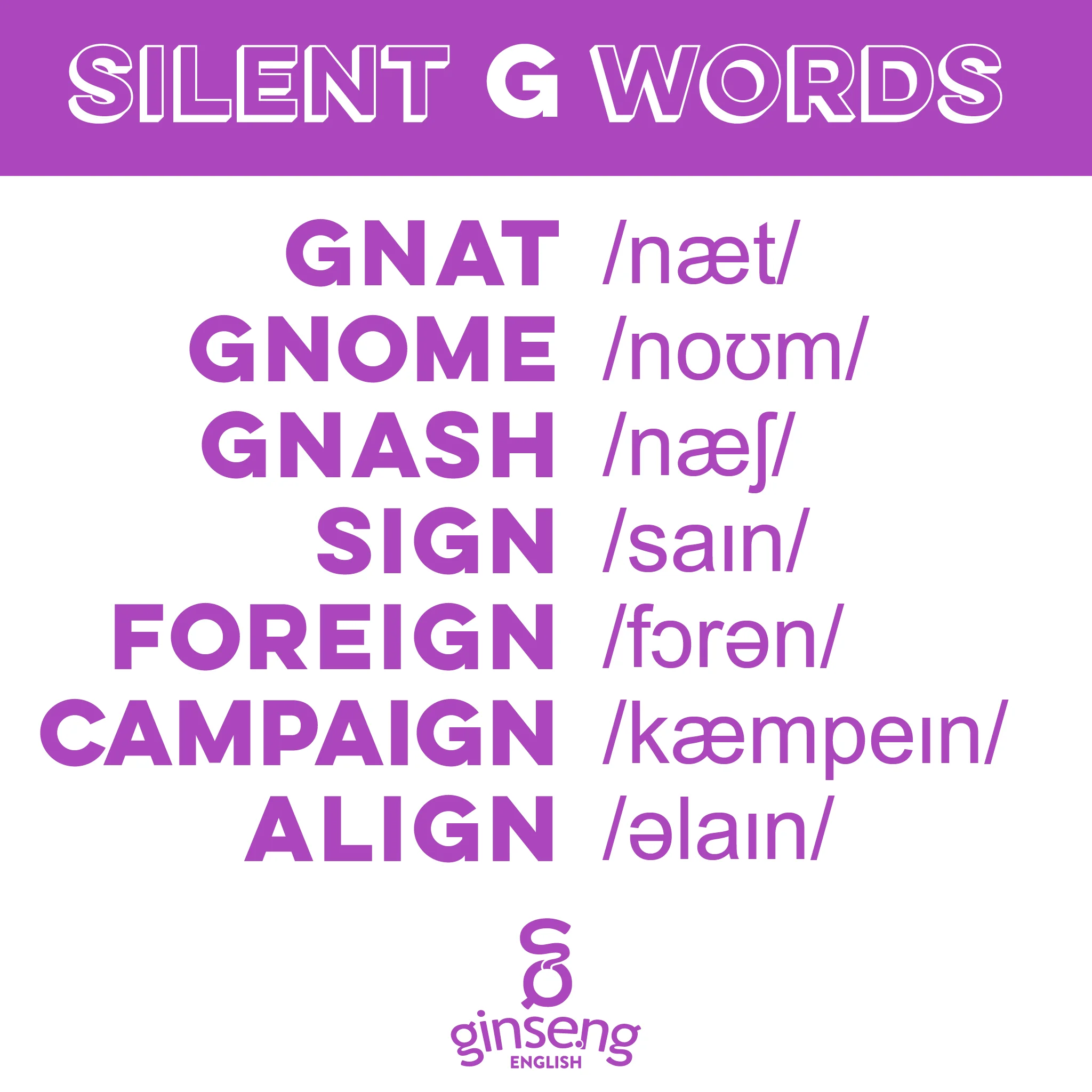
Everyone seems to love to learn about words with silent letters, so here's another! G is often silent as well. Notice the pattern here: it almost always comes before an N. Just ignore the G and pronounce the N sound. Notice that the G does not really affect the vowel sound if it comes after a vowel.
| Word | IPA | PoS | Definition |
|---|---|---|---|
| gnat | /næt/ | n. | a very small flying insect |
| gnome | /noʊm/ | n. | a fictional being like a dwarf |
| gnash | /næʃ/ | v. | to grind the teeth togther |
| sign | /saɪn/ | n. | a symbol |
| foreign | /ˈfɑrən/ | adj. | from a different place |
| campaign | /kæmˈpeɪn/ | n. | a series of actions for one goal |
| align | /əˈlaɪn / | v. | to put in a line |
If you like this, check out these free resources on silent letters:
You might also find our other blogs about English pronunciation such as Silent K, Silent B, Silent N and Silent L, and Deleted Syllables to be helpful too!
Silent G Words in English. Feel free to share the graphic and link back to Ginseng!

6 Reasons to Study Abroad
6 Reasons to Study Abroad
Choosing to study abroad can be a scary but exciting decision! If you’re on the fence about studying in another country, let me see if I can persuade you. There are hundreds of reasons to study abroad, and below are just 6 of them to get you started!

1. Learn a new language
How did you guess that this is where I would start? 😉 I am going to assume that, if you found this blog through Ginseng English, you are considering studying in an English-speaking country. Learning English is a great idea because English is one of the most commonly spoken languages in the world, and the best language to use when traveling.
There is no better way to learn English quickly than to live in a place that speaks it! As they say, it’s sink or swim!
2. Live like a local
Probably the coolest thing about studying abroad is that this isn't vacation. This is your life now.

Live like a local, eat like a local
By actually living in a new place, not just visiting, you’ll be able to immerse yourself in your new home in a way that is impossible on a vacation. Try all the coffee shops until you find the best latte. Learn your favorite bartender’s name. Find the fastest route to school and the most scenic one, and enjoy being able to decide each morning which one to take. Before you know it, you’ll be walking down the street and realize that you don’t feel like a tourist anymore—you feel like a local.
And not only will you get a chance to feel at home in the place where your school is, but you’ll also get a chance to explore the country too! What’s cooler than a weekend trip to New York City or to the beaches of California!?
3. Make new friends

Traveling gives you and your friends a great excuse to take cheesy selfies!
The funny thing about studying abroad is that everyone in your program is in the same boat as you. They are all excited to make friends and explore their new city with you. You’ll make friends quicker than you ever have before. As you experience new things together, you’ll create friendships that will last a lifetime. Those moments in class where neither of you understands what the teacher is saying, or those school meals where the food doesn’t make sense to either of you, those moments will always stick with you.
Secondly, you’re not just making friends and connections with locals but also with people from around the world who share your interests! This means that next time you travel, you’ll have friends to visit all over the globe!
4. Improve career opportunities and make connections
This isn’t the most exciting reason, but studying abroad is great for your résumé! The fact that you took the risk to leave everything familiar behind and explore the unknown shows determination and perseverance. When you come back from studying abroad, you will have a much better understanding of other cultures, and a more global perspective. Potential employers love to see that you have worldly experience, which someone else may not have. Speaking English certainly doesn’t hurt your résumé either!
You will be meeting people from all over the world, and these connections may come in handy if you are looking for an international job in the future.
5. Try ALL the new food

You haven't lived until you've tried fresh New England lobster!
How did I not mention the food earlier!? Food is such an important part of each culture, and each new place comes with hundreds of new types of food to try! You may discover a new favorite—or your new least favorite!—that you didn’t even know existed!
Also, I know some people say that there’s no such thing as “American food” but have you tried lobster rolls in Boston, or the cheesesteaks in Philadelphia, or po' boys in New Orleans? America has some pretty amazing food...
And hey, if trying new food isn’t your thing, or if you’re really missing home one day, there’s a good chance that you can find some familiar food in your new city too. Most big cities have a Chinatown, a Little Italy, or grocery stores with an international food section where you can find just about anything. Whether you're from Brazil, Vietnam or Italy, rest assured, you can get your café com leite, your cà phê, or your cappuccino. 🤓 ☕️
6. Learn to rely on yourself
When you study abroad, you’ll learn what it feels like to truly be on your own. I’m not going to lie, there will be some scary moments. You might even cry (I know I did). But there will also be some really amazing moments when you learn exactly what you’re capable of and what you really want to get out of this experience. When was the last time you got to take full responsibility for yourself and decide exactly what you want to do today? What you want to see? Who you want to talk to? Or what you want to eat? This is your time! Live it up!

Now let's not get too sentimental, but while you’re out there figuring out what it’s to be on your own, you might also end up with a newfound appreciation for your friends, family and other small things from home. That sewing kit your mom made you pack? You’ll have no choice but to thank her when your favorite jeans rip. All those times you fought with your little brother? You might actually end up missing that dumb little face. And when you're stuck on a train full of people who don't speak your language, you might even feel nostalgic for that crowded bus you took every day at home.
Don't worry though! Living abroad will force you to find new ways to stay in touch with people back home, and may actually bring you closer to them. You might even discover the art of letter writing!
Hi! My name is Sarah and I have 8 years of experience working with international students studying in the United States, most recently at Berklee College of Music in Boston. I share your passion for adventure, and am currently traveling through Asia as part of the Ginseng English Anywhere tour! I’ll be writing many blog posts about studying abroad, so if you’ve decided to study abroad in the US, then this is the place is for you!
If have any questions about studying abroad, or are interested in scheduling an advising appointment with me, e-mail me at sarah@ginse.ng
OTHER FREE RESOURCES ABOUT STUDYING ABROAD
The Most Common English Adjectives
If you want to quickly expand your English vocabulary, adjectives are a great place to start! Adjectives are a really important part of speech. An adjective is a word used to describe a noun.
It is a good idea to focus on the most common ones in the language. Below are lists of the 50 most common words in both American and British English.
| No. | Adjective |
|---|---|
| 1 | OTHER |
| 2 | NEW |
| 3 | GOOD |
| 4 | AMERICAN |
| 5 | GREAT |
| 6 | BIG |
| 7 | HIGH |
| 8 | OLD |
| 9 | DIFFERENT |
| 10 | NATIONAL |
| 11 | SMALL |
| 12 | LITTLE |
| 13 | BLACK |
| 14 | IMPORTANT |
| 15 | POLITICAL |
| 16 | SOCIAL |
| 17 | LONG |
| 18 | YOUNG |
| 19 | RIGHT |
| 20 | BEST |
| 21 | REAL |
| 22 | WHITE |
| 23 | PUBLIC |
| 24 | SURE |
| 25 | ONLY |
| 26 | LARGE |
| 27 | ABLE |
| 28 | HUMAN |
| 29 | LOCAL |
| 30 | EARLY |
| 31 | BAD |
| 32 | BETTER |
| 33 | ECONOMIC |
| 34 | FREE |
| 35 | POSSIBLE |
| 36 | WHOLE |
| 37 | MAJOR |
| 38 | MILITARY |
| 39 | FEDERAL |
| 40 | INTERNATIONAL |
| 41 | TRUE |
| 42 | FULL |
| 43 | HARD |
| 44 | SPECIAL |
| 45 | RECENT |
| 46 | RED |
| 47 | OPEN |
| 48 | PERSONAL |
| 49 | GENERAL |
| 50 | CLEAR |
| No. | Adjective |
|---|---|
| 1 | OTHER |
| 2 | NEW |
| 3 | GOOD |
| 4 | OLD |
| 5 | DIFFERENT |
| 6 | LOCAL |
| 7 | GREAT |
| 8 | SMALL |
| 9 | SOCIAL |
| 10 | IMPORTANT |
| 11 | NATIONAL |
| 12 | HIGH |
| 13 | BRITISH |
| 14 | POSSIBLE |
| 15 | LARGE |
| 16 | RIGHT |
| 17 | LONG |
| 18 | LITTLE |
| 19 | YOUNG |
| 20 | POLITICAL |
| 21 | ABLE |
| 22 | GENERAL |
| 23 | ONLY |
| 24 | PUBLIC |
| 25 | AVAILABLE |
| 26 | FULL |
| 27 | EARLY |
| 28 | BEST |
| 29 | BIG |
| 30 | MAIN |
| 31 | MAJOR |
| 32 | ECONOMIC |
| 33 | SURE |
| 34 | REAL |
| 35 | LIKELY |
| 36 | BLACK |
| 37 | PARTICULAR |
| 38 | INTERNATIONAL |
| 39 | SPECIAL |
| 40 | DIFFICULT |
| 41 | CERTAIN |
| 42 | CLEAR |
| 43 | WHOLE |
| 44 | FURTHER |
| 45 | WHITE |
| 46 | OPEN |
| 47 | EUROPEAN |
| 48 | FREE |
| 49 | CENTRAL |
| 50 | SIMILAR |
Most of the most common adjectives are the same in the US and the UK (78% of the top 50 and 92% of the top 25 words appear in both lists). Notice that American is the 4th most common adjective in American English and British is the 13th most common adjective in British English. We shouldn't read too much into these simple lists, but it is interesting to note that military, federal, and personal all appear in the American list. Do you notice any other patterns?
That's all for now! Start studying!
If you're looking for something similar, check out the most common verbs in English.
Sources: The primary sources for compiling this article were the Corpus of Contemporary American English (COCA) and the British National Corpus.