Most Common English Verb Tenses
English Verb Form Frequency
We spend a lot of time in English class studying all the different verb tenses. I can't tell you how many times my students have asked me, "How often do we really use the future perfect progressive?" My answer is usually that it is very rare, but it's meaningful, and it can be helpful to understanding how the past perfect progressive works as well. But that really is a good question:
How often do we use each verb tense in English?
This is an important question because there are 12 different verb tenses in English, and you want to study strategically, learning the most valuable ones!
Let's start by saying that there is no one answer. As you may know, the English we use for speaking is different from the English we use in writing. There are many different situations to be speaking or writing in, and in each of those situations we would see different verb frequencies. Even from person to person, our individual speaking style might lead one person to use, for example, the present tense more often than another person. We can, however, observe some useful patterns.
The 5 Most Commonly used English Verb Tenses
If you are looking for a quick answer, here it is:
| # | Tense | Frequency |
|---|---|---|
| 1 | Simple Present | 57.51% |
| 2 | Simple Past | 19.7% |
| 3 | Simple Future | 8.5% |
| 4 | Present Perfect | 6.0% |
| 5 | Present Continuous | 5.1% |
Some quick insights from the top 5:
The simple present accounts for more than half of the verbs used in English speech
The 5 most commonly used verb tenses total up to over 95% of usage
The simple tenses are the top three verb tenses
For a more in-depth analysis, read on!
The Source Material
For this post, we looked at an interesting research study by Krámský (1969). We have also updated this article to include findings from Alzuhairy (2016). Krámský took several different samples of three different styles (or registers) of English—novels, plays, and specialized (academic and technical) texts. He analyzed 20,000-word samples from each text, counting each form of each verb, and sharing all his data.
The results are complex, and grouped in ways that might not be too helpful, but I have tried to regroup them and show them in charts that are more useful for language teachers and learners.
Before we look at some of those patterns, I want to include a caveat, or warning. When compared to all the language in the world, Krámský's sample is actually very, very small. Ideally, we would get this information from a larger base of language called a corpus, like the Corpus of Contemporary American English. Unfortunately, information of this kind is currently difficult (if not impossible) to get from most corpora. Still, the general proportions and patterns that Krámský found should be fairly accurate. The one other warning is that the texts Krámský used as samples of spoken (or colloquial) English are actually plays, written to sound like spoken English. It is very possible that examples of actual spoken English would be different from the language found in the plays.
Ok, now let's get to the fun stuff!
Verb Tense Frequency
First, I've broken each text type down by verb tense: past, present, and future:

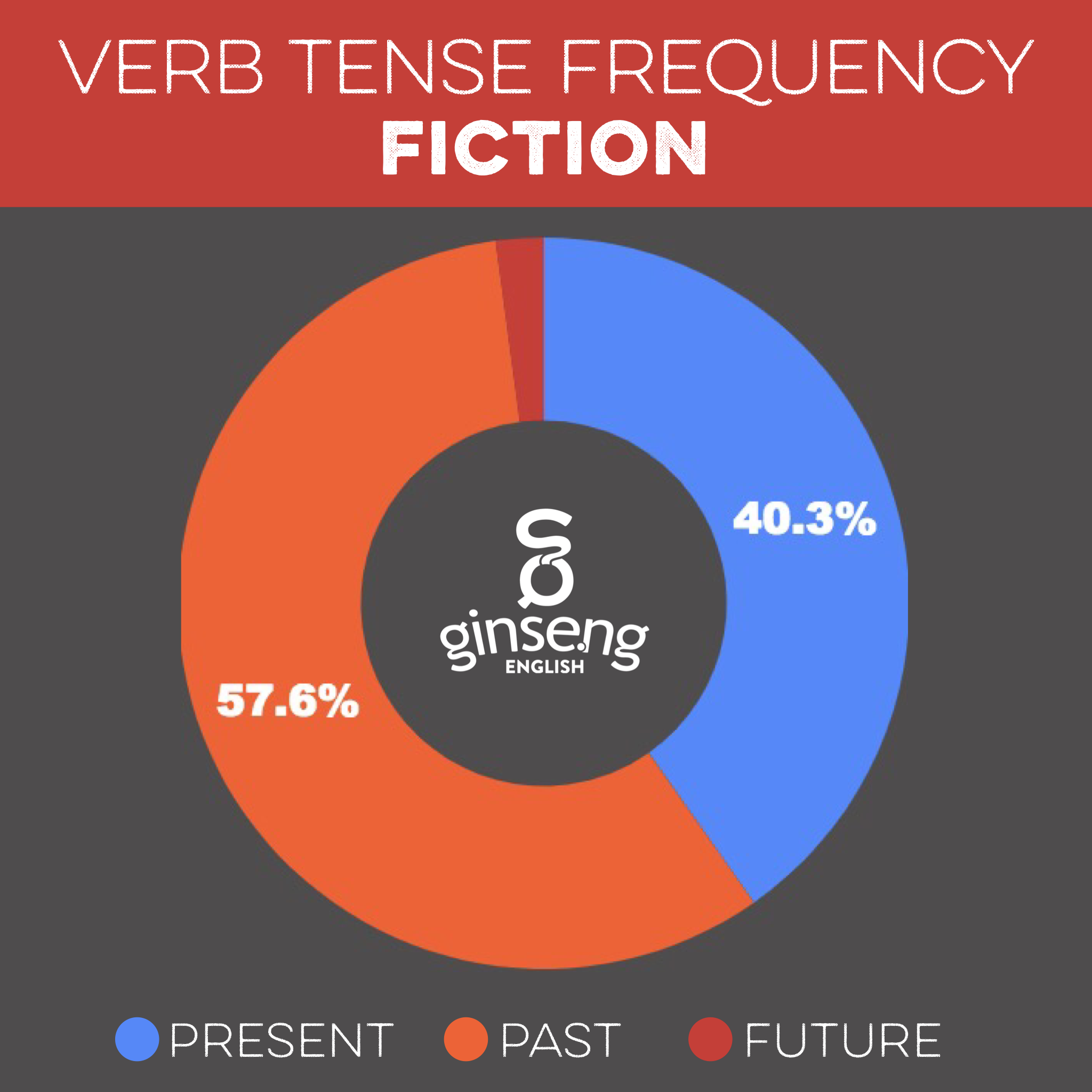

As you can see, there are some big differences between different text types. Spoken English is mostly in the present tense (68.9%), but fiction is mostly past tense (57.6%). Specialized texts overwhelmingly use the present tense (87.1%).
This makes a lot of sense. In fiction, we generally tell stories that take place before: first this happened, then that happened, then that happened. When we speak, though, we talk a lot more about what we think and feel and like, what we do, who people are, our experiences and all of these things are expressed in the present tense. In specialized texts, we are often writing about things that are generally true, and here again, we use the present tense a lot.
The future tense is less used in all text types: 9% in speech, 2% in fiction, and 4% in specialized texts.
This table breaks down each tense by frequency in all three text types:
| Tense | Speech | Frequency | Specialized |
|---|---|---|---|
| Present | 68.9% | 40.3% | 87.1% |
| Past | 22.4% | 57.6%% | 8.7% |
| Future | 8.7% | 2.1% | 4.3% |
Verb Aspect Frequency
The tenses are easy enough—past, present, future—but the really tricky thing about learning English verbs is the four aspects: simple, progressive, perfect, and perfect progressive. Thankfully, there isn't as much difference between the different styles of English when it comes to aspect. Take a look:

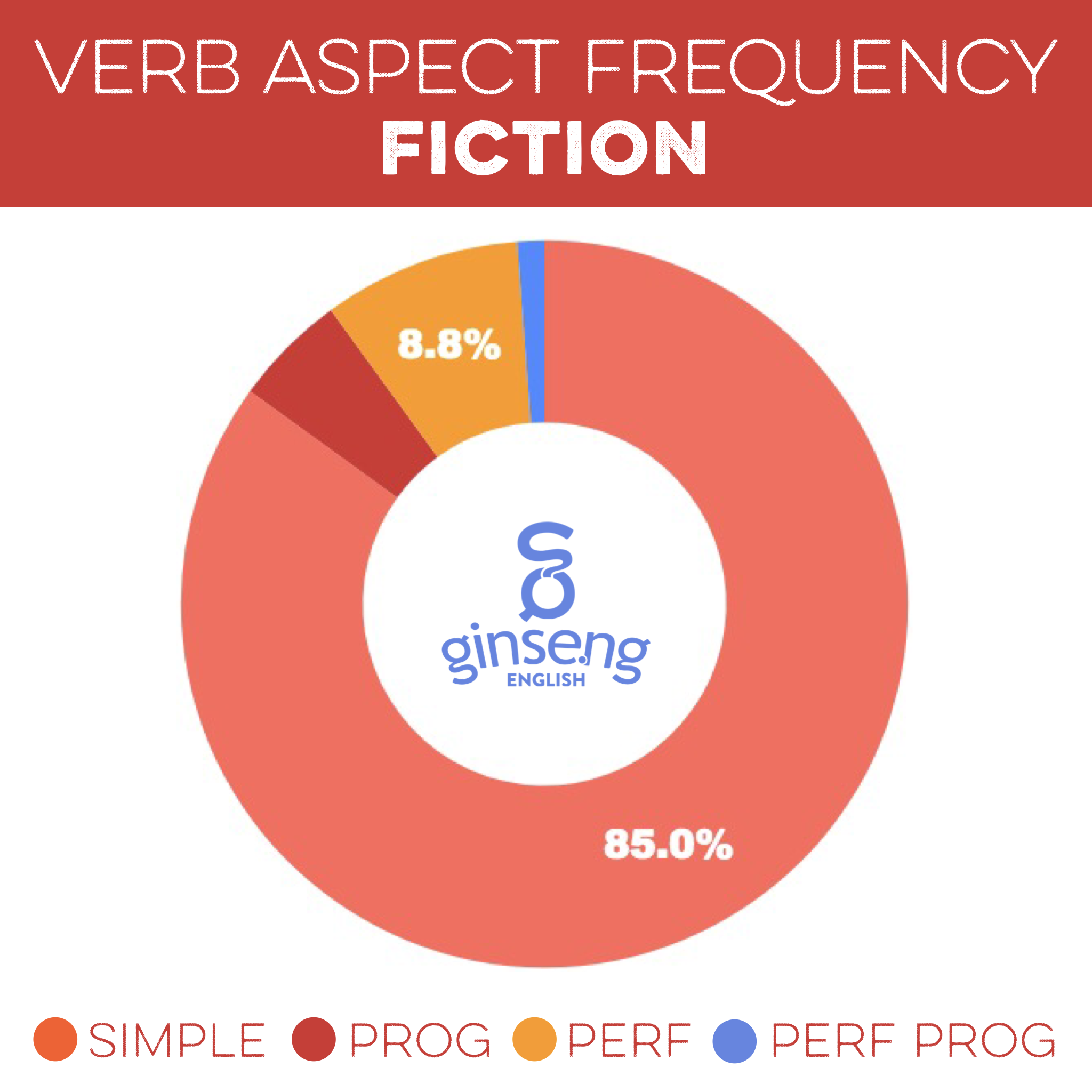
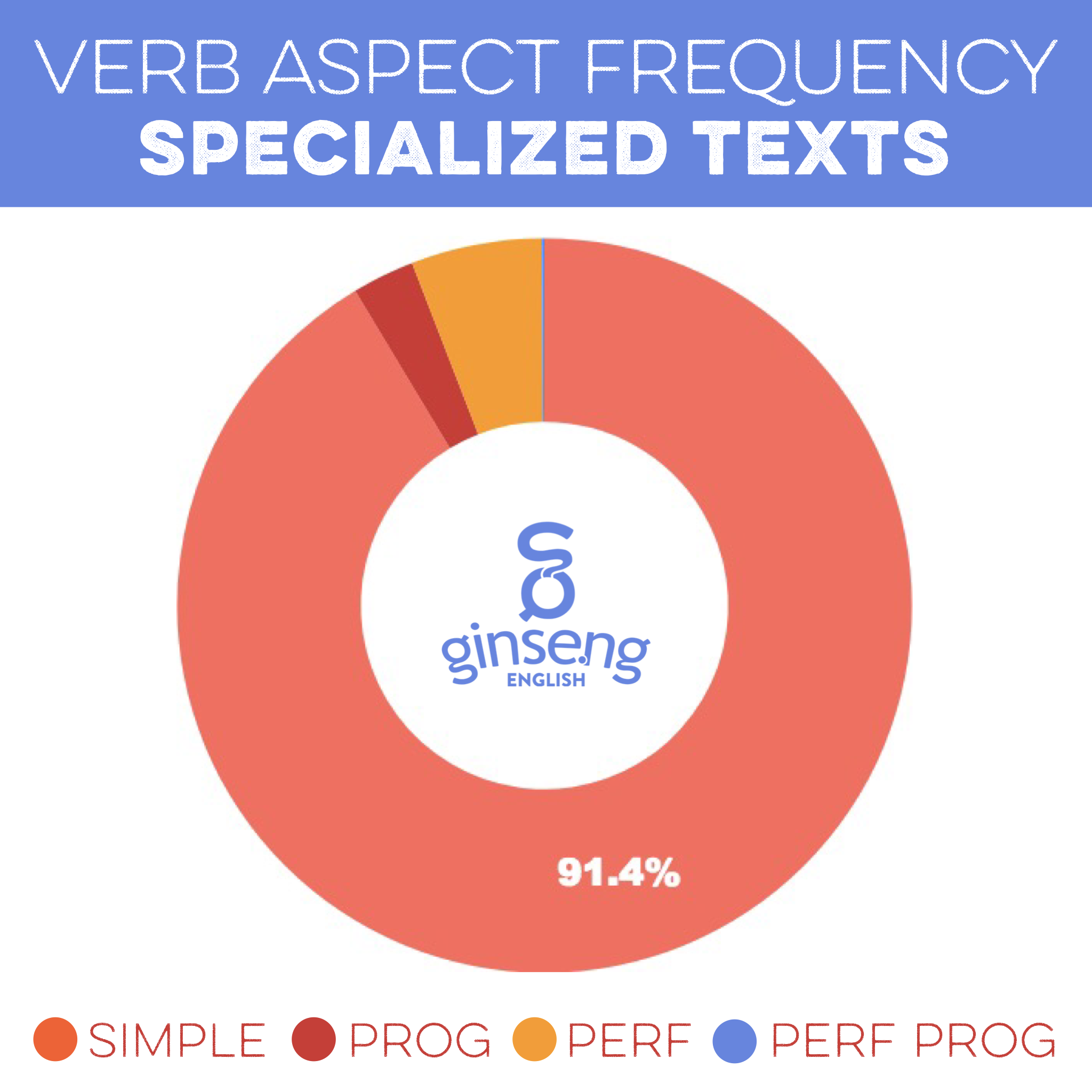
The charts look generally the same. In every style of English, the simple aspect—simple present, simple past, and simple future—makes up over 85% of verbs that we use. The lesser-used aspects all fall in the same order: after simple, it's perfect, then progressive, then perfect progressive gets a tiny little sliver of use. Biber and Reppen (2002) confirm this pattern, observing that the simple aspect is “more than 20 times as common as progressive in conversation.” (p. 204, cited in Alzuhairy (2016).
Alzuhairy (2016) studied academic texts in particular. The same general pattern applies, but simple present only accounts for about 50% of verbs in Alzuhairy’s findings.
Most Used Tenses and Aspects
5 verb forms make up 96% of all verbs in spoken English.
I think this may be one of the most useful insights from Krámský's work for teachers and students. Although there are 12 tense/aspect combinations in English, 5 of these cover around 96% of spoken English.
Notice that the simple present alone accounts for 57% of verbs. Next is the simple past (19.7%), then simple future (8.5%), followed by present perfect (6.0%) and then present progressive (5.1%). If you want to know which verb tenses to learn first, these five will definitely give you the most bang for your buck!
The remaining 7 tense/aspect combinations are each under 1.5% of spoken English verbs. Of course, it is valuable to learn all the combinations, but if you want to prioritize the most useful verb tenses, this should be helpful.
Active and Passive Voice
The passive voice is another of those constructions that challenges students and leads to the question, how useful is this? Well, again, Krámský's work gives us some idea how useful they are. Here is a breakdown of active and passive constructions in the three registers:
The vast majority of verbs in English are in the active voice.
It is not surprising that the vast majority of verbs are active. The most important takeaways that I see are these: 97.5% of verbs in spoken English are active, but the passive voice is much more common in specialized and academic texts, in which only 82.2% of sentences are active.
Complete Table of Most Used Verb Tenses in English
| # | Tense | Frequency |
|---|---|---|
| 1 | Simple Present | 57.51% |
| 2 | Simple Past | 19.7% |
| 3 | Simple Future | 8.5% |
| 4 | Present Perfect | 6.0% |
| 5 | Present Continuous | 5.1% |
| 6 | Past Continuous | 1.4% |
| 7 | Past Perfect | 1.2% |
| 8 | Present Perfect Continuous | 0.7% |
| 9 | Future Perfect | 0.2% |
| 10 | Future Continuous | >0.1% |
| 11 | Past Perfect Continuous | >0.1% |
| 12 | Future Perfect Continuous | >0.1% |
More free grammar resources:


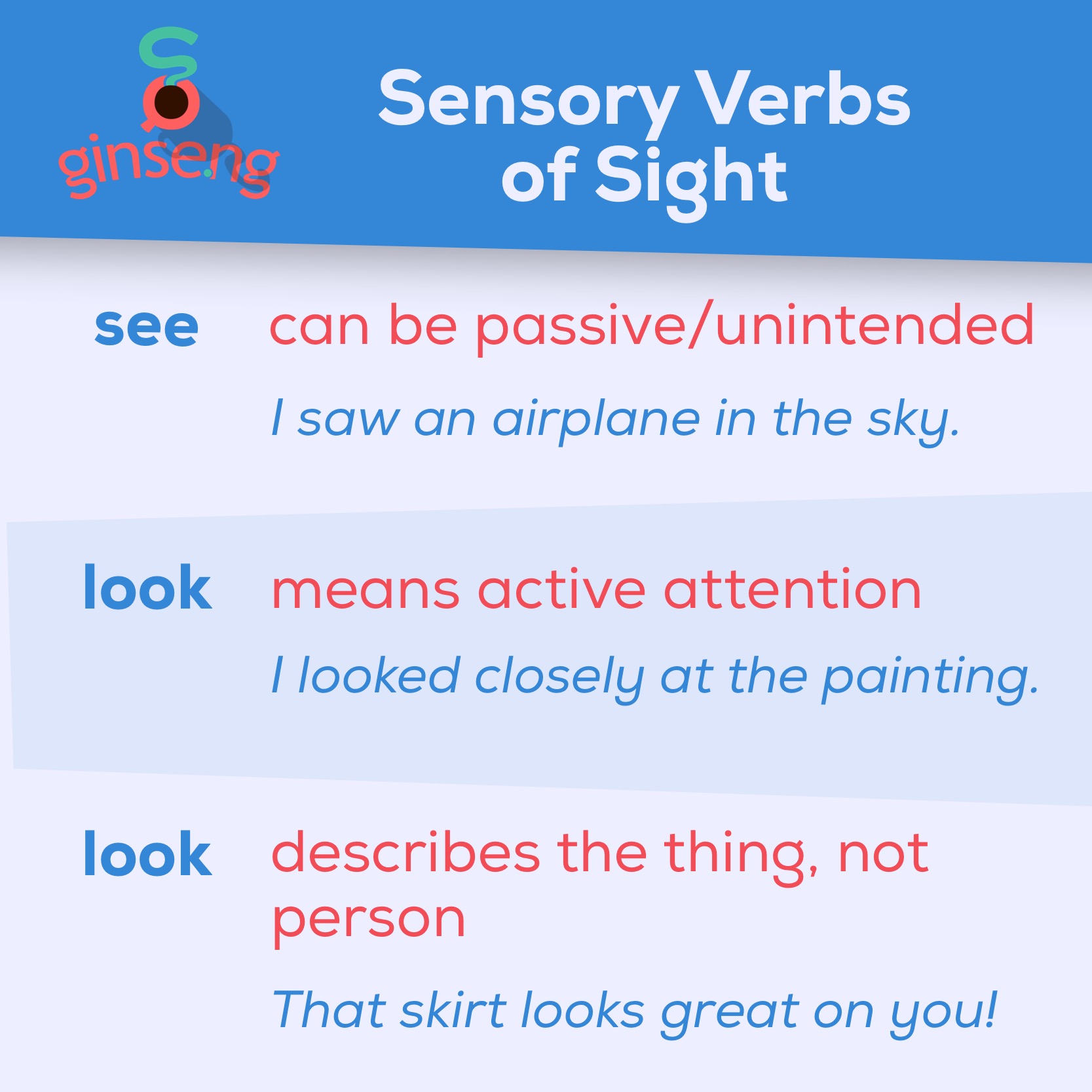
3 Types of -ing Verb
Ready for some challenging academic grammar?
English grammar can be difficult because sometimes the same word works differently in different situations. This is true for -ing verbs, which can do three different things.
Let's look at the 3 types:

Three types of -ing verb
CONTINUOUS VERBS
The man is walking.
This is the most basic one: a present continuous verb. The subject in the sentence is "man" and "is walking" tells us what he is doing right now. If you see an -ing verb after a be verb (am, is, are, was, were), it is probably a continuous verb.
Another name for continuous verbs is progressive verbs. Continuous and progressive mean the same thing.
PARTICIPIAL ADJECTIVES
The walking man lives with my friend Paul.
The man walking across the street lives with my friend Paul.
In both of these sentences, walking works like an adjective, not a verb. Walking describes the man, and the verb in the sentence is lives. When an -ing verb describes a noun, we call it a participial adjective. Participial adjectives can come before or after the noun, but it is more common to put them after the noun.
Read a little more about participial adjectives here.
GERUNDS
The man likes walking.
In this sentence, we have a subject: the man. We have a verb: likes . What is the -ing verb here? It's the thing that the man likes. What does he like? Walking. Walking is the object of like. What are some other things you can like? Sports, travel, English. All nouns. Object of verbs are nouns, so walking is acting as a noun here. That's what a gerund is: an -ing verb that works like a noun.
More free English resources
Watch Your Mouth: Hidden Brain Podcast
Podcasts are not only a great way to enjoy a car ride with friends, make a task like cleaning the kitchen more bearable, and help pass a long bus ride. They are also a great way to learn English!
Watch Your Mouth: Hidden Brain Podcast
Podcasts are not only a great way to enjoy a car ride with friends, make a task like cleaning the kitchen more bearable, and help pass a long bus ride. They are also a great way to learn English!
There are hundreds of great podcasts out there, but when we heard Hidden Brain’s podcast, Watch Your Mouth, we had to share it! This podcast is about whether the structure of languages we speak can change how we see the world, and “how the constantly evolving nature of languages can give us different ways of understanding ourselves as well as the world we live in.” The transcript of this episode is great read too!
A favorite quote from this podcast is, “If you're bilingual or you're learning a new language, you get what Jennifer experienced - the joy of discovering a phrase that helps you perfectly encapsulate a feeling or an experience. The phrase brings an entire world with it - its context, its flavor, its culture. Today, we explore the many facets of this idea. Languages are not just tools to describe the world. They are ways of seeing the world.”
We hope that you enjoy this interesting podcast! If you’re looking for more podcasts suggestions to help you learn English, FluentU has a great list to get you started.
Other FREE English Resources



Nicknames for America
Today’s post is about all the different nicknames that Americans have for their country.
Nicknames for America
Have you ever asked someone where they are from and they answered “the States,” and you wondered, huh…? What state? Where? What does that even MEAN!?
Well, that’s because Americans have many different nicknames for their country. Before you come and study in the U.S., learn more about those names. To avoid future confusion, and maybe to even sound a little more fluent, here are the most popular names for America!
And on that note, today is America’s Independence Day, so Happy July 4th everyone! 🇺🇸
The United States of America
The full, official name of the country, as it’s written on our money and government buildings
The United States
A shorter but still pretty formal way to refer to the country.
America
We often just call the country America. Some of our neighbors in the other countries of North and South America object to our claiming this name, but it’s what we say!
The U.S.
A very common way that many Americans answer the question “Where are you from?”
U.S.A.
This one isn’t so common in speech, but it’s good for when you need to be a little bit clearer. Common in signs and Olympics chants!
The States
A very common, informal abbreviation.
U.S. of A.
A little funny and artistic. We don’t say this too often, but in songs where you need to make U.S.A. into four syllables, this does the trick!
The Land of Opportunity
An old nickname for the U.S. Still true?
The Melting Pot
This nickname refers to the fact that America is a land of immigrants who come together to produce a new culture. Recently, its been proposed that perhaps a stew is a better metaphor, showing that people don’t just “melt” and assimilate, but retain the beautiful aspects of their home culture.
‘Murica
This is a funny one, mimicking the lazy pronunciation you might hear from some hillbillies or rednecks. Often used to make fun of overly patriotic people.
Other English Resources
...And Sometimes Y?
How Many Vowels Are There?
How many vowels are there in English? Five? Six? Twenty? Five and a half?
If you ask an American what the English vowels are, we will almost all say the exact same thing that we learned in school as children:
A, E, I, O, U, and sometimes Y.
Ellen Degeneres recently tweeted at NSYNC, and she jokingly congratulated for making a major accomplishment "without a vowel" in their band name. However, as many people (including Ginseng) explained, Y is a vowel in NSYNC. Ellen was just making a joke, of course, but many people, learners and native speakers alike, really don't understand what it means when we say that Y is "sometimes" a vowel.
Let's look a little closer at what exactly we mean when we say "and sometimes Y" in order to help us understand several important aspects of English pronunciation and spelling.

Vowels and Consonants
Before we can say how many vowels there are, we need to clarify what exactly a vowel is. The answer is not as simple as you may think. The most common dictionary definitions say something like this:
vowel (n.)
1. a speech sound in which air flows out through the mouth and is not blocked by the teeth, tongue, or lips;
2. a letter representing one of these sounds.
On the other hand, consonant is usually defined something like this:
consonant (n.) - any speech sound or letter that is not a vowel.
So a vowel is a sound made with your mouth open, and a consonant is basically every other sound.
Sounds and letters
You may have noticed that the definitions of consonant and vowel above talk about both sounds and letters, and this is where the confusion comes from. Sounds and letters are different things. Letters are written and are meant to represent the sounds in a language.
However, you have probably noticed that English sounds and letters don't have a perfect correspondence. For example, sometimes the letter C sounds like S (as in city) but other times it sounds like K (as in cat).
This is especially true about vowels. If we ignore Y for a moment, there are 5 vowel letters: A, E, I, O, U. However, if we look at vowel sounds there are between 14 and 21 (depending on the accent).
How is this possible? Think about the different sounds that A makes in the words father, bake, and cap, and the different U sounds in put, cup, and nuke.
The most important idea here is that letters can make different sounds.
Why is Y Special?
Okay, but we're talking about Y, right? Is it a consonant or a vowel!? How many vowels are there!? We need a number!
So, like many other letters, the letter Y represents many different sounds. You can see the most common ones in the words only, cry, myth, and yet.
Let's look more closely at those examples: in only, Y makes the long E sound /i/, the same sound E makes in we. In cry, Y makes the long I sound /aɪ/, pronounced like the I in mine. In myth, Y makes the short I sound /ɪ/, the same sound as the I in kid. As you can see, these are all vowel sounds.
The Y in yet is different. It isn't really a sound that other letters frequently make. Its "the Y sound" /j/. And this is a consonant sound. If you make this sound, you will feel that the back of your tongue rises up toward the top of your mouth. Remember, when we block or obstruct the air to make a sound, this is what makes a consonant.
So the reason that the letter Y is sometimes a vowel and sometimes a consonant is that it makes several different sounds. Some of these sounds are vowel sounds, and one is a consonant sound. In the words only, cry, and myth, Y is a vowel. In yet, yellow, and you it is a consonant.
In case you were still wondering about Ellen's NSYNC tweet, the Y in NSYNC is definitely a vowel.
Y is Almost Always a Vowel
So we know why Y is sometimes a vowel, but we were curious: How often is Y a vowel and how often is it a consonant. How common are the different sounds that Y makes? The answer was not easy to find, but eventually we came across an academic paper that contained the answer we needed.
It turns out that Y is not just "sometimes" a vowel. It is almost always a vowel. It is only a consonant around 2.5% of the time. That means about 97.5% of the time it is a vowel. By far, the most common sound it makes is long E /i/. As you might guess, this is probably because -y and -ly are very common suffixes in English.
Next time you hear someone say "A, E, I, O, U, and sometimes Y," you can correct them: "A, E, I, O, U, and 97.5% of the time Y!"

What is Ginseng?
Well, you already know that Ginseng is an online English school. But as we talk to more and more people around the world about Ginseng, we’ve learned that more and more people want to know about the word ginseng:
What does it mean?
How do you pronounce it?
Why is it the name of an English school!?!?
Well, ask and you shall receive. Let's get some answers to those questions!
What is Ginseng?

Ginseng Root
Ginseng is a plant! And it's a funny plant because the root—the underground part of the plant—is more famous than the flowers and leaves.
Ginseng has been used in Chinese medicine for centuries to help people relax. Some people even say it improves your memory!
The word ginseng comes from the Hokkien pronunciation (/jîn-sim/)of the Chinese word (人参) for the plant. That literally translates to person-root, because the root often has two “legs” and looks like a person.
How do You Pronounce Ginseng?
First, that G is soft. This means it sounds like an English J, as in jump. G is often—but not always—pronounced this way when it is before either an E or an I.
The first syllable sounds exactly like the word gin, a common alcohol. It also sounds like the first syllable in ginger, another root.
The last syllable sounds exactly like the English word sing. The E is pronounced like a short I sound. (Note: some people pronounce the -seng with a short E sound, but that's not what we say for Ginseng English).
The stress in the word is on the first syllable. So all together, the word ginseng is pronounced jin-sing (IPA: /ˈdʒɪn sɪŋ/).
Why did you name the school Ginseng?
Lots of reasons! Many of the best brands out there are not literal descriptions of what the company does. Think about Google, Nike, Mercedes. This was the type of brand we wanted. We didn't want to be Rob’s Online English School. We wanted something more abstract and suggestive, something evocative.

Early logo for Engma English
The first idea was Engma, the name for this symbol: ŋ. After a while, we decided that this was a little too esoteric and just didn't work for our company.
Ginseng worked better for a couple of reasons:
We first started considering this name because of its sound. It’s one of the only other words in which the letters E-N-G are pronounced /ɪŋ/ like they are in Eng-lish.
Also, ginseng has lots of positive connotations: it's relaxing and it helps your memory. These are two very important things for learning a language!
What about that logo?
Ginseng root is often made into a relaxing tea, so our logo is a steaming cup of tea to help you relax while you learn English with us! As you may have noticed, it’s also our letter G, upside-down!
More about Ginseng English


Silent G Words
If you’re looking for explanations and examples of words with silent G, you’ve come to the right place. Charts, definitions, word lists, and the history of how silent G became silent.
Everyone seems to love to learn about words with silent letters, so here's another! G is often silent as well. Notice the pattern here: it almost always comes before an N. Just ignore the G and pronounce the N sound. Notice that the G does not really affect the vowel sound if it comes after a vowel.
| Word | IPA | PoS | Definition |
|---|---|---|---|
| gnat | /næt/ | n. | a very small flying insect |
| gnome | /noʊm/ | n. | a fictional being like a dwarf |
| gnash | /næʃ/ | v. | to grind the teeth togther |
| sign | /saɪn/ | n. | a symbol |
| foreign | /ˈfɑrən/ | adj. | from a different place |
| campaign | /kæmˈpeɪn/ | n. | a series of actions for one goal |
| align | /əˈlaɪn / | v. | to put in a line |
If you like this, check out these free resources on silent letters:
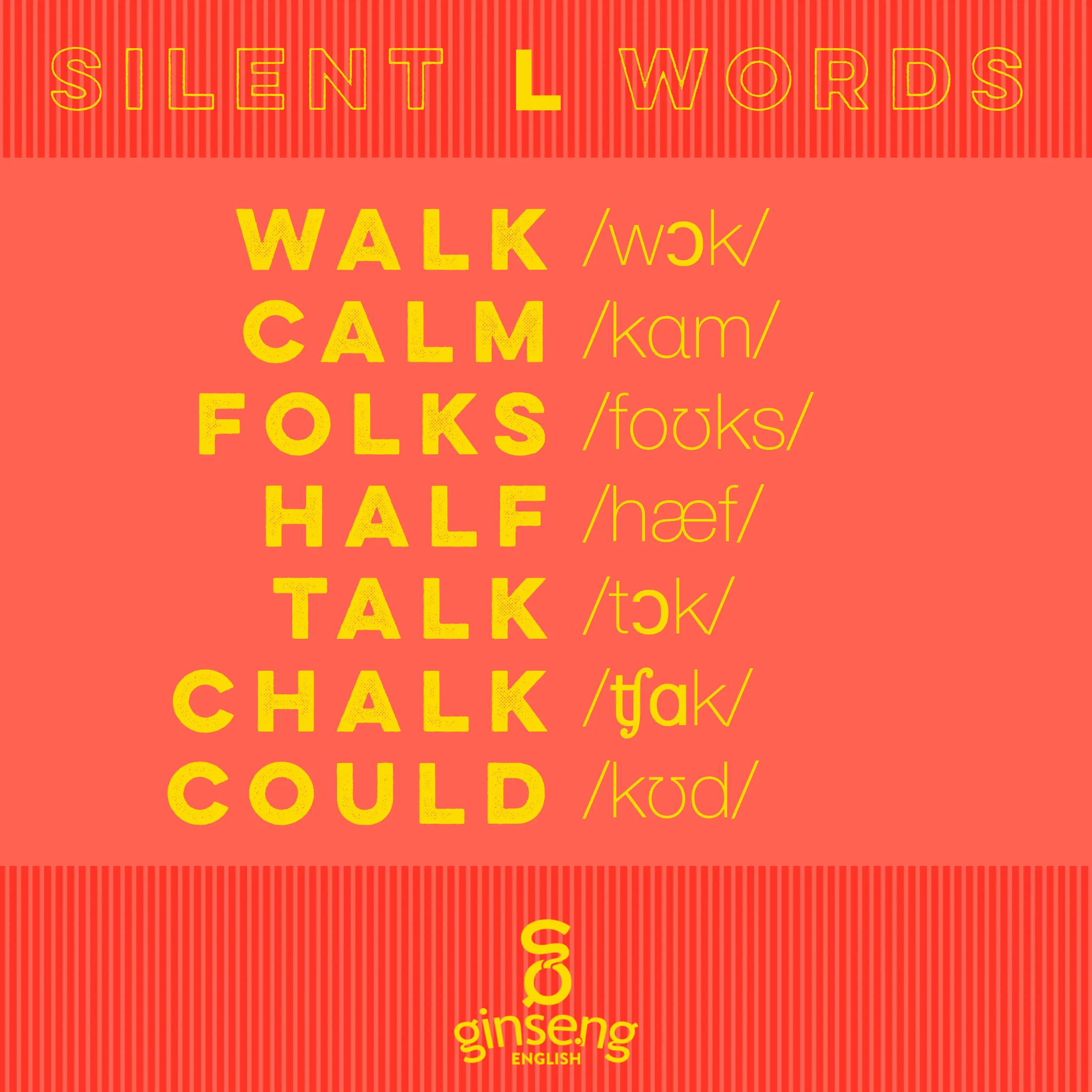
You might also find our other blogs about English pronunciation such as Silent K, Silent B, Silent N and Silent L, and Deleted Syllables to be helpful too!
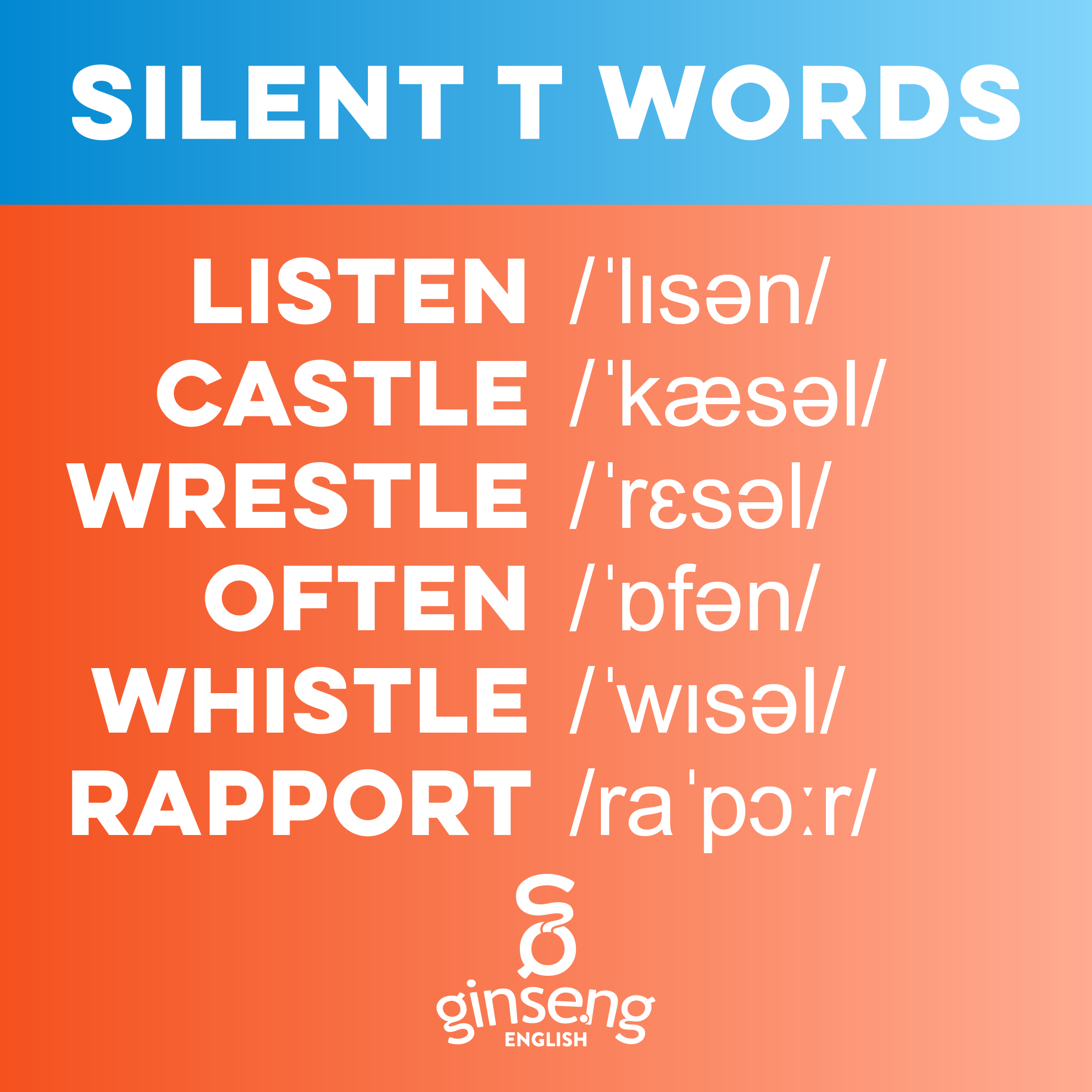

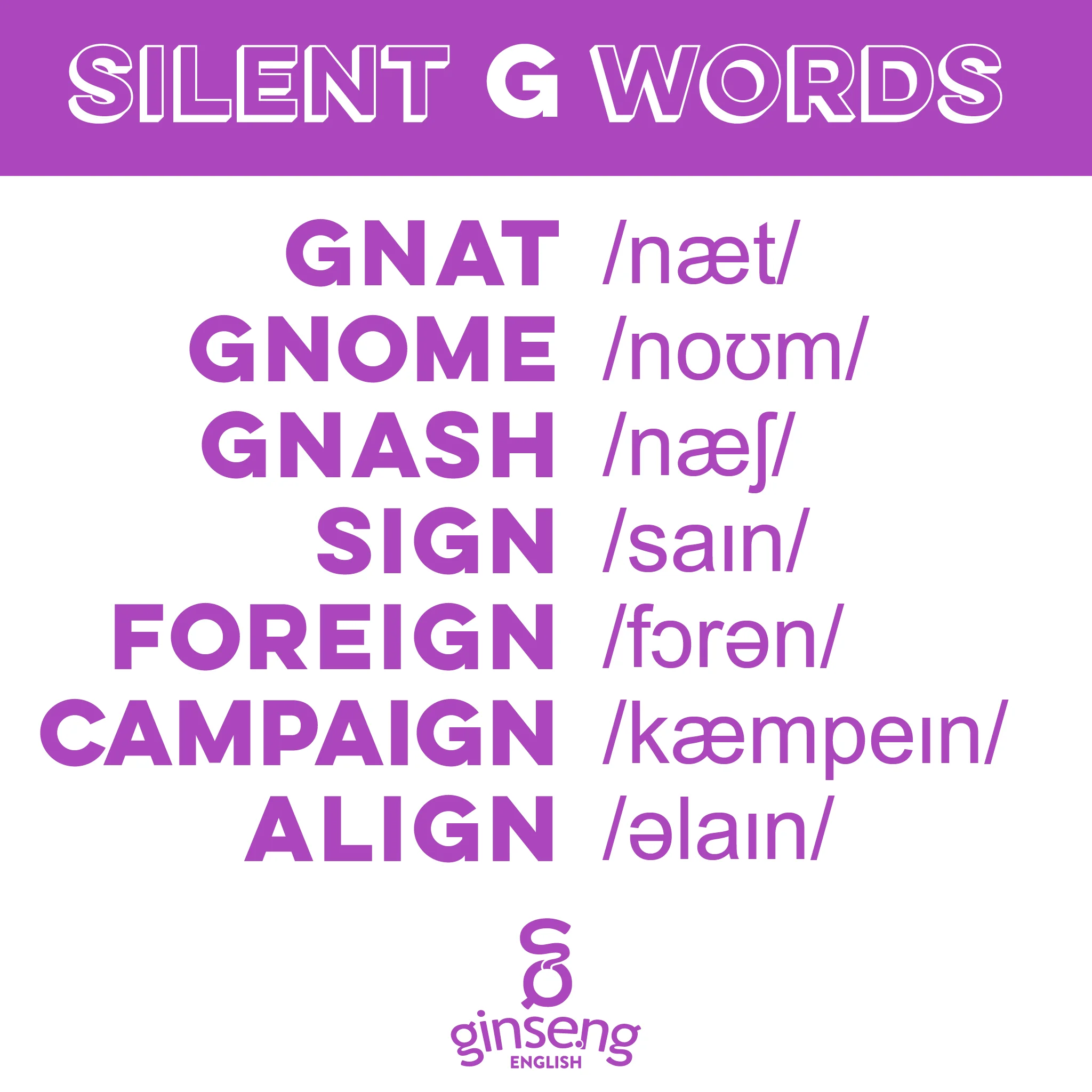
Silent G Words in English. Feel free to share the graphic and link back to Ginseng!
C-V-C Words
The C-V-C Pattern
One of the craziest things about learning English is the relationship between spelling and pronunciation. We don't even need to talk about ought, enough, through, etc, right?
But there are some patterns to learn that can make English a little less crazy. Today let's talk about one of the most important ones: C-V-C words.
But what does C-V-C mean???
I'll tell you. C-V-C means consonant-vowel-consonant. A C-V-C word is a three-letter word that follows the spelling pattern of a consonant, then a vowel, and then another consonant. Remember, vowels are the letters A, E, I, O, U (sometimes Y!), and consonants are all the other letters. For example, top. T is a consonant. O is a vowel. P is a consonant. C-V-C.
Here are some more examples of C-V-C words:
| c | a | t |
| c | v | c |
| r | e | d |
| c | v | c |
| b | i | g |
| c | v | c |
| h | o | p |
| c | v | c |
| b | u | n |
| c | v | c |
Can you see the pattern?
Now, why is this important? It is important because if you can recognize a C-V-C word, you can almost certainly pronounce it, even if it's a new word for you! That's because in C-V-C words, the vowel is almost always a "short" vowel.
Check out the list of the short vowel sounds with examples in the chart.
Double Consonants and C-V-C Words
There is another reason that consonant-vowel-consonant words are important. This one is a little more difficult.
Maybe you know that in English, we sometimes need to double a letter when we add a suffix like -er, -ed, -ing, and -est. This is important for comparative and superlative adjectives, the simple past tense, and the present progressive. For example mad becomes madder, nap becomes napped, win becomes winning, and big becomes biggest. For these words we have double consonants, but not always: nicer, hoped, mining, poorest. At first, this can be very confusing. When do we double the consonant!? How do we know!? C-V-C words!!! You generally need to double the last consonant when adding a suffix to a C-V-C word. There are some exceptions: generally we do not double the consonants W, X, or Y.
Longer C-V-C words
Above we defined C-V-C words as 3-letter words. That makes sense: C + V + C = 3 letters, right? But actually, there are more C-V-C words. It is really about the end of the words. Any one-syllable word that ends in C-V-C also follows the pattern above. Here are some other examples:
| s | t | r | a | p |
| c | v | c |
| s | h | r | e | d |
| c | v | c |
| c | l | i | p |
| c | v | c |
| d | r | o | p |
| c | v | c |
| s | m | u | g |
| c | v | c |
There is one other type of C-V-C word. All of the C-V-C words so far have been one syllable, and most C-V-C words are only one syllable. But some two-syllable words also follow this pattern. Two-syllable words ending in C-V-C, with the stress on the second syllable also follow the C-V-C pattern. The stress is very important here. There are not many words like this, and most are just a prefix added to a shorter word. Most two syllable words have stress on the first syllable. But when you do find a two-syllable word ending in C-V-C, with the stress on the second syllable, you know that you should double the consonant when adding -ed, -ing, -er, or -est.
| en | t | r | a | p |
| c | v | c |
| r | e | g | r | e | t |
| c | v | c |
| s | u | b | m | i | t |
| c | v | c |
| d | e | f | o | g | |
| c | v | c |
| d | e | b | u | g |
| c | v | c |
Complete list of C-V-C Words
Below is a complete list of words that follow the consonant-vowel-consonant pattern.
C-V-C Words with A
bad, bag, bam, ban, bat, cab, cad, cam, can, cap, cat, cav, dab, dad, dam, dap, fab, fad, fan, fat, fax, gab, gag, gal, gap, gas, gat, had, hag, ham, has, hat, jab, jam, lab, lad, lag, lap, mad, mag, man, mat, max, nab, nag, nap, pad, pal, pan, pat, rad, rag, ram, ran, rap, rat, sac, sad, sag, sap, sat, sax, tab, tad, tag, tan, tap, tar, tat, tax, vac, van, vat, wad, wag, wan, war, was, wax, yak, yam, yap, zag, zap
C-V-C Words with E
bed, beg, bet, cel, den, fed, fen, fez, gel, gem, get, hem, hen, hex, jet, keg, led, leg, let, med, men, met, net, peg, pen, pep, pet, red, rep, rex, set, sex, ten, veg, vet, vex, wed, wet, yen, yet, zed, zen
C-V-C Words with I
bib, bid, big, bin, bit, did, dig, dim, din, dip, fib, dig, fit, fix, gig, gin, hid, him, hip, his, hit, jig, kid, kin, kit, lid, lip, lit, mix, nib, nil, nip, nix, pig, pin, pit, rib, rid, rig, rim, rip, sib, sim, sin, sip, sis, sit, six, tin, tip, wig, win, wit, wiz, yip, zig, zip, zit
C-V-C Words with O
bob, bod, bog, bon, bot, box, cob, cod, cog, com, con, cop, cot, coz, dog, dom, don, dot, fob, fog, fox, god, got, hob, hog, hop, hot, job, jog, jot, lob, log, lop, lot, lox, mob, mod, mom, mop, nod, nog, nor, not, pod, pom, pop, pot, pox, rob, rod, rot, sob, sod, sog, son, sop, sot, tom, ton, top, tot, won
C-V-C Words with U
bud, bug, bun, bus, but, cub, cup, cut, dub, dud, dug, fun, gun, gut, hub, hug, hum, hun, hut, jug, jut, lug, mud, mug, mum, nub, nut, pub, pug, pun, pup, pus, put, rub, rug, rum, run, rut, sub, sud, sum, sun, sup, tub, tug, tut, tux, yum, yup
Exceptions
Some words look like C-V-C words, but aren't exactly. For example words that end in -AY and -AW are not really C-V-C words, because the -AY and -AW actually combine into a new vowel sound. The same is true for -OY words and -OW words.
Words ending in vowel-R often follow the spelling patterns of other C-V-C words, but R changes the pronunciation of the vowel before it, creating a sound that is not exactly a short vowel. We call these new vowel sounds R-colored vowels.
More free English resources
Read Next
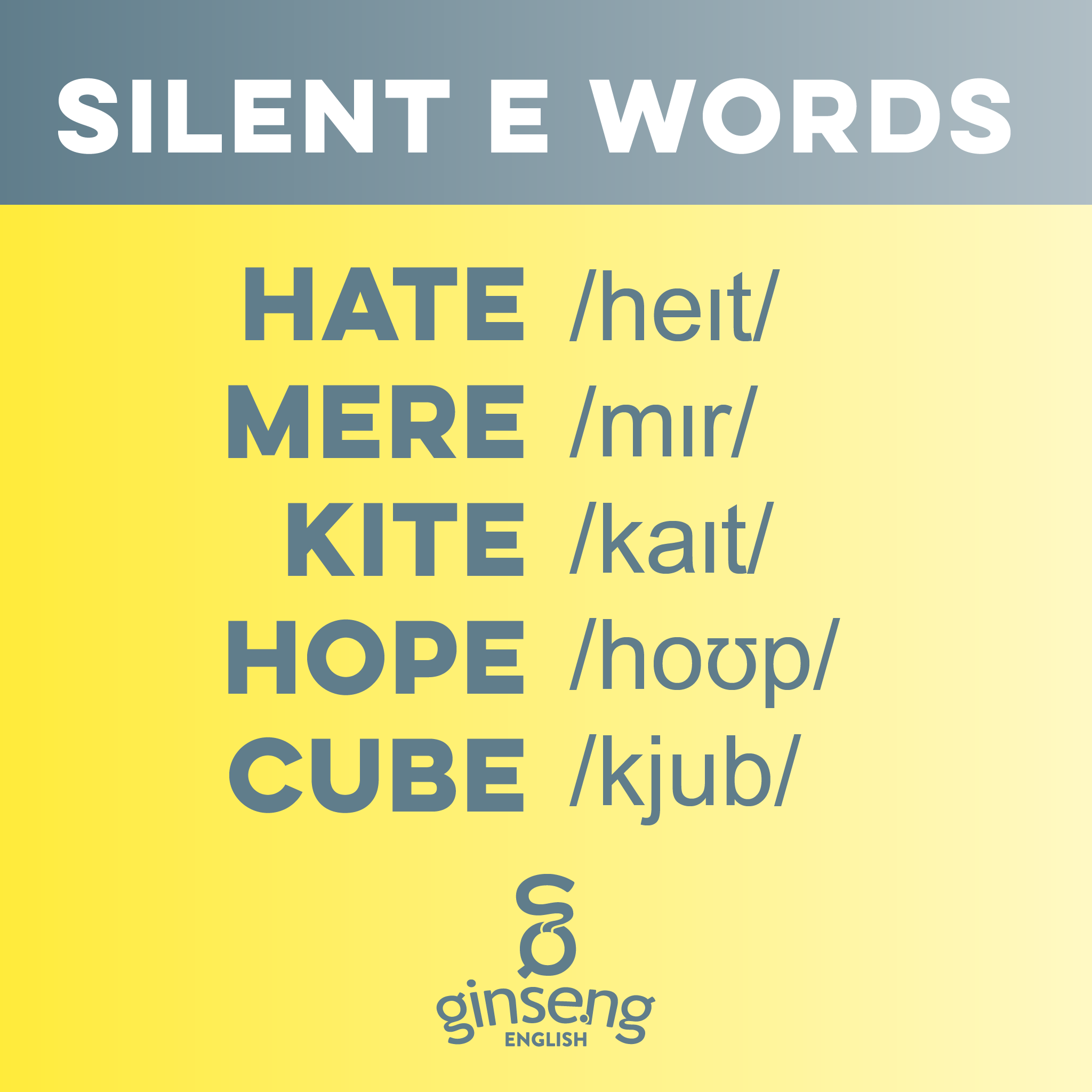
C-V-C -E Words
Parts of a Laptop
English Vocabulary - Parts of a Laptop
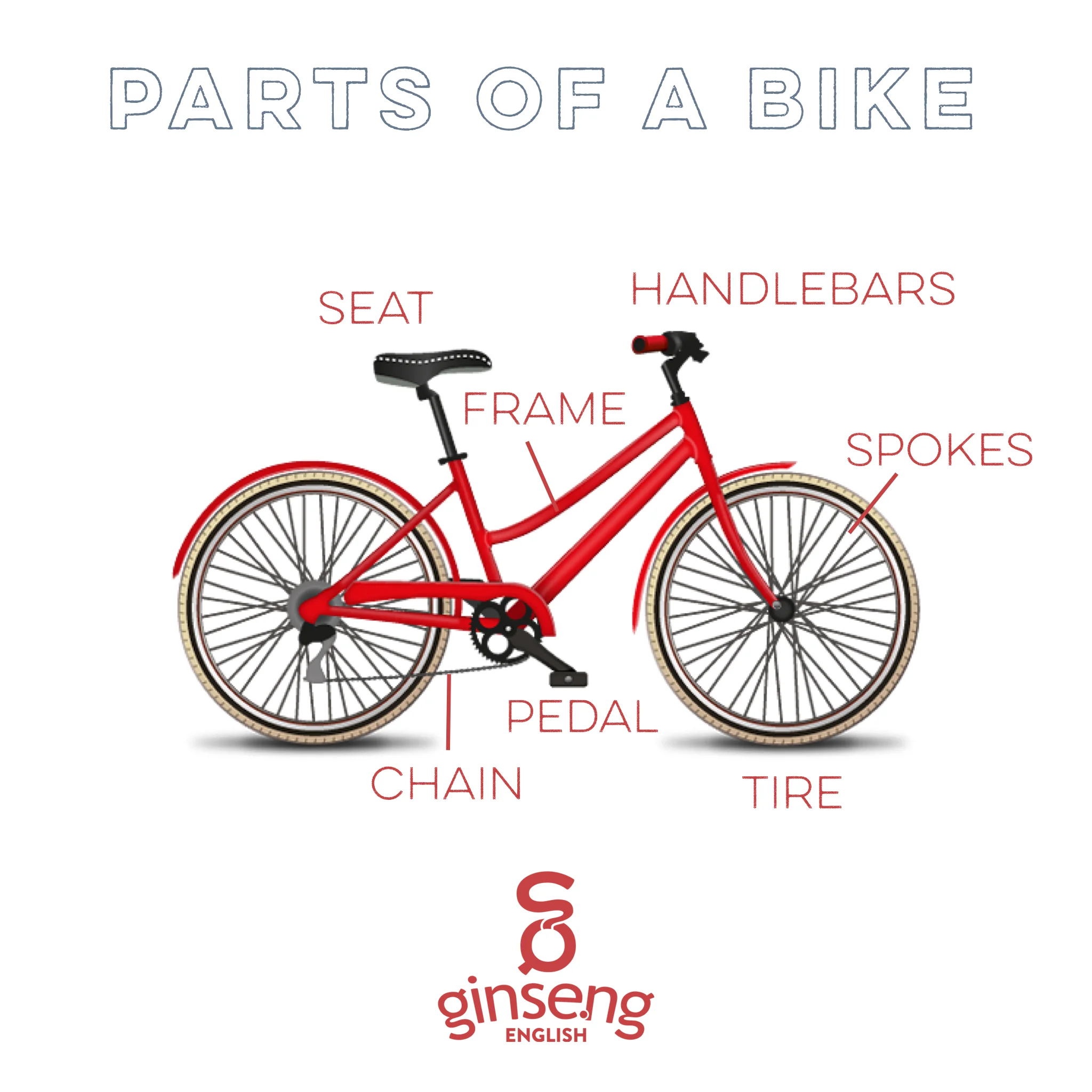
Today lets learn English words to talk about parts of a laptop. As you may know, a laptop is a computer you can close like a book and take with you. Larger computers that you cannot take with you are called desktops, because they sit on top of a desk. A laptop sits on top of your lap (your lap is the upper part of your legs, which is horizontal when you sit!
The part of the laptop that you look at is called the display. Display is also a verb: your computer displays pictures, videos, and websites. Some people call this a screen, too. Screen is a more general word—your TV has a screen, there is a screen at the movies—but display is better for computers. On most laptops, there is an area around the display that doesn't show pictures, like a frame. We call this the bezel. In the middle of the bezel, above the display, you probably have a webcam: a camera that you can use on the web.
The part of the laptop with the letters is called the keyboard. A board is a flat surface, and this board is covered with buttons called keys; that's why we say keyboard! In front of the keyboard is a touchpad, which you can touch to move your cursor (the arrow on your computer screen).
On the sides of the laptop (not shown in this picture) you may have many different ports to plug in your power cord, headphones, or a USB cord.
More free English resources



Parts of a Laptop Computer

Silent Syllables
So, we all know by now that English is crazy, right? We have talked about silent N and silent K and silent L and silent B. But English is even crazier. It's not just letters that are silent. We have silent syllables in English, too!*
What is a Syllable?
A syllable is a part of a word with one vowel sound and the consonants around it. For example, the word working has two vowel sounds, so it has two syllables. We often show syllables like this: wor-king. Often one syllable is stronger than the others, and we can show this, too. In the word working, the first syllable is stronger. This is called the stressed syllable. We can show the stressed syllable in different ways:
wor-king, WOR-king, 'wor-king
Some words only have one syllable, like big, cat, and think. Some words have LOTS of syllables, like an-ti-dis-es-tab-lish-men-tar-i-an-ism.
Why are Some Syllables Silent?
Like we said, some syllables are strong. That means some other syllables are weak. When we are speaking quickly, over many many years, the pronunciation of the word changes, and some syllables eventually become so weak that they are completely silent.
How Do I Know If a Syllable is Silent?
You don't. Sorry! There are some patterns for where silent syllables happen (for instance, they are always in the middle of a word, they are often the syllable before an R sound, they are almost always the syllable after the stressed syllable), but it's really not a good idea to guess that a syllable will be silent. There are only a couple dozen words in English that have silent syllables, so your best strategy is to learn which words they are.
That's why we've assembled this list! Please comment below if you have any words for us to add to the list!
| Word | Syl | Pronunciation | Audio |
|---|---|---|---|
| miserable | 3 | miz-rable | |
| vegetable | 3 | veg-ta-ble | |
| business | 2 | biz-ness | |
| comfortable | 3 | kumf-ter-ble | |
| chocolate | 2 | chok-let | |
| family | 2 | fam-ly | |
| aspirin | 2 | as-prin | |
| separate | 2 | sep-ret | |
| interesting | 3 | in-tre-sting | |
| laboratory | 4 | lab-ra-to-ry | |
| every | 2 | ev-ry | |
| several | 2 | sev-ral | |
| average | 2 | av-reg | |
| favorite | 2 | fav-rit | |
| conference | 2 | con-frence |
Are These Syllables Always Silent?
Now, some of you are probably thinking, "But I KNOW I've heard people say in-te-res-ting with 3 syllables!!!" You probably have! Every time we pronounce a word, it sounds a little bit different. Sometimes when we are speaking slowly or emphatically, we might pronounce the silent syllable in miserable or interesting. This sounds confusing, but don't worry! If you leave the syllable silent, it will never be wrong!
*Note: Deleting syllables is a common phenomenon in American English, but it may not happen in all varieties of English.

More Free English Resources
To read more about English pronunciation check out these blog posts on the Silent N, Silent L, Silent B, Silent G, and Silent K.
Silent K Words
If you’re looking for explanations and examples of words with silent K, you’ve come to the right place. Charts, definitions, word lists, and the history of how silent K became silent.
Silent K Words
There are many letters that we see and write but do not pronounce. These silent letters are a challenge. But there are many patterns we can learn to make reading and pronunciation easier. Silent K is a common pattern.
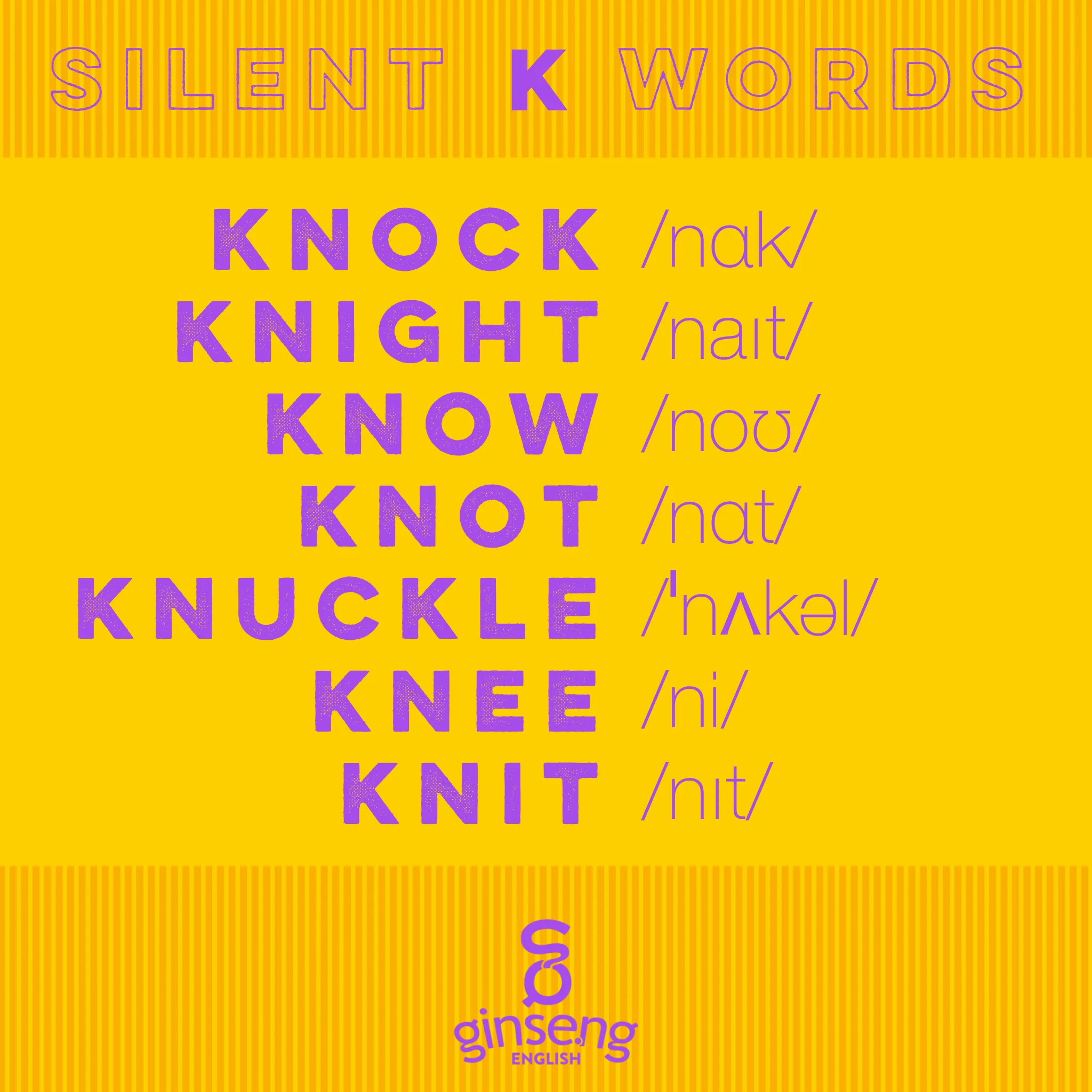
If you see a word that starts with KN-, you only pronounce the N. So knight sounds exactly the same as night and knot is pronounced exactly the same as not. Notice that this is very similar to the pattern for silent G words.
Like many silent letters, the K was not always silent. In Old English, the word knight was once cniht and knot was once cnotta, and the K sound at the beginning used to be pronounced, up until about the 17th century. But because the K-N combination is difficult to pronounce, over hundreds of years we elided it until it disappeared completely. In many other Germanic languages, the K is still pronounced in related words.
Examples
Here's a word list with 15 examples of silent K words.
| Word | IPA | PoS | Definition |
|---|---|---|---|
| knock | /nɑk/ | v. | to hit sth with the knuckles |
| knight | /naɪt/ | n. | a soldier who wore armor |
| know | /noʊ/ | v. | to have in your mind |
| knot | /nɑt/ | n. | the part where rope is tied |
| knuckle | /ˈnʌkəl/ | n. | a joint in the fingers |
| knee | /ni/ | n. | the large joint in the leg |
| knit | /nɪt/ | v. | to make something from yarn |
| knife | /nʌɪf/ | n. | a tool with a blade for cutting |
| knob | /nɒb/ | n. | a ball-shaped handle |
| knack | /nak/ | n. | a natural skill |
| knickers | /ˈnɪkərz/ | n. | an old word for pants |
| knead | /niːd/ | v. | fold dough by hand |
| knapsack | /ˈnapsak/ | n. | a backpack |
| knickknack | /ˈnɪknak/ | v. | a small decorative object |
More free resources on silent letters
Dying to learn more English pronunciation? Take a look at our other blog posts about Silent N, Silent L, Silent B, Silent G and Deleted Syllables.

5 Myths About Learning English

Learning English is tough. And it's even tougher because there's lots of bad information about what makes good education. Today, let's look at five myths—things that many people believe, but that are not true—about learning English.
1. We learn vocabulary and grammar in the order that we study.

Many students assume that there is a logical order to the English grammar items and vocabulary words that you should try to study. They think that if we arrange things from "simple" to "complex" and study them in that order, we will learn them in that order. Most English textbooks are designed around this idea, but that simply isn't how it works.
Research shows that, yes, there are some basic patterns. But many factors, such as your first language, can really change the order that you learn grammar or vocabulary. This does not necessarily mean that we should not study grammar or vocabulary directly, but most experts now say that the curriculum should be based around something other than grammar topics.
“Some studies suggest that second language learners acquire a second language in different orders depending on their native language.”
2. Native speakers are better teachers

There are English schools around the world that advertise, "English Lessons with Native English Teachers!" These are especially common online (see below). And many English learners seem to share the idea that native speakers are the best teachers. But why?

An ad emphasizing "native speakers."
35 #Languages. Flexible Schedules. Engaging, Native-Speaking Teachers. The Best Location in #LA. Next term Oct 30th! https://t.co/TlriJjFIMS pic.twitter.com/3kXqc2Tiq3
— BH Lingual Institute (@BevHillsLingual) September 20, 2017
A native speaker of English did not have to study and learn the language as an adult. They haven't necessarily experienced all the same challenges and struggles as someone who learned the language at a later age. Native speakers can often follow English grammar patterns without knowing what that grammar pattern is, so they can do it but they cannot teach it.
“‘All sorts of people are fluent, but only a tiny proportion of them are sufficiently aware of the structure of the language that they know how to teach it.’ ”
They can probably pronounce TH, but they might not be able to tell you how to pronounce TH. In other words, a native speaker might have the ability to speak English very well, but they often don't have the skills needed to teach English well. As linguist David Crystal puts it, "All sorts of people are fluent, but only a tiny proportion of them are sufficiently aware of the structure of the language that they know how to teach it." In many ways, a non-native English speaking teacher can be more helpful than a native speaker! Of course, there are very good native and non-native teachers, but skill and qualification as a teacher is much more important than your first language.
Check out this article at TEFL Equity Advocates to learn more about how we select the best teachers at Ginseng.
3. Accuracy is the most important thing

So many of my students tell me that they want me to correct them every time they make a mistake in their speaking or writing. My response is, "No, no you don't want that." When students ask this, they assume that English is all about accuracy, and that improving your English means eliminating errors from your English.
But English is about a lot more than accuracy. In fact, focusing too much on accuracy can really limit your fluency, your ability to speak rapidly and naturally, and fluency is an important part of language learning. If you are too worried about making mistakes, you might also avoid more challenging, complex structures, and complexity is another important part of language learning. As your understanding of the language develops, you need to try more complex sentences and structures, and you will make mistakes as you experiment. Those mistakes are important, and if you have someone correcting you every time you make a mistake, you won't experiment as much!
Accuracy is important but it's not everything! We need to balance accuracy, fluency, and complexity as we learn English.
4. Learning English should be a constant challenge

Learning a language can be a challenge, but that doesn't mean that everything you do in English class should be as difficult and challenging as possible. Generally, you just want small challenges: new language that is just a little above your current level. This is called comprehensible input. Comprehensible means you can understand it. Input is language that you take in.
But there is also a lot of important language acquisition that happens when you are doing things in English that are not challenging at all! Extensive reading, or easy pleasure reading, is very important to developing your English. So is casual conversation, which can really develop fluency!
Make sure that you spend some time challenging yourself with English that is just above your level, and some time using the English that you already know. Again, it's all about balancing those two!
5. Progress in English is linear

This can be really frustrating, but learning English is not a straight line from no English to fluent English. Some parts of the language you will learn quickly. Others will take years. Generally we learn a lot in the first year or two that we study, and our learning slows down after that. Sometimes it will even seem like your English is getting worse! Don't worry. All of this is common and part of the process.
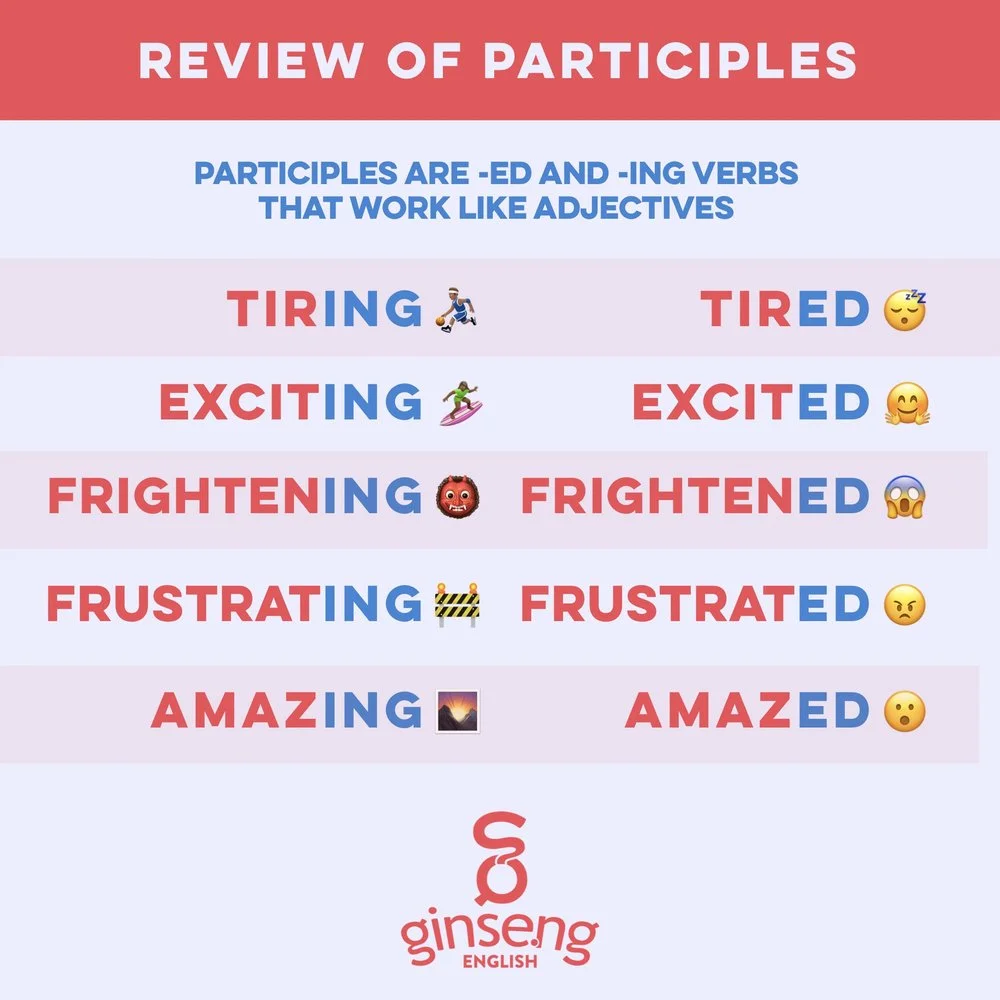
Review of Participles
Remember:
Participles (or participial adjectives) are verbs with -ED and -ING endings that can work like adjectives, describing people and things.
-ED participles (past participles) usually describe how we feel, as in, "I feel exhausted."
-ING participles (present participles) usually describe things that make us feel that way, as in, "That hike was exhausting."
If you found this Ginseng English tip helpful, please share with #ginsenglish and follow @ginsenglish on Twitter, Instagram, and Facebook! Also, consider signing up for our online English courses!

Portmanteau Words
A portmanteau word is a words that is made by combining two other words.
Portmanteau is a French word (pronounced /pɔːtˈmantəʊ/ in English) for a big suitcase that can hold many things. Because these words "hold" more than one other word inside them they were called portmanteaus by Lewis Carroll, the writer of Through the Looking Glass, who enjoyed using them in his writing).
English Portmanteau Words
Have you ever felt so hungry that it made you angry? We call that feeling hangry in English! Ever wondered if someone was your friend or enemy? Frenemies! What's an icon that expresses an emotion? An emoticon!
What is a Portmanteau?
First, let's define portmanteau. A portmanteau word is a words that is made by combining two other words.
Portmanteau is a French word (pronounced /pɔːtˈmantəʊ/ in English) for a big suitcase that can hold many things. Because these words "hold" more than one other word inside them they were called portmanteaus by Lewis Carroll, the writer of Through the Looking Glass, who enjoyed using them in his writing).
Although the French plural of the word is portmanteaux, in English we can just say portmanteaus
How we form portmanteaus
Usually, it's the first half of one word added to the second half off another word. For example, a TV show that has both drama and comedy is sometimes called a dramedy. If you want to chill and relax with your friends, you can say, We're just chillaxing. When they first made hotels that where you could park your motorcar, they called them motels.
One of our favorites is brunch, which is breakfast + lunch. What could be better?
Not all portmanteaus are formed in the same way, though. For example, you have probably heard the word sitcom used to describe shows like Friends and How I Met Your Mother, right? Well, sitcom comes from the phrase situational comedy.
Surprising Portmanteaus
Oxford Dictionaries points out that there are some common words that you may not realize are portmanteaus:
moped = motor + pedal
modem = modulator + demodulator
motel = motor + hotel
dumbfound = dumb + confound
bash = bang + smash
hassle = haggle + tussle
web + seminar = webinar
brother + romance = bromance
friend + enemy = frenemy
hungry + angry = hangry
Examples of Common Portmanteaus in English
Here's a longer list of portmanteau examples. After each word in the list are the two words that form it and its definition.
| # | Word | Part A | Part B | Definition |
|---|---|---|---|---|
| 1 | hangry | hungry | angry | so hungry you are angry |
| 2 | motel | motor | hotel | a hotel for people driving |
| 3 | podcast | iPod | broadcast | a radio show for iPods or smartphones |
| 4 | spork | spoon | fork | a spoon with tines on the end |
| 5 | brainiac | brain | maniac | someone very smart |
| 6 | emoticon | emotion | icon | an icon that expresses an emotion |
| 7 | snark | snide | remark | sarcasm, especially online |
| 8 | dramedy | drama | comedy | a show with both serious and funny parts |
| 9 | sitcom | situational | comedy | a tv show based on funny situations |
| 10 | frankenfood | Frankenstein | food | genetically modified food |
| 11 | Bollywood | Bombay | Hollywood | the Indian movie industry |
| 12 | bromance | brother | romance | a close friendship between men |
| 13 | crunk | crazy | drunk | really drunk and crazy |
| 14 | edutainment | education | entertainment | educational entertainment |
| 15 | mansplaining | man | explaining | when men explains to women rudely | 16 | sexture | sexy | texture | a sexy, messy hairstyle |
Can you add any to this list?
Using Portmanteaus
It's important to know that some portmanteaus, like chillax, are just for fun and extremely casual. We'd rarely use them in places like school or work. Others are not necessarily casual, but not used very commonly, such as dramedy. And then some have become everyday words, like motel and brunch.
In the media, it's common to combine the names of celebrities who are dating to refer to them as a couple. The first was Brangelina (Brad Pitt and Angelina Jolie), and others have followed: Kimye (Kim Kardashian + Kanye West), Billary (Bill + Hillary Clinton).