
Future Perfect Continuous Tense
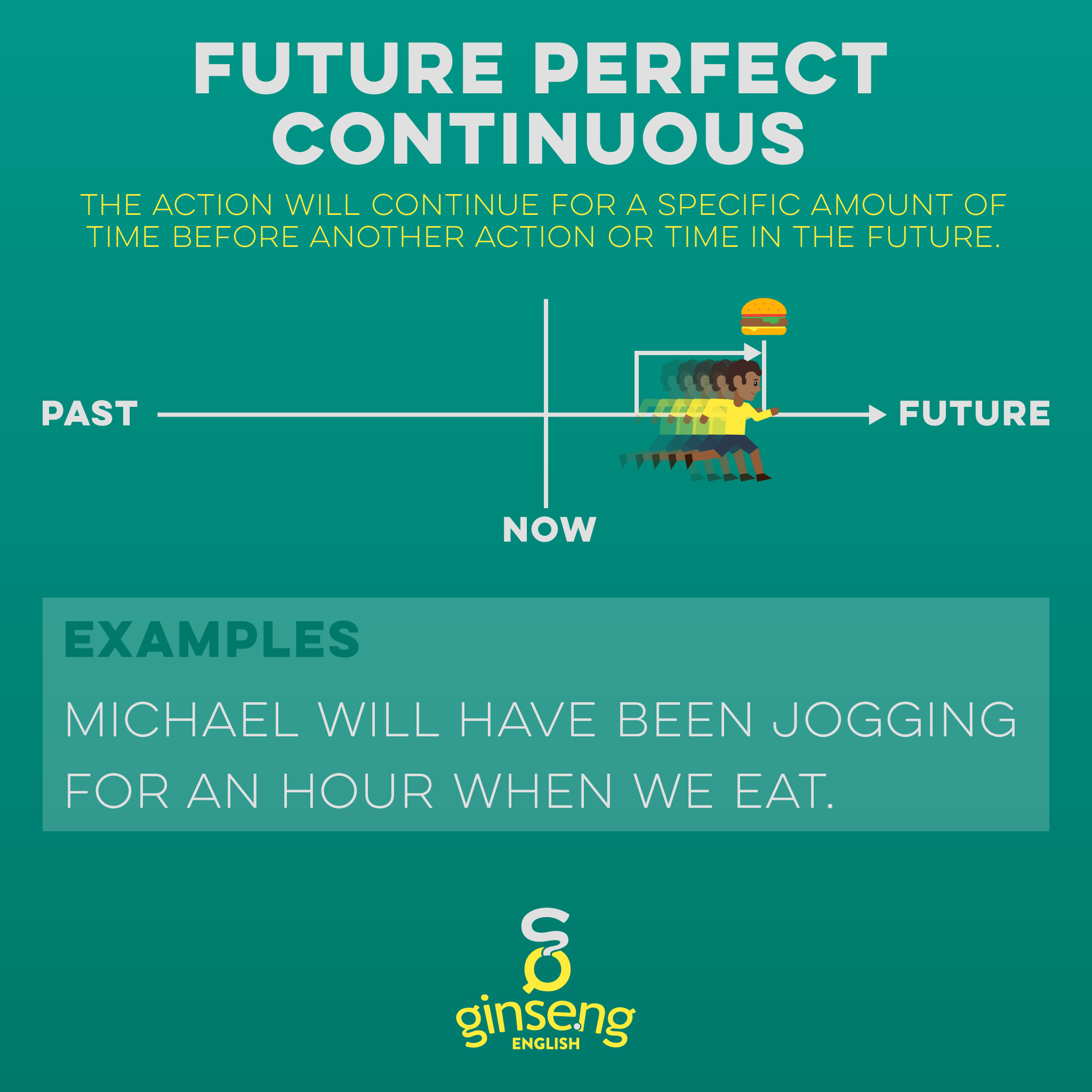
The future perfect continuous is an English verb form used to describe an action that starts in the future and continue up to another time or action in the future. This can be a time or date, or it can be another action. Often a duration is specified for the verb in the future perfect continuous. This verb form alone does not specify if the action will continue after that point.
This is a very rare verb form. Less than .1% of English verbs are in the future perfect continuous. Do not use this verb tense unless you are absolutely certain that it is necessary.
Note that continuous and progressive are just different words for this same thing, so some people call this tense the future perfect progressive.
Keep reading to learn the rules and reasons for using and forming the future perfect continuous, including loads of charts and examples!
Using the Future Perfect Continuous
Perfect continuous verbs are used to describe an action that has been in progress before another action or point in time, often with a duration specified. With the future perfect continuous, that time is in the future. This can be a time or date (next summer, Saturday at 5, in 2050) or it can be another action in the future.
Chart for Future Perfect Continuous Tense In English

Here are some example sentences:
By the time I finish my Ph.D., I will have been studying for over 20 years!
Monday is my work anniversary. I'm going to have been working here for a decade!
In these examples, the perfect continuous action (will have been studying, going to have been working) is presented with a duration (over 20 years, a decade) and another action (I finish) or point in time in the future (Monday).
Form
Formula with Will
To form the future perfect continuous, we use the future perfect form of the helping verb be—will have been or going to have been—and the continuous form of the main verb. No matter what the subject is, the verb form is
subject + will have been + VERBing
Conjugation
Here are conjugation tables showing the verb work in the future perfect continuous with will.
| Singular | Plural | |||
|---|---|---|---|---|
| 1st person | I | will have been working. | we | will have been working. |
| 2nd person | you | will have been working. | you | will have been working. |
| 3rd person | he | will have been working. | they | will have been working. |
| she | will have been working. | |||
| it | will have been working. | |||
Formula with Going to
Because forming the future tenses with going to is more complex and wordy, we almost never form the future perfect continuous with going to. In the rare situation that we might use it, the form is
subject + am/is/are + going to have been + VERBing
Conjugation
Here is a conjugation table:
| Singular | Plural | |||
|---|---|---|---|---|
| 1st person | I | am going to have been working. | we | are going to have been working. |
| 2nd person | you | are going to have been working. | you | are going to have been working. |
| 3rd person | he | is going to have been working. | they | are going to have been working. |
| she | is going to have been working. | |||
| it | is going to have been working. | |||
Other Forms
Questions
In the future perfect continuous, you have more than one helping verb. To make a question, move the subject after the first helping verb, will, but before the second helping verb, have. Again, please keep in mind that these forms are extremely rare, and these examples sound very unnatural in English; we share them only to help students understand the patterns of the language.
At what point will you have been acting for 20 years?
When will they have been playing this game for too long?
Negative Sentences
You can form a negative by inserting not between the first helping verb will and the second helping verb have. For example:
In January, we will not have been living in California for 20 years.
But notice that the negative form is ambiguous. It is unclear which part of the sentence we are negating. Are we living someplace other than California? Has it just not been 20 years yet? This is a good reason to avoid making negative sentences in the future perfect continuous.
The Passive Voice
If for some reason you need to make a passive sentence in the future perfect continuous, use be in the future perfect continuous (will have been being) and then the perfect form of the main verb. As you can see in the following example, this is awkward and confusing
Next year the house will have been being renovated for 5 years.
We do not recommend making future perfect continuous passive sentences.
CHECK OUT THESE OTHER FREE GRAMMAR RESOURCES:
Future Perfect Tense
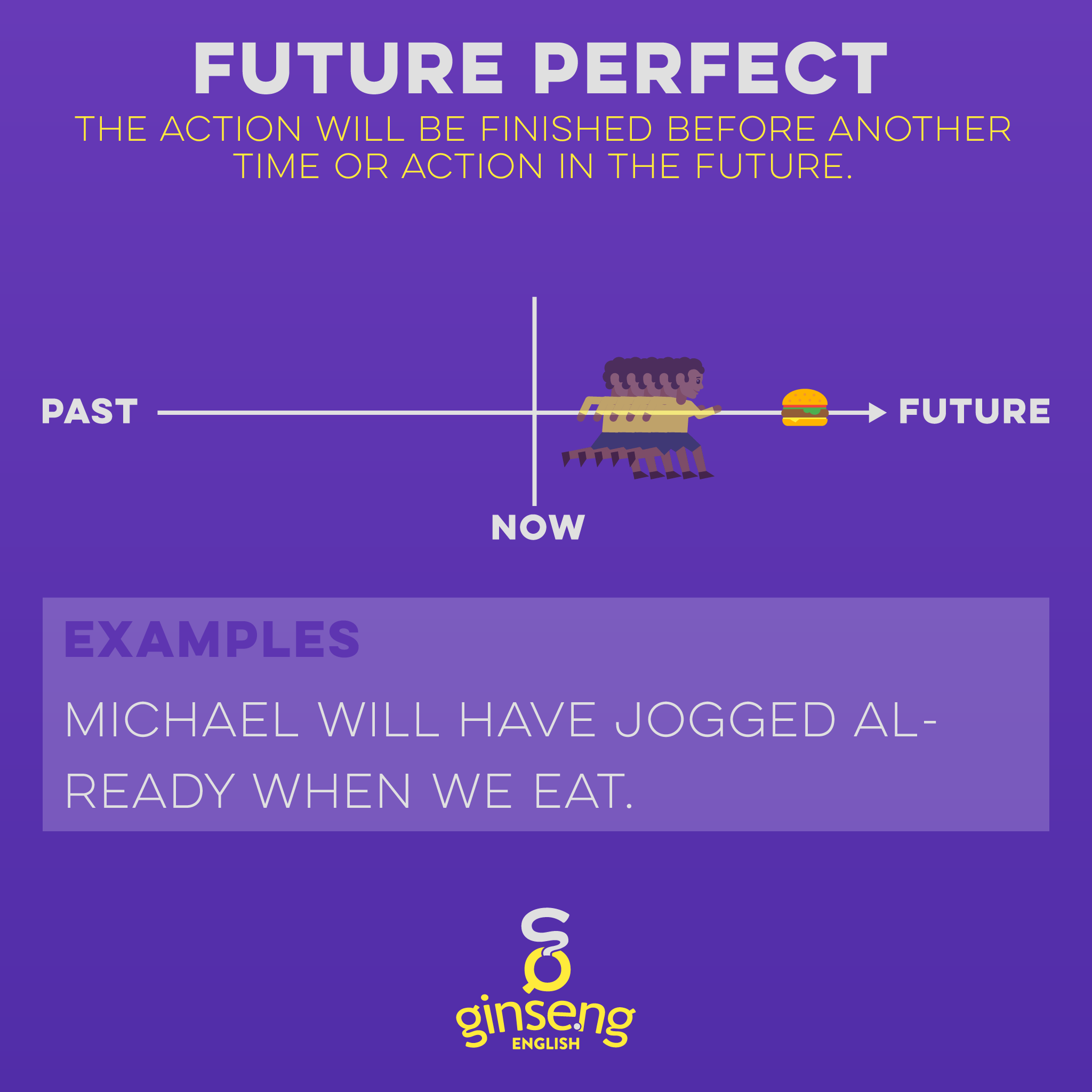
The future perfect is an English verb form used to describe actions that will be complete at a particular moment in the future. This can be a time or date, or it can be another action.
This is not a common verb form. Less than .1% of English verbs are in the future continuous.
Keep reading to learn the rules and reasons for using and forming the future continuous, including loads of charts and examples!
Using the Future Perfect
Perfect verb tenses are used to describe an action that is complete before another action or point in time. With the future perfect, that time is in the future. This can be a time or date (next weekend, tomorrow at 5, on November 3rd) or it can be another action in the future.
Chart for Future Perfect Tense In English

Here are some example sentences:
The skyscraper isn't completely built yet, but when I go in June, they will have finished it.
You can come over at 8. We will have eaten dinner by then.
In these examples, the perfect action (will have finished, will have eaten ) will be complete before the other specific action (when I go in June) or time (at 8).
Forming the Future Perfect
Formula with Will
To form the future perfect, we use the future form of the helping verb have—will have—and the perfect form of the main verb. No matter what the subject is, the verb form is:
subject + will have + perfect VERB
Conjugation
That means the conjugation chart is really easy!
| Singular | Plural | |||
|---|---|---|---|---|
| 1st person | I | will have worked. | we | will have worked. |
| 2nd person | you | will have worked. | you | will have worked. |
| 3rd person | he | will have worked. | they | will have worked. |
| she | will have worked. | |||
| it | will have worked. | |||
Formula with Going to
Because forming the future tenses with be going to is more complex and wordy, we almost never form the future perfect with be going to. In the rare situation that we might use it, the formula is:
subject + am/is/are + going to have + perfect VERB
Conjugation
Here is a conjugation table for the verb work with going to.
| Singular | Plural | |||
|---|---|---|---|---|
| 1st person | I | am going to have worked. | we | are going to have worked. |
| 2nd person | you | are going to have worked. | you | are going to have worked. |
| 3rd person | he | is going to have worked. | they | are going to have worked. |
| she | is going to have worked. | |||
| it | is going to have worked. | |||
Other Forms
Questions
In the future perfect, you have more than one helping verb. To make a question, move the subject after the first helping verb, will, but before the second helping verb, have.
Will you have eaten by 8?
Will they have finished the construction by the end of the year?
Will she have completed her degree by that time?
What will they have accomplished with this senseless war?
When will they have made a decision?
Negative Sentences
To form a negative, insert not between the first helping verb will and the second helping verb have. Here are some examples.
I will not have eaten by 8.
They will not have finished the construction by the end of the year.
She will not have completed her degree yet.
The Passive Voice
Making a passive sentence in the future perfect is extremely complex and extremely rare. We do not recommend making future perfect passive sentences. If for some reason you do need to make a passive sentence in the future perfect, use be in the future perfect (will have been) and then the perfect form of the main verb.
The package will have been delivered by Friday afternoon.
All the food will have been eaten by the time we get there.
CHECK OUT THESE OTHER FREE GRAMMAR RESOURCES:
Past Perfect Continuous Tense
The present perfect continuous is an important verb form for talking about recent events and their durations. Read about the rules for using the present perfect continuous tense, how we form it, and tons of example sentences!
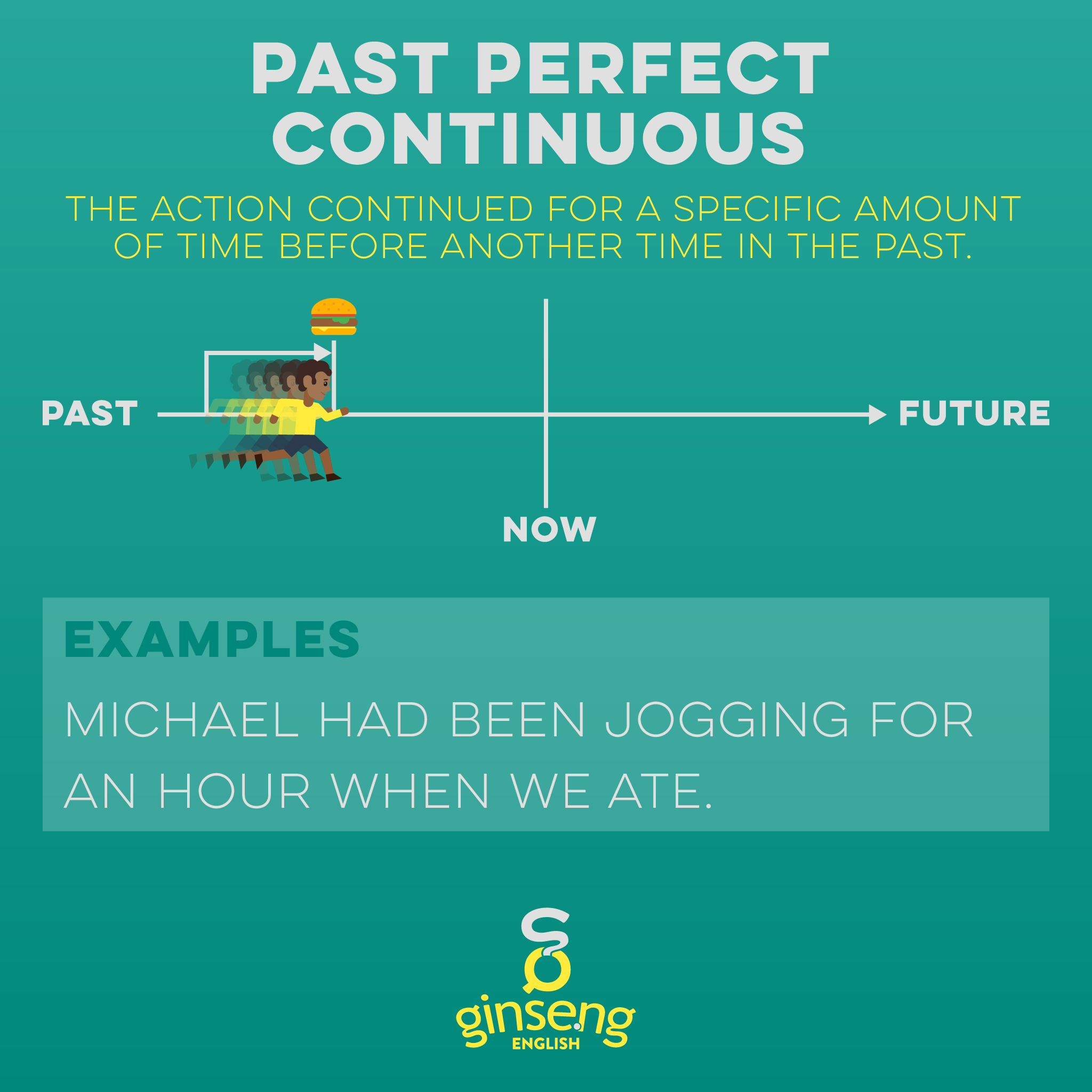
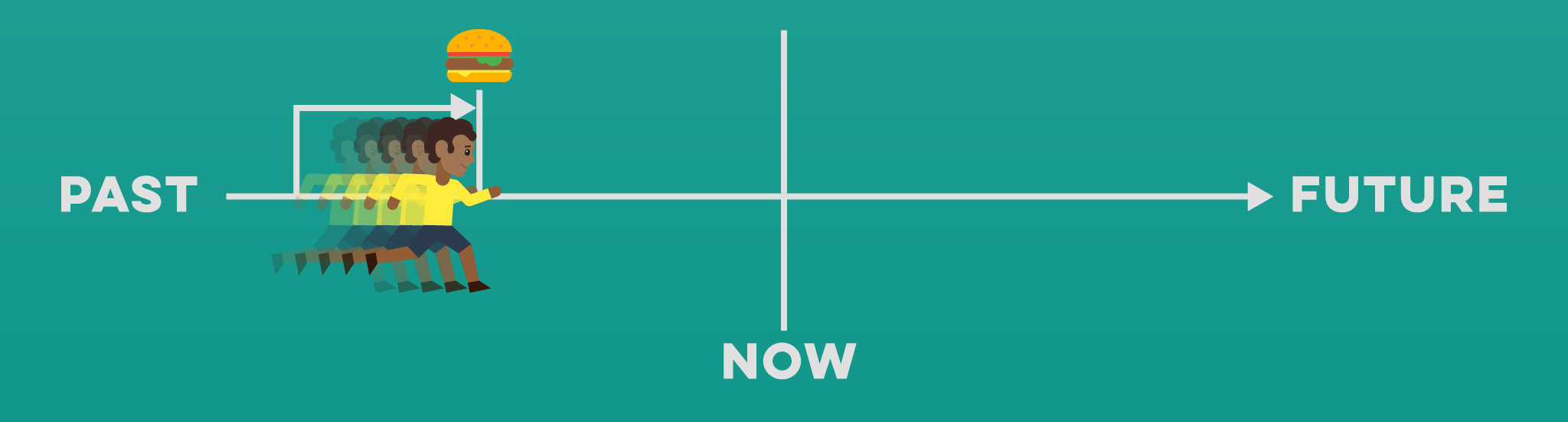
The past perfect progressive shows that an action started in the past and continued up to another time or action, also in the past. It does not specify if the action continues after that point. This is a very uncommon verb form: less than .1% of verbs in spoken English are in this form.
Continue reading to learn how to form the past perfect continuous and when to use it, including loads of examples and charts!
Just to be clear, continuous and progressive are just different names for this same thing. In some countries, one word is more common, but continuous is more common around the world, so we use that!
Chart for Past Perfect Continuous Tense in English
Using the Past Perfect Continuous Tense in English
The past perfect continuous is really difficult. Lots of websites will claim to explain this tense in just a quick article, and this just isn’t possible (sorry!). We use this verb form in a few different situations, and it can have different meanings depending on the situation. Here are some examples:
We were wet because it had been raining for hours.
I knew the city well at that point because I had been living there for a few years..
When I met your mom I was in pretty good shape because I had been working construction
Note that these correspond pretty closely with the different ways that we use the present perfect continuous form:
Recently Completed Actions
Actions Still Happening (with for/since)
New Routines and Habits
The past perfect continuous is basically the same, except shifted into the past time frame.
It is worth mentioning that, in many situations the past perfect and past perfect continuous are interchangeable.
Here are a few more examples:
That had been a difficult month. She had been working long hours.
I’d been going to the gym a lot back then.
We’d been cooking at home more at that point.
Forming the Past Perfect continuous
Formula
Forming the past perfect continuous isn’t difficult. You will always use the same formula:
had + been + VERBing
You could also think of it as simple steps, too:
First, use had (this is the past part)
Then use been (this is the perfect part)
Then use your main verb with -ing (this is the continuous part)
Conjugation
Here is the verb work conjugated into the past perfect continuous.
| Singular | Plural | |||
|---|---|---|---|---|
| 1st person | I | had been working. | we | had been working. |
| 2nd person | you | had been working. | you | had been working. |
| 3rd person | he | had been working. | they | had been working. |
| she | had been working. | |||
| it | had been working. | |||
Notice that we can see both the perfect and the continuous aspect in this form. Had been is the perfect aspect. Been verb-ing is continuous aspect.
Other Forms of the past Perfect continuous
Negative Sentences
You always have two helping verbs in the past perfect continuous: had and been. To make a negative, simply make it had not been.
I had not been practicing for very long.
I had not been living in Boston for years, and I missed it.
I had not been studying, so I was doing poorly in school.
Because the past perfect continuous uses so many words, we often use contractions with not to make it a little shorter:
I hadn't been practicing for very long.
I hadn't been living in Boston for years, and I missed it.
I hadn't been studying, so I was doing poorly in school.
Questions
To make a question, put had before the subject:
Why did they break up? Had he been cheating?
How long had the car been running for when it finally died?
Why had you been studying Chinese if you were planning to move to France?
Passive Voice
Making passive sentences with rarer and more complicated verb forms like the past perfect continuous is extremely uncommon and almost always a bad idea. We really recommend that you rephrase a sentence to avoid creating such an awkward sentence.
They had been being observed a lot at work.
Hopefully you can see how awkward this sentence is. If you really need to make a passive sentence in this form, you should use the get passive to avoid the awkward combination of been and being.
Put get in the past perfect continuous (had been getting) and then the perfect form of the main verb.
We had been getting observed a lot at work lately.
I'd been getting kicked off the internet every 5 minutes.
check out these other free grammar resources:

Future Continuous Tense
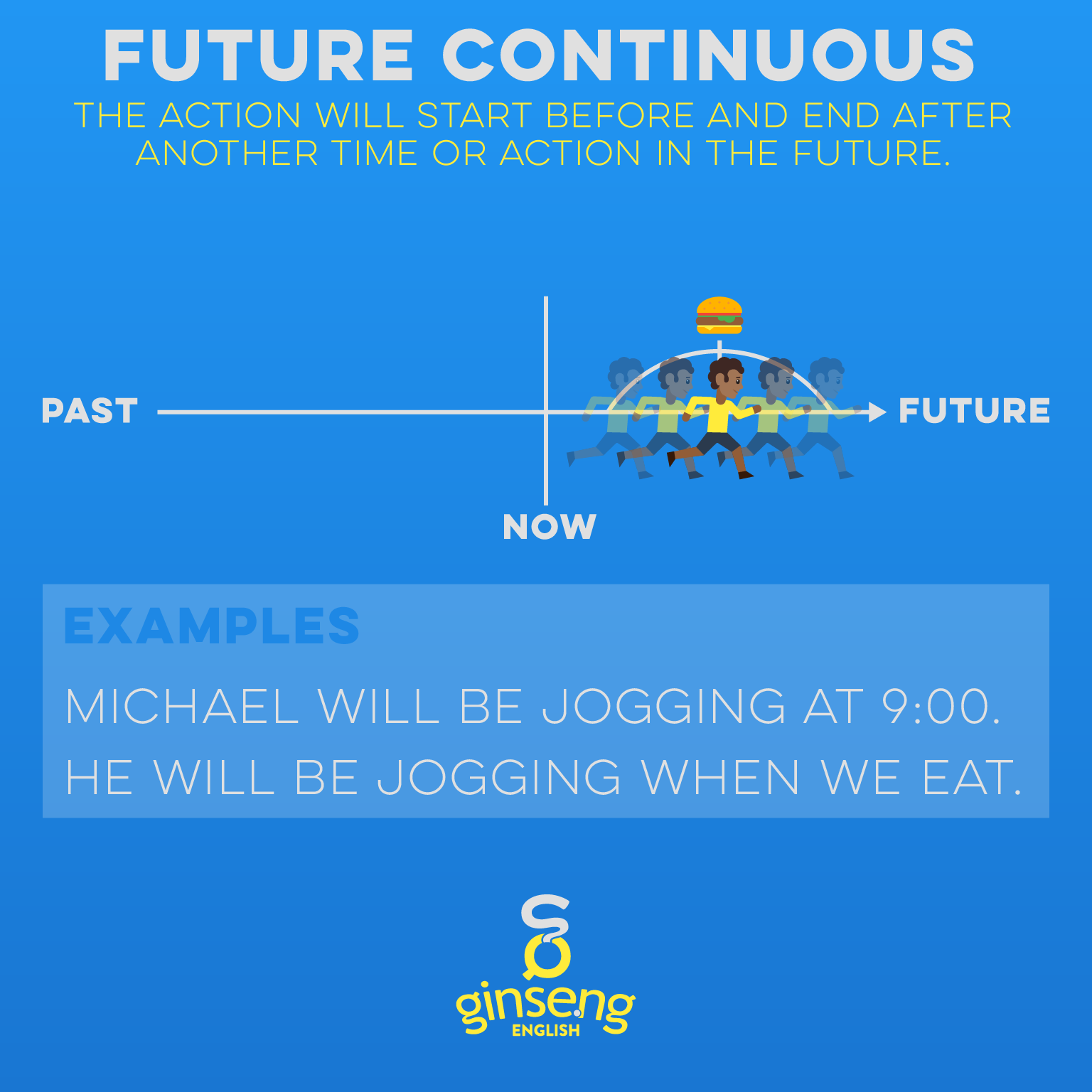
The future continuous (also called the future progressive) is an English verb form used to describe actions that will be in progress at a particular moment in the future. This can be a time or date, or it can be another action.
This is not a common verb form. Less than .1% of English verbs are in the future continuous.
Keep reading to learn the rules and reasons for using and forming the future continuous, including loads of charts and examples!
It is important to realize that continuous and progressive are different names for the same thing. In some places, progressive is more common, but continuous is a more common term overall.
USing the Future continuous
When we see a continuous verb, it tells us that something is in progress at a particular time. With the future continuous, that time is in the future. This can be a time or date (next weekend, tomorrow at 5, on November 3rd) or it can be another action in the future.
Chart for Future Continuous Tense In English

Here are some example sentences:
Don’t call her at 8. She will be flying to Denver then.
I will probably be running when you come home.
Try to be quiet when you come home tonight. Everyone will be sleeping.
In these examples, the continuous action (will be flying, will be running) will start before the other specific action (come home) or time (at 8), and continued after that action or time.
We can also use the future continuous to show that a future action will continue over a period of time.
I’m going to be studying all next week.
We will be traveling for most of 2019.
Forming the Future continuous
There are two options for forming the future continuous: will or going to.
Formula With Will
To form the future continuous with will, use will be and the continuous form of the verb, with -ing.
subject + will be + VERBing
Conjugation with Will
Here is a complete conjugation table:
| Singular | Plural | |||
|---|---|---|---|---|
| 1st person | I | will be working. | we | will be working. |
| 2nd person | you | will be working. | you | will be working. |
| 3rd person | he | will be working. | they | will be working. |
| she | will be working. | |||
| it | will be working. | |||
Formula With Going To
To form the future continuous with going to, you need to use the correct present form of the verb to be (am/is/are). Then use going to be. Then use the -ing form of the verb.
subject + am/is/are + going to be + VERBing
Conjugation with Going to
Here is the going to conjugation table:
| Singular | Plural | |||
|---|---|---|---|---|
| 1st person | I | am going to be working. | we | are going to be working. |
| 2nd person | you | are going to be working. | you | are going to be working. |
| 3rd person | he | is going to be working. | they | are going to be working. |
| she | is going to be working. | |||
| it | is going to be working. | |||
Other Forms
Questions
In the future continuous, you have more than one helping verb. To make a question, move the subject after the first helping verb (be or will).
Will you be eating out tonight?
When will you be arriving in Philadelphia?
Are you going to be sleeping when I get home?
What are you going to be reading next semester?
Negative Sentences
To form a negative, insert not after the first helping verb (be or will).
I will not be eating out tonight.
She will not be running.
We are not going to be reading Nabokov.
I am not going to be sleeping when you get home.
The Passive Voice
Making a passive sentence in the future progressive is extremely complex and extremely rare. In the conventional passive, putting be in the future progressive results in the unnatural combination of be and being: …will be being… or …going to be being…
For this reason, we recommend using the get passive in the future progressive. Put get in the future progressive (is going to be getting, are going to be getting, will be getting) and then the perfect form of the main verb.
We are going to be getting picked up by my mom.
If we miss another payment, we’ll be getting kicked out!
CHECK OUT THESE OTHER FREE GRAMMAR RESOURCES:
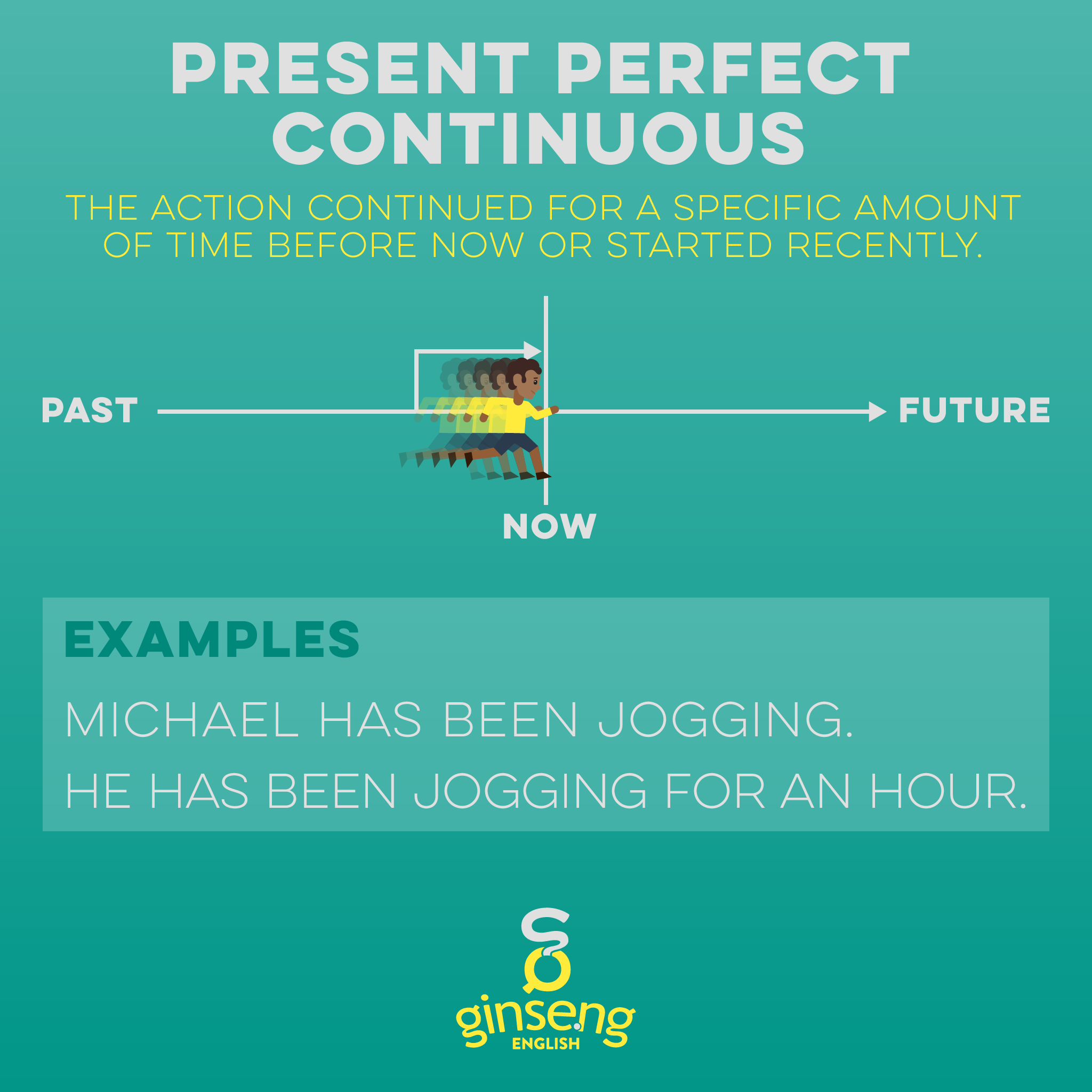
Present Perfect Continuous Tense
The present perfect continuous is an important verb form for talking about recent events and their durations. Read about the rules for using the present perfect continuous tense, how we form it, and tons of example sentences!
The present perfect continuous (also called the present perfect progressive) is a verb form that we use to describe an action that started in the past and either recently finished or is still continuing. Although only about .7% of verbs in speech are in the past perfect, this verb tense can be very useful in certain situations.
Continue reading to learn how to form the present perfect continuous and when to use it, including tons of examples and charts!
Just to avoid confusion, continuous and progressive are just different names for this same thing. In some countries, one term is more common than the other, but continuous is more common overall, so we use that term.
Chart for Present Perfect Continuous in English

Using the Present Perfect Continuous Tense in English
The present perfect continuous is a little bit tricky. If you find a website that claims to explain it in just a few sentences, you should be suspicious. We use this tense in a number of different situations, and it can have different meanings in those different situations. We can look at three common ways that the present perfect progressive is used:
to describe new routines,
to describe recently completed actions, and
for actions that are still continuing.
New Routines and Habits
In general, we use the simple present to talk about routines and habits: If I go jogging every day or a couple of times a week, I can simply say, I jog, right?
But what if this is a new habit? Maybe I have gone jogging every day for the past two weeks, so it is a routine, but it might feel funny to just say I jog. I am a jogger. In situations like this, where we want to demonstrate that a habit or routine is somewhat new, the present perfect continuous is the form that we want to use.
I have been jogging.
Here are a few more examples:
This has been a difficult month. She has been working long hours.
I’ve been going to the gym lately.
We’ve been cooking at home more recently
Recently Completed Actions
We also use the present perfect continuous to talk about actions that have just recently ended, especially when there is still evidence of that action. For example, after you paint, you may still have paint on your hands. To explain this, you would use the present perfect progressive:
Sorry, my hands are dirty. I've just been painting.
Take a look at these other examples:
The house is a mess because we've just been redecorating.
Sorry, I'm all sweaty. I've been exercising.
Why are you two crying? Have you been fighting?
Notice that in each of these examples, there is sensory evidence (the mess, sweating, crying) of the recently completed actions (painting, exercising, fighting). This is almost always the case when using the present perfect continuous in this way.
Actions Still Happening with For and Since
This is probably the most common way that this verb form is used. This is very important: When we see the present perfect continuous with for or since, the action started at a specific time in the past and is still happening. Here are some examples:
Michele has been living in Boston since June.
Juana's been writing her thesis for 6 months.
In the first example, Michele still lives in Boston. In the second example, Juana still works at Apple. Again, when you see for or since with this verb tense, the action or situation described by the main verb is still continuing. See Signal Words, below, for more information about how we use for and since.
Here are more examples with for and since:
Cara's been working at FedEx for 3 years now.
I've been thinking about changing jobs for a long time.
We've been developing a new strategic plan since late last year.
You have been traveling back and forth to California since you got married, right?
Forming the Present Perfect continuous
Formula
Forming the present perfect continuous isn’t difficult. You will always use the same formula:
have/has + been + VERBing
You could also think of it as simple steps, too:
First, choose either have (if the subject is plural or the pronouns I, you, we, or they) or has (if the subject is a singular noun, he, she, or it).
Then use been.
Then use your main verb with -ing.
Conjugation
Here is the verb work conjugated into the present perfect continuous.
| Singular | Plural | |||
|---|---|---|---|---|
| 1st person | I | have been working. | we | have been working. |
| 2nd person | you | have been working. | you | have been working. |
| 3rd person | he | has been working. | they | have been working. |
| she | has been working. | |||
| it | has been working. | |||
Notice that we can see both the perfect and the continuous aspect in this form. Have been is the perfect aspect. Been verb-ing is continuous aspect.
Other Forms of the Present Perfect continuous
Negative Sentences
You always have two helping verbs in the present perfect continuous: have/has and been. To make a negative, simply put not in between them!
She has not been living here for a long time.
I have not been reading much recently.
They have not been working late.
Because the present perfect continuous uses so many words, we often use contractions with not to make it a little shorter:
She hasn't been living here for a long time.
I haven't been reading much recently.
Questions
To make a question, simply put has/have before the subject.
Has she been living here for a long time?
Have you been working out lately? You look great!
What have you been reading?
When have you been going to bed lately?
Passive Voice
Making passive sentences with more complex verb forms like the present perfect continuous is extremely uncommon and almost always awkward in English. We really recommend that you rephrase a sentence to avoid creating such an awkward sentence.
We have been being observed a lot at work.
See the awkwardness in the sentence above? If you really need to make a passive sentence in this verb form, we often use the get passive to avoid the unnatural combination of been being.
Put get in the present perfect progressive (has been getting, have been getting) and then the perfect form of the main verb.
We have been getting observed a lot at work lately.
I've been getting kicked off the internet every 5 minutes.
Signal Words
Recently or Lately
When we are talking about new routines and habits, it’s common to use the word recently or lately, which both have the same meaning in this sense. There is some flexibility in where we can put these words in a sentence, but the beginning or end of the clause is a safe bet.
Take a look at these examples:
Lately, I've been thinking a lot about Aunt Maude.
We've been having second thoughts about moving recently.
Just
We can use the adverb just to emphasize that an action was completed in the immediate past, right before now. Because the present perfect continuous can talk about actions that stopped right before now, it is common to use just with it. Have a look at these examples:
Don't mind these ridiculous old clothes. I've just been gardening.
Hey Paul! I can't believe you're here. We've just been talking about you!
For
We already said, the most important signal words with the present perfect progressive are for and since. They are important because they change the meaning. Whenever you see for and since with this verb form, you know the action is still true.
When we use for, we specify the duration of the action. This could be the number of minutes or weeks or years. It could also be a more general phrase like a really long time or a little while.
People have been living on this land for thousands of years.
It's been raining for hours
I've been studying English for half my life!
Since
While for is used with a duration, since is used to specify the point in time when the action began. That could be a time or date. It can also be another event described with a clause, like since I was a child.
People have been living on this land since about 800 B.C.E.
It's been raining since noon.
I've been studying English since I was a child.
check out these other free grammar resources:
Past Perfect Tense
The past perfect is an important verb form for describing events in the past. Read about the rules for using the past perfect tense, how we form it, and tons of example sentences!
The past perfect is a verb form that we use to talk about an action that is complete before another action or event in the past.
It isn't one of the most common verb tenses in English (only about 1.2% of verbs in speech are in the past perfect), but it can be very important for narrating events in the past.
Chart for Past Perfect Tense in English
Using the Past Perfect Tense in English

Perfect verb forms are generally used to show that an action or situation is complete before another action or a point in time. In the past perfect, that one action happened before another action in the past. For this reason, we sometimes say the past perfect is “the past of the past.”
Here's an example:
Carla had already eaten when we arrived at her house.
There are two actions here: eating and arriving. Eat is in the past perfect, and arrive is in the simple past, so we know that the eating was completed first. When you have two verbs in a sentence, one in the simple past and one in the past perfect, the past perfect action finished before the simple past action.
The examples below illustrate the rules for how we generally use the past perfect tense.
Examples of the Past Perfect tense
First let's look at how we often use the past perfect in a sentence with other past tense verbs:
I had just left my house when it started to rain.
Notice that we have two clauses and two verbs. Started is in the simple past: it started and finished in the past. Left is in the past perfect (had left) which means that the action (leaving) was complete before the other action (starting to rain).
Sometimes there are two verbs in the same sentence, like in the example above, but not always. Look at this conversation:
Te: Hey, I called you last night, but you didn’t answer!
Banh: Oh, I went to bed pretty early last night. What time did you call?
Te: I think it was around 9.
Banh: Yeah, I had already fallen asleep.
In this example, the verb in the past perfect is had fallen asleep. We know that past perfect means this action was complete before another action or point in time in the past. In this case, we have both an action (Te called) and a time (around 9).
Forming the Past Perfect
Formula
Forming the past perfect is easy. We use had (the past form of the helping verb have) and the perfect form of the main verb.
subject + had + perfect VERB
Conjugation
This table shows the complete conjugation of the verb work in the past perfect.
| Singular | Plural | |||
|---|---|---|---|---|
| 1st person | I | had worked. | we | had worked. |
| 2nd person | you | had worked. | you | had worked. |
| 3rd person | he | had worked. | they | had worked. |
| she | had worked. | |||
| it | had worked. | |||
Other Forms of the Past Perfect
Negative Sentences
The helping verb in the past perfect is always had.To make a negative, put not after the helping verb had.
I had not studied French before I went to Morocco.
They had not seen each other for years.
I hadn’t eaten all night so I was starving.
Questions
To make a question, put had before the subject.
Had they dated long before they got married?
Had you expected the promotion?
Why had she bought so many extra tickets?
How long had you lived in San Francisco by then?
Passive Voice
To make a passive sentence in the past perfect, use be in the past perfect (had been) and then the perfect form of the main verb.
By 1945, the war had been won.
I had been fired, so I felt really depressed.
In the morning we learned that Kiki had been found by the neighbors.
Signal Words
The past perfect is often used with time words such as before, until, previously, etc. One word that is very common (and sometimes confusing!) with the past perfect is by.
We can use by with a specific time to show the completion of the action before that time.
By 1:00, everyone had left the party.
In this example, all the people left before 1:00.
The time isn't always a number, as these examples illustrate:
By dawn the rain had stopped.
By the end of the semester, she had completed all her prerequisites.
By then, I had figured out the solution.
By the time has a similar meaning, but it is used with a clause describing another action, rather than a time.
By the time I got home, everyone had gone to bed.
It had gotten dark by the time we finished eating.
Check out these other free grammar resources:
Past Continuous Tense
The past continuous is an important and challenging verb form in English. It is used to describe actions that were in progress at a specific point in the past. Read about the rules for using the past continuous tense and how we form it, with charts and over 25 example sentences!
The past continuous (also called the past progressive) is an English verb form used to describe actions that were in progress at a particular moment in the past.
About 1.5% of verbs we use when speaking English are in the past continuous tense. If you are looking for more common verb tenses, start with the simple present, simple future, or present continuous.
Keep reading to learn the rules and reasons for using and forming the past continuous, including loads of charts and examples!
Note that past continuous and progressive are just different names for the same form. In some countries, progressive is more common, but continuous is more common overall.
USING THE Past CONTINUOUS TENSE IN ENGLISH
Continuous verbs show that an action is in progress at a specific time. With the past progressive, that specific time is in the past. This can be a time or date in the past (last night, yesterday at 5, on September 1st) or it can be another action in the past (called, got home).
Chart for Past Continuous Tense In English

Take a look at some example sentences:
I was eating dinner when the phone rang.
At 10:00 last night, we were watching TV.
This time last year we were driving to California.
In these examples, the progressive action (was eating, were watching) started before the other specific action (phone rang) or time (at 10:00), and continued after that action or time.
We can also use the past progressive to show that a past action continued or repeated over a period of time in the past
In college I was always sleeping too late.
All last week I was working.
In the first sentence, always with the past continuous shows a repeated action in the past. In the second sentence, the past continuous emphasizes that the action spanned the entire time period (last week). In both of these situations, the simple past is also acceptable.
More EXAMPLES OF THE past CONTINUOUS
Here are a bunch of examples of the past continuous to help you get a better idea of how we use this verb form:
In December I was preparing for the TOEFL.
Something was happening outside.
Everything was changing then.
The next day people were talking about the election.
Forming the past Continuous
Formula
To form the past continuous, we use the past form of the helping verb be and the continuous form of the verb, with -ing.
subject + was/were + VERBing
Conjugation
The table below shows the full conjugation for the verb work in the past continuous form:
| Singular | Plural | |||
|---|---|---|---|---|
| 1st person | I | was working. | we | were working. |
| 2nd person | you | were working. | you | were working. |
| 3rd person | he | was working. | they | were working. |
| she | was working. | |||
| it | was working. | |||
Note that when adding -ing to C-V-C words, you must double the last consonant and when adding -ing to silent E words, you must drop the silent E.
Other Forms of the past Continuous
Questions
In the past continuous, you have a helping verb, either was or were. To make a question, move the helping verb to before the subject.
Were you wearing a tie?
Was she having a party?
What were they doing?
Who was she yelling at?
Negative Sentences
To form a negative in the past continuous, put not between the helping verb and the main verb.
I was not wearing a tie.
We were not having a party.
The Passive Voice
To make a passive sentence, put be in the past continuous (was being, were being) and then use the perfect form of the main verb.
A party was being planned.
The trash was being collected.
The winners were being selected.
Signal Words
When
The most common signal word with the past continuous is when. We use when to connect a second clause with the other action in the simple past to show that the simple past action interrupts the past continuous action.
I was eating dinner when he called.
He called when I was eating dinner.
Notice that when is flexible. It can be used at the beginning of the simple past clause or the past continuous clause. We can also start the sentence with a when clause if we put a comma in the middle:
When he called, I was eating dinner.
When I was eating dinner, he called
While
We can also use while with the past continuous. The meaning is basically the same, but the way we can use it is more limited. While can only come at the start of the past continuous clause, not the simple past clause.
He called while I was eating dinner.
I was eating dinner while he called.
While I was eating dinner, he called.
While he called, I was eating dinner.
CHECK OUT THESE OTHER FREE GRAMMAR RESOURCES:
Related Content

Present Perfect Tense in English
Present Continuous Tense
The present continuous is a common but challenging verb tense in English. It is used to describe actions that are happening at the current moment. Read about the rules for using the present perfect tense and how we form it, with charts and over 25 example sentences!
The present continuous (also known as the present progressive) is a very common English verb form used to describe actions that are happening right now or during this period of time. About 5% of verbs in spoken English are in the present continuous tense.
Many English learners confuse it with the simple present tense. See this article about the difference between simple present and present continuous.
Read on to learn the rules and reasons for using and forming the present continuous, including lots of charts and examples!
Just to be clear, present continuous and present progressive are just different names for this same form. In some countries, one term is more common than the other, but continuous is more common overall.
USING THE PRESENT CONTINUOUS TENSE IN ENGLISH
The present continuous is used to show that an action is happening in the current moment or period of time. The action started before now, is happening right now, and will finish after now. See the illustration below.
Chart for Present Continuous Tense In English

It is important to recognize that this is very different from many other languages, in which the simple present is used to talk about actions happening right now. In English, the simple present is not used for actions that are happening now, but for actions that happen repeatedly. So we say:
I am reading right now.
We cannot say I read right now. And we say:
I read every night.
But we do not usually say I am reading every night.
More EXAMPLES OF THE PRESENT CONTINUOUS TENSE
Here’s a bunch of examples of the present continuous to help you get a better idea of how we use it.
I am studying English right now.
Are you talking to me?
He is working, but he can come visit after 5:00.
Wow. Look at all those people across the street! I think they are protesting.
We can also use the present continuous to describe actions that are generally in progress at a particular time:
Every Friday night at 7 she's sitting there watching her favorite TV show.
6:15 is no good. We are usually eating then.
We also use it to show that a situation is not permanent:
We're living in Brooklyn with a friend for a few months.
I lost my job at the bank so I'm working at Stop and Shop.
And also for situations that are newly changing or developing:
Cell phones are affecting every aspect of our lives.
Endangered species are going extinct at an alarming rate.
Present Continuous for Future Plans
There is one more use of the present continuous that is a little different. We said that generally we use this tense to talk about the current moment, but we also use the present continuous to talk about future plans:
We are going to San Francisco next week.
What are you guys doing this weekend?
Forming the Present Continuous
Formula
To form the present continuous, we use the present form of the helping verb be and then the continuous (-ing) form of the main verb.
subject + am/is/are + VERBing
Conjugation
This table shows the complete conjugation of the verb work in the present continuous.
| Singular | Plural | |||
|---|---|---|---|---|
| 1st person | I | am working. | we | are working. |
| 2nd person | you | are working. | you | are working. |
| 3rd person | he | is working. | they | are working. |
| she | is working. | |||
| it | is working. | |||
When adding -ing to C-V-C words, you should double the last consonant. When adding -ing to silent E words, drop the silent E.
Other Forms of the Present Continuous
Questions
To make questions in the present continuous, we already have the helping verb be, so all we have to do is move it to before the subject.
Are you wearing a tie?
Is she having a party?
Why is he crying?
What are they eating?
Negative Sentences
When forming a negative in the present continuous, not goes between the helping verb be (am, is or are) and the main verb.
I am not wearing a tie.
She’s not having a party.
The Passive Voice
To make a passive sentence in the present continuous, use be in the present continuous (am being, is being, or are being) and then the perfect form of the main verb.
A party is being planned.
The trash is being collected.
We are being attacked.
You are being lied to.
Signal Words
If you use the present continuous, it is generally clear that the time is right now, so it is not necessary to use any signal words. But for emphasis, we can say right now, currently, at the moment, as we speak, for the time being.
We can use the present continuous with always to talk about things that happen again and again, especially to show that we are annoyed by the repeated action:
He's always interrupting me whenever we try to have a serious conversation.
She's always showing up 10 minutes late. It's so inconsiderate.
To specify the time when the current action will end, use until.
I am working until 9:00.
If you want to specify when the current action began, using since, do not use the present continuous:
I am working since 5:00.
The present perfect continuous is better for situations like this.
CHECK OUT THESE OTHER FREE GRAMMAR RESOURCES:
Related Content
Present Perfect Tense in English
Present Perfect Tense
The present perfect is a common but confusing verb tense in English. It is used to connect the past to the present.. Read about the rules for using the present perfect tense and how we form it, with charts and tons of example sentences!
The present perfect is a very common—and sometimes very confusing—verb form. The present perfect is the fourth most common verb tense in English (the simple present is most common, followed by the simple past and simple future). About 6% of verbs in spoken English are in the present perfect tense.
The reason this verb tense so confusing is that it connects two times, the present and the past. Let's look a little more at how we use the present perfect.
USING THE PRESENT PERFECT TENSE IN ENGLISH
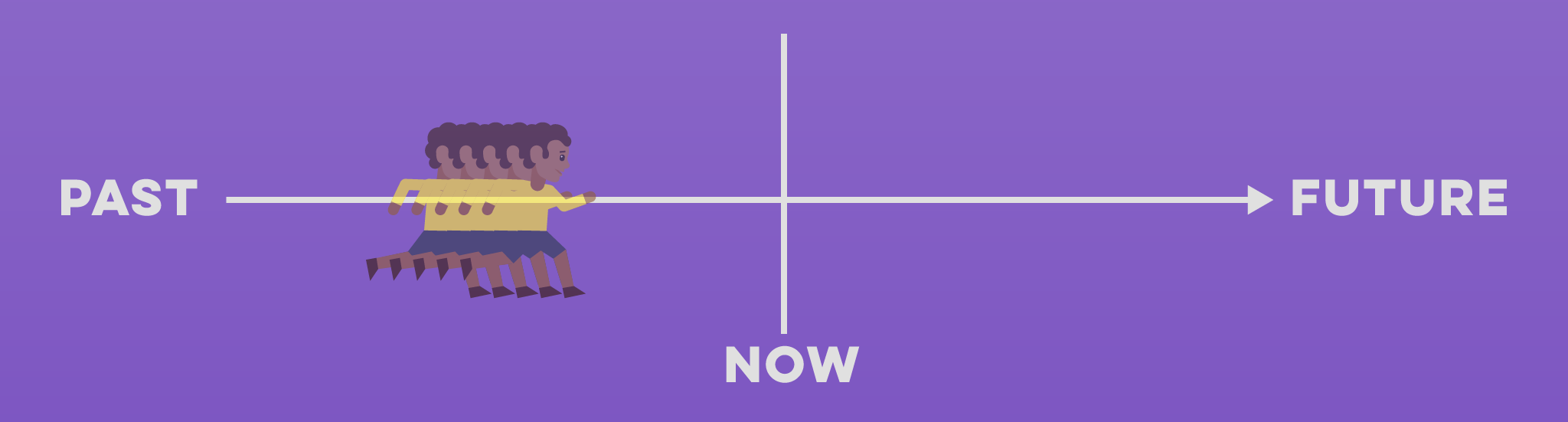
Actions described using the present perfect actually happened in the past. Read that carefully. The verb tense is called the present perfect, but the action is not in the present; it happened in the past. See the illustration below.
Chart for Present Perfect Tense In English
Why do we use a present tense verb form to talk about an action that happened in the past? Because we are not focusing on the action, but on the fact that we now have the experience of that action. For example, if I went to Paris 10 years ago, the action is finished, but I still have the experience now, so we can make this sentence:
I have visited Paris.
There are many words that signal that we should use the present perfect. When you use already, yet, never, and ever, you generally want to use the present perfect.
The examples below illustrate the rules for how we generally use the present perfect tense.
EXAMPLES OF THE PRESENT Perfect TENSE
Here’s an example to help understand.
My friend Claire says, “I just got this new book, and I started reading it last night. It’s strange. I don’t know if I like it.”
Then I say, “Oh! I have read that one. It starts off strange but it gets better.”
Notice that verb in the present perfect: I have read. I read the book in the past. But we are not talking about the past when I read the book. Claire is talking about reading the book now. I use the present perfect to connect my experience with what Claire is talking about. When I say “I have read that one,” I’m saying “I have that experience,” so I can talk about it with you, now, in the present.
To connect one’s experience with the current situation (later verbs are in the present tense):
I’ve been to Colombia. I could give you some tips.
This candidate has worked in finance for 10 years. I think she’s a good match for the job.
Present Perfect with For and Since
When used with for or since, the present perfect tense is a little different. When we use for and since, it describes situations that began in the past and are still true today. Since can be used to specify the time when the situation began.
I have lived in Boston since 2008.
I have studied English since I was a child.
I have had a headache since last night.
For is used to specify a length of time (also called duration).
I have lived in Boston for 10 years.
I have studied English for a long time.
I have had a headache for 12 hours.
Forming the Present perfect
Formula
To form the present perfect, we use the present form of the helping verb have and the perfect form of the main verb.
subject + has/have + perfect VERB
Conjugation
Here is a conjugation table, showing the verb work in the present perfect.
| Singular | Plural | |||
|---|---|---|---|---|
| 1st person | I | have worked. | we | have worked. |
| 2nd person | you | have worked. | you | have worked. |
| 3rd person | he | has worked. | they | have worked. |
| she | has worked. | |||
| it | has worked. | |||
Other Forms of the present perfect
Questions
In the present perfect, you will always use have (or has) as your helping verb. To form a question, put have before the subject of the sentence.
Have you visited Paris?
Has she been healthy?
How have you been?
What have you studied?
Negative Sentences
When forming a negative in the present perfect, not goes between the helping verb (have or has) and the main verb.
I have not visited Paris
I haven’t been bad.
The Passive Voice
To make a passive sentence in the present perfect, use be in the present perfect (has been, have been) and then the perfect form of the main verb.
My package has been delivered already!
You have been selected for a special offer.
Notes
Based on a study by Kramsky (1969), the present perfect accounts for about 6% of verbs in spoken English.
When using already and yet, verbs should generally be in the perfect form.
As you may know, English speakers can be a little lazy about the present perfect. In many casual situations, we just use the simple past instead, and ignore the pattern described above. You may choose to do the same. For example, if I just said to Claire, “Oh! I read that one.” it would have been okay, too. But this is only in conversation. In formal writing, using the simple past in place of the present perfect sounds inappropriate and sometimes even confusing. For example, when a journalist announces a new technology or invention in the news, it is typical to use the present perfect (because the important thing is that this technology now exists):
Google has developed a self-driving car.
Using the simple past in this case would be inappropriate.
CHECK OUT THESE OTHER FREE GRAMMAR RESOURCES:
Related Content

Contractions in English
Simple Future Tense
The simple future is a very common verb tense used to talk about plans and expectations in English. Read about the rules for using it, how we form it, and tons of example sentences!
The simple future is a very common and useful verb tense. It is the third most common verb form in English, after the simple present and simple past. Just under 10% of verbs in spoken English are in the simple future.
Using the Simple Future
Simple future verbs are used for actions that will happen at a specific time in the future, after the current moment. This includes plans, predictions, promises, willingness, and decisions.
There are two forms of the simple future tense: the first is formed using will and the second is formed using going to. The meaning of the two forms is generally the same, but it is more typical to use will in some situations and going to in other situations.
Chart for Simple Future Tense in English

The examples below illustrate the rules for how we usually use the simple future tense.
Examples
Examples of Simple Future with Will
Here are lots of example sentences showing different ways that we can use the simple future tense tense.
To make predictions and promises:
I will give you a ride to the station.
My staff will help you with that.
I'll answer the phone.
The news says it will rain tomorrow.
I think Real Madrid will win.
When we have just now made a decision to do something:
[the doorbell rings]
I’ll get it!
A: We’re going to the mall.
B: Oh! I’ll come, too!
In these situations above, the speaker makes a decision and announces it immediately.
Examples of Simple Future with Going To
To talk about plans:
I'm going to exercise this evening.
We're going to visit my sister.
For things we can see are just about to happen:
Nancy: The wind is going to blow those papers away
Tonya: Ah, I’ll take them inside.
Esperanza: What are you going to do this weekend?
Mathilda: I’m going to go hiking in Maine. What about you?
Esperanza: I’m just going to stay home.
Forming the Simple FUTURE
Formula with Will
The simple future with will is the same with any subject. Just use the helping verb will, followed by the base form of the main verb.
subject + will + VERB
Conjugation
The table below shows the complete conjugation of the verb work in the simple future with will.
| Singular | Plural | |||
|---|---|---|---|---|
| 1st person | I | will work. | we | will work. |
| 2nd person | you | will work. | you | will work. |
| 3rd person | he | will work. | they | will work. |
| she | will work. | |||
| it | will work. | |||
Formula with Going to
The simple future with going to is just a little more complicated. Conjugate the helping verb be based on the subject. After that, just use going to and the base form of the verb.
subject + am/is/are + going to + VERB
Conjugation
This table shows the complete conjugation of work with going to.
| Singular | Plural | |||
|---|---|---|---|---|
| 1st person | I | am going to work. | we | are going to work. |
| 2nd person | you | are going to work. | you | are going to work. |
| 3rd person | he | is going to work. | they | are going to work. |
| she | is going to work. | |||
| it | is going to work. | |||
Other Forms of the Simple Future
Negative Sentences
To make a negative sentence in the simple future, you do not need to add do, because will works as a helping verb. Add not after will or the be verb.
I will not help you
I am not going to drink tonight.
Questions
If you are forming a question in the simple future tense with will, put will before the subject of the sentence.
Will you help me?
When will the rain stop?
How will she pay all those bills?
To form a question in the simple future with going to, put the conjugated form of be before the subject.
Are you going to go out tonight?
Who is she going to work with?
What are we going to do?
Passive Voice
To form a passive sentence in the simple future, put the verb to be in the simple future (will be or is/are going to be) and then put the main verb in the perfect participle form:
A new parking garage will be built at this intersection.
Joan is going to be promoted!
You can find more explanation and examples in our guide to the English passive voice.
Notes
Generally, when we use the simple future tense, it is important that the speaker and listener know the specific time. For example, just saying I am going to the movies is unusual.
Many experts will say that English does not technically have a future tense. When they say this, they mean that we don't inflect verbs to talk about the future like many other languages do. Instead, we talk about the future using modal verbs (will/going to). For students learning English, it is easier to just think of the future as a tense.
Simple Past Tense
The simple past is a very common English verb tense used to talk about actions that happened at a specific time in the past. Read about the rules for using it, how we form it, and tons of example sentences!
The simple past (sometimes called the second verb form) is a very common verb form in English. Almost 20% of verbs in English are in this form. It is the second most common verb form, after the simple present.
Using the Simple Past
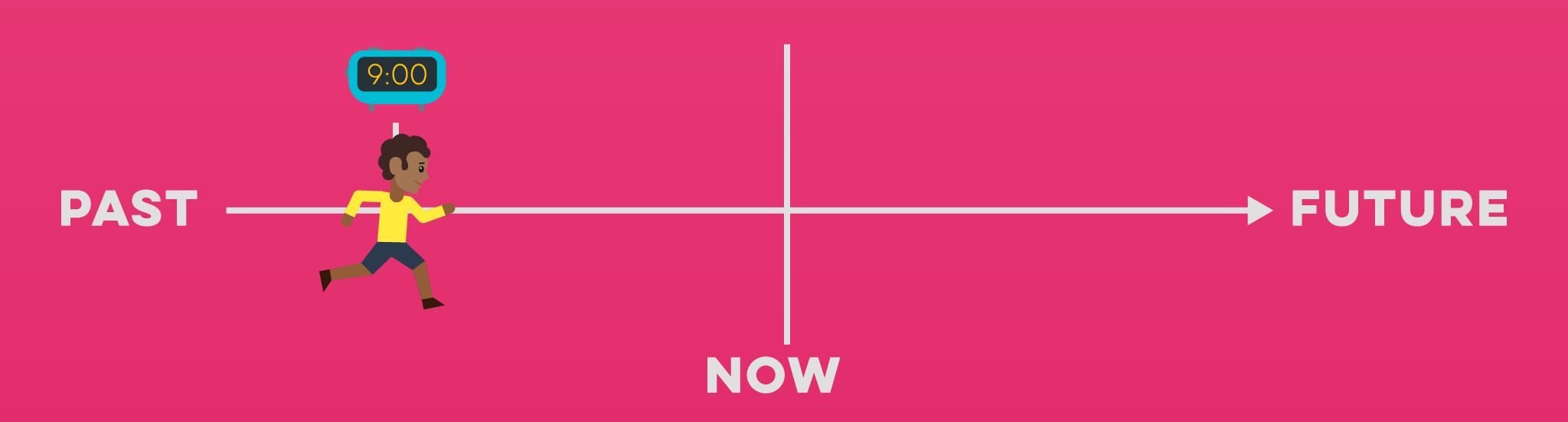
The simple past is used for actions that happened at a particular time in the past. They started and finished in the past. When you are telling a story about something that happened in the past, most main verbs will be in the simple past.
Chart for Simple Past Tense in English
The examples below illustrate the rules we generally follow when using this verb form
Examples
Here are some examples of regular verbs in the simple past:
Magellan landed in the Philippines in 1521.
Susan cooked us an amazing dinner last night!
I wanted a puppy when I was a child.
We needed lots of money to buy the new car.
England defeated Spain in the match last night.
Here are some examples of irregular verbs in the simple past:
Last night I saw a movie.
Back in June, I went to Paris.
I had a party last weekend. All my friends came.
We lost the match by three points.
I found my t-shirt under the bed.
Forming the Simple past Tense
Formula
Regular verbs take -ed to form the simple past tense.
subject + VERBed
In some cases, this requires doubling the last consonant in the word. Irregular verbs do not follow this pattern.
When you use this verb form, you almost always need to identify a specific time in the past when the action happened. Sometimes this tense is referred to as the second verb form.
Conjugation
The table below shows the complete conjugation of the verb work in the simple past:
| Singular | Plural | |||
|---|---|---|---|---|
| 1st person | I | worked. | we | worked. |
| 2nd person | you | worked. | you | worked. |
| 3rd person | he | worked. | they | worked. |
| she | worked. | |||
| it | works. | |||
Notes
Generally, when we use the past tense, it is important that the speaker and listener know the specific time. For example, just saying I went to the movies is unusual.
Other Forms
Negative Sentences
If the verb is a form of be, make a negative sentences in the simple past, by putting not after the verb.
That was not Rebecca.
She wasn’t at school on Tuesday.
We were not excited.
If the verb is not a form of be, put did not before the main verb to make a negative.
We did not feel hungry at dinnertime.
I didn’t go to school yesterday.
They did not want to come.
Questions
Exactly like the questions in the simple present, if the simple past verb is a form of be, move the verb to before the subject to form a question.
Was that girl Rebecca?
Was that pork?
Were they angry?
Where were you?
How was the pizza?
For other verbs, add did before the subject.
Did you like the movie?
Did Claire go home?
Where did you go?
What did you make for lunch?
Passive Voice
To form the passive voice in the simple past, use the verb be in the simple past (was or were) and then the perfect form of the main verb:
The factory was built in 1909.
A new island was discovered.
See our complete guide to the passive voice in English for more details and examples.
More free english resources


Simple Present Tense
The simple present is the most common and useful verb tense in English. It is used to talk about repeated actions and to describe people or states of being. Read about the rules for using the simple present tense, how we form it, and tons of example sentences!
One of the most important parts of English grammar is verb tenses, and the simple present tense (also known as present simple or present indefinite) is the most common verb tense in English. Over 50% of verbs in English are in this tense, so it's a really important tense to learn. It is used for several different situations.
Using the Simple Present Tense
The simple present can describe actions that happen regularly. This means things we do again and again, things we do every day, every week, every month. This can be routines and habits, and also things that are currently, always, or generally true.
Simple Present Verb Chart

This form is also used to describe feelings, emotions, and our senses. We can also use it for describing people and things in English.
It is important to note that we do not generally use this tense for actions that are happening right now. For this situation we use the present continuous tense. See this article about the difference between simple present and present continuous/progressive.
The examples below illustrate the rules for how we generally use the simple present.
Examples
Here are twelve example sentences showing different ways that we can use the simple present tense:
To state facts:
The earth moves around the sun.
Birds have wings.
Your mother's mother is your grandmother.
To describe habits and routines:
I wake up at 7:00.
I brush my teeth every day.
I take my vacation every August.
To describe people and things:
She has brown hair.
That car is red.
Sally is tall
To describe feelings and opinions:
She is angry.
We are cold.
I smell cookies.
Sarah loves movies.
Forming The Simple Present Tense
Formula
Regular verbs in English take the base form of the verb (the infinitive without to, sometimes called first verb form).
subject + VERB
The exception is the third person singular (he, she, and it), which add an -s.
subject + VERBs
If the word ends in -ch, -sh, -th, -ss, -o, or -z, you usually have to add -es.
Conjugation
The table below shows the verb to work conjugated in the simple present tense.
| Singular | Plural | |||
|---|---|---|---|---|
| 1st person | I | work. | we | work. |
| 2nd person | you | work. | you | work. |
| 3rd person | he | works. | they | work. |
| she | works. | |||
| it | works. | |||
If you don’t know the words I, he, she, it, we, you, and they, you can read more about pronouns.
Other Forms
Negative Sentences
If the main verb is a form of be, simply put not after the verb to make a negative sentence.
That is not pork.
I’m not Rebecca.
If the main verb is not a form of be, use the helping verb, do (or does), then not, then the base form of the verb.
He does not like cheese.
I do not have a lighter.
She doesn’t live near here.
Questions
Many simple present questions use the verb be. If the verb is a form of be, move the verb to before the subject to form a question:
Are you Rebecca?
Is this pork?
Where are you?
What is that?
If the main verb is not be, we need to use a helping verb to make questions. In the simple present, the helping verb is do (or does with he, she, or it).
Does he like cheese?
Do you have a lighter?
What do you think?
Where does she live?
Passive Voice
To make a passive sentence, use be in the simple present (is/are), and then the perfect form of the main verb.
Pineapples are grown in Hawaii.
Ice cream is made with milk.
The New York Times is read around the country.
Notes
Adverbs of frequency are often used with the simple present tense