
Silent T Words
Stop pronouncing these words wrong! If you’re looking for explanations and examples of words with silent T, you’ve come to the right place. Charts, definitions, a word list of over 20 examples, and the history of how silent T became silent.
Silent T words are tricky even for native speakers. It's not at all uncommon to hear native speakers pronounce the word often off-ten. There are a few simple patterns you can learn to make sure that you're keeping those silent Ts silent! Read on!
When Is T Silent?
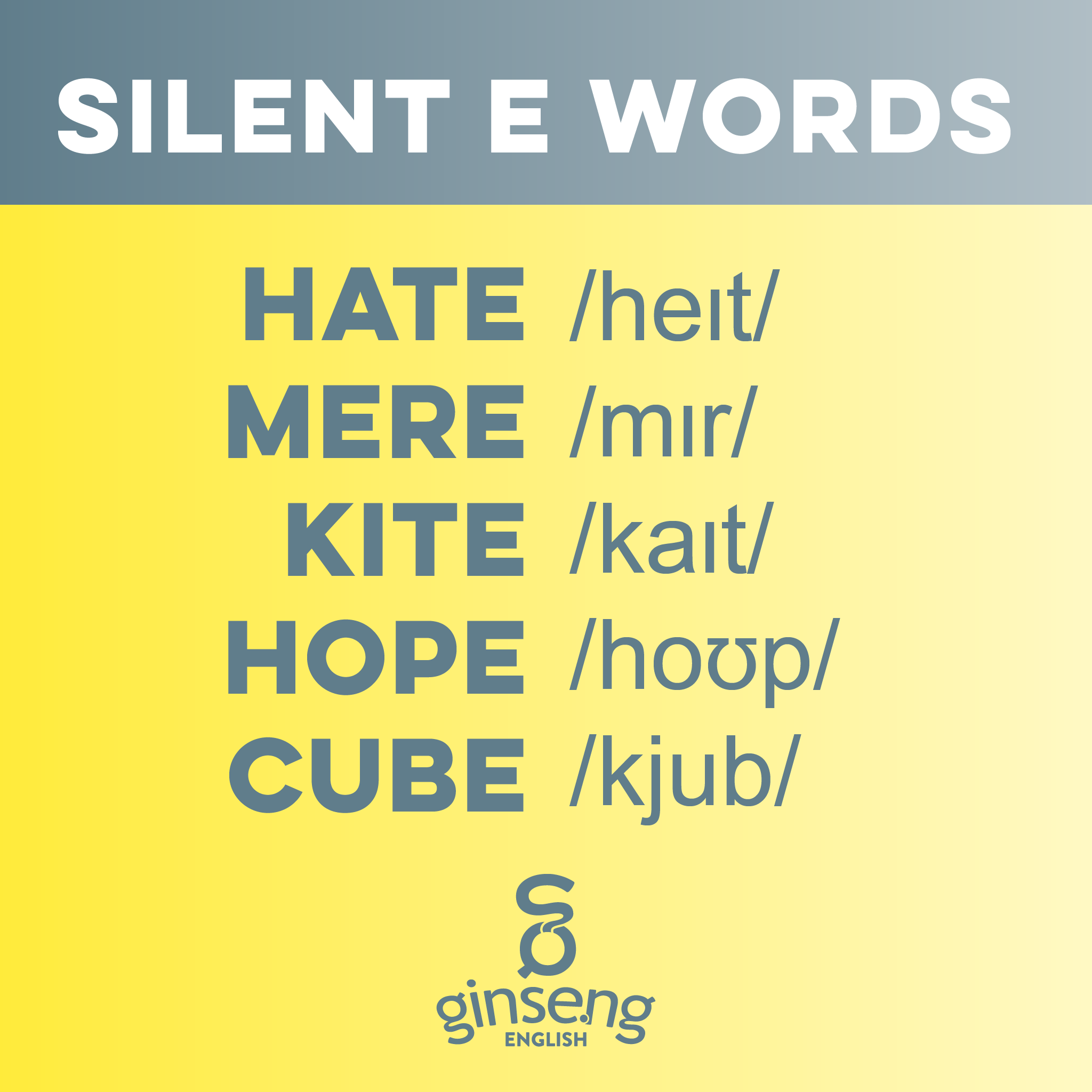
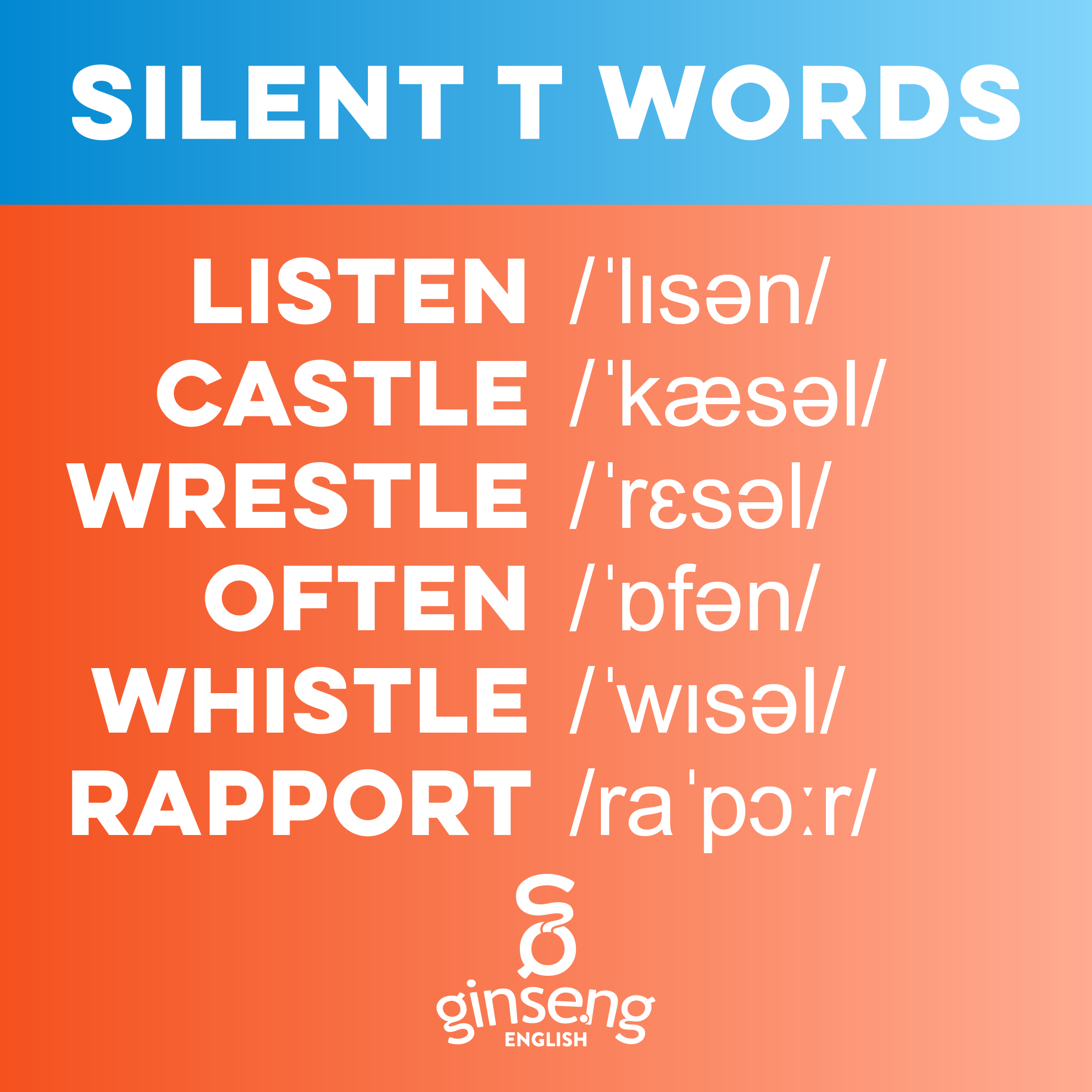
The "rules" for silent T are these: if you see -STEN, -FTEN, or -STLE, you should assume that the T is silent.
A lot of other silent letters are silent at the beginning (like G and K) or end (like B and N) of words. Silent T is a little different. It usually becomes silent because it gets "sandwiched" between two other consonant sounds, and it's easier to say if you leave out that T, which requires a lot of effort.
Examples
The chart below contains a word list of over 20 examples of words with silent T. Are you pronouncing them all correctly?
| Word | IPA | PoS | Definition |
|---|---|---|---|
| listen | /ˈlɪsən/ | v. | to pay attention to sound |
| fasten | /ˈfæsən/ | v. | to connect |
| hasten | /ˈheɪsən/ | v. | to hurry |
| glisten | /ˈglɪsən/ | v. | to shine with wetness |
| moisten | /ˈmɔɪsən/ | v. | to make moist |
| christen | /ˈkrɪsən/ | v. | to make Christian or give a name |
| chasten | /ˈtʃeɪsən/ | v. | to moderate or restrict in behavior |
| soften | /ˈsɒfən/ | v. | to make softer |
| often | /ˈɒfən/ | adv. | frequently |
| whistle | /ˈwɪsəl/ | v. | blow air through the lips to make sound |
| thistle | /ˈθɪsəl/ | n. | a common prickly plant |
| castle | /ˈkæsəl/ | n. | a large fortified medieval building |
| wrestle | /ˈrɛsəl/ | v. | to fight using grappling |
| nestle | /ˈnɛsəl/ | v. | lie comfortably within something |
| pestle | /ˈpɛsəl/ | n. | heavy tool for crushing food in a mortar |
| gristle | /ˈɡrɪsəl/ | n. | tough cartilage in meat |
| mortgage | /ˈmɔːrɡɪdʒ/ | n. | a contract to borrow money for a house |
| rapport | /raˈpɔːr/ | n. | a friendly relationship |
| gourmet | /ˈɡɔːrmeɪ/ | adj. | of a refined taste in food |
| ballet | /ˈbæleɪ/ | n. | an artistic dance form |

| Word | IPA | PoS | Definition |
|---|---|---|---|
| damn | /dæm/ | v. | to condemn to hell |
| condemn | /kənˈdɛm/ | v. | to judge guilty |
| limn | /lɪm/ | v. | to draw or describe |
| hymn | /hɪm/ | n. | a religious song |
| column | /ˈkɒləm/ | n. | a decorative pillar |
| solemn | /ˈsɒləm/ | adj. | serious or earnest |
| autumn | /ˈɔːtəm/ | n. | the season after summer |
What do you notice about the pattern? Silent N is always at the end of a word. It is also always after the letter M. When you see -MN at the end of a word, you should assume that you only pronounce the MN. There aren't any common words beginning with silent N, unlike G, which can be silent at the beginning or end of a word.
Is -MN always silent?
You will sometimes see -MN- in the middle of words related to these silent N words.
Damnation is the noun form of damn, a hymnal is a book of hymns, and autumnal is the adjective form of autumn. In words like these, where the first letter after MN is a vowel, you usually pronounce the N. In autumnal, hymnal, and damnation, we pronounce the N.
But in some cases, the next sound after the MN is a consonant sound. For example, columns and solemnly. When the next sound after the MN is a consonant sound, we usually do not pronounce the N.
Why is N Silent Sometimes?
As The Independent nicely says it, "Silent Letters are the ghosts of pronunciations past." Older versions of these words had pronounced Ns.
Most of them come to English from Latin. For example autumn comes from the Latin autumnus and column comes from the Latin columna. In these words, the N was pronounced. If you try to say them, you'll see that pronouncing the N in autumnus is pretty easy. If you try to pronounce the N at the end of autumn, it's not so easy. This is because in autumnus, the N is followed by a vowel. It starts a new syllable.
When Latin words changed over a long time into English words, most of them lost their Latin suffixes, -a and -us and -ae and -i. When we dropped those last syllables, the MN became very difficult to pronounce, so we just stopped!
If you enjoyed this, check out some of our other English posts!
By the way, make sure to check out our other posts on English pronunciation, including Silent K, Silent B, Silent G and Silent L, and Deleted Syllables.
Silent N Words in English
Silent B Words
If you’re looking for explanations and examples of words in English with silent B, you’ve come to the right place. Charts, definitions, word lists, and the history of how silent B became silent.
One of the most frustrating and interesting things about English is the crazy pronunciation. Silent letters can be particularly difficult. They are there. You can see them. But you don't hear them!
There are two situations in which B is silent. Silent B at the end of words is one common pattern. If you see -MB at the end of a word, usually you do not pronounce the B. The other common silent B pattern is -BT.
Examples of Silent B Words
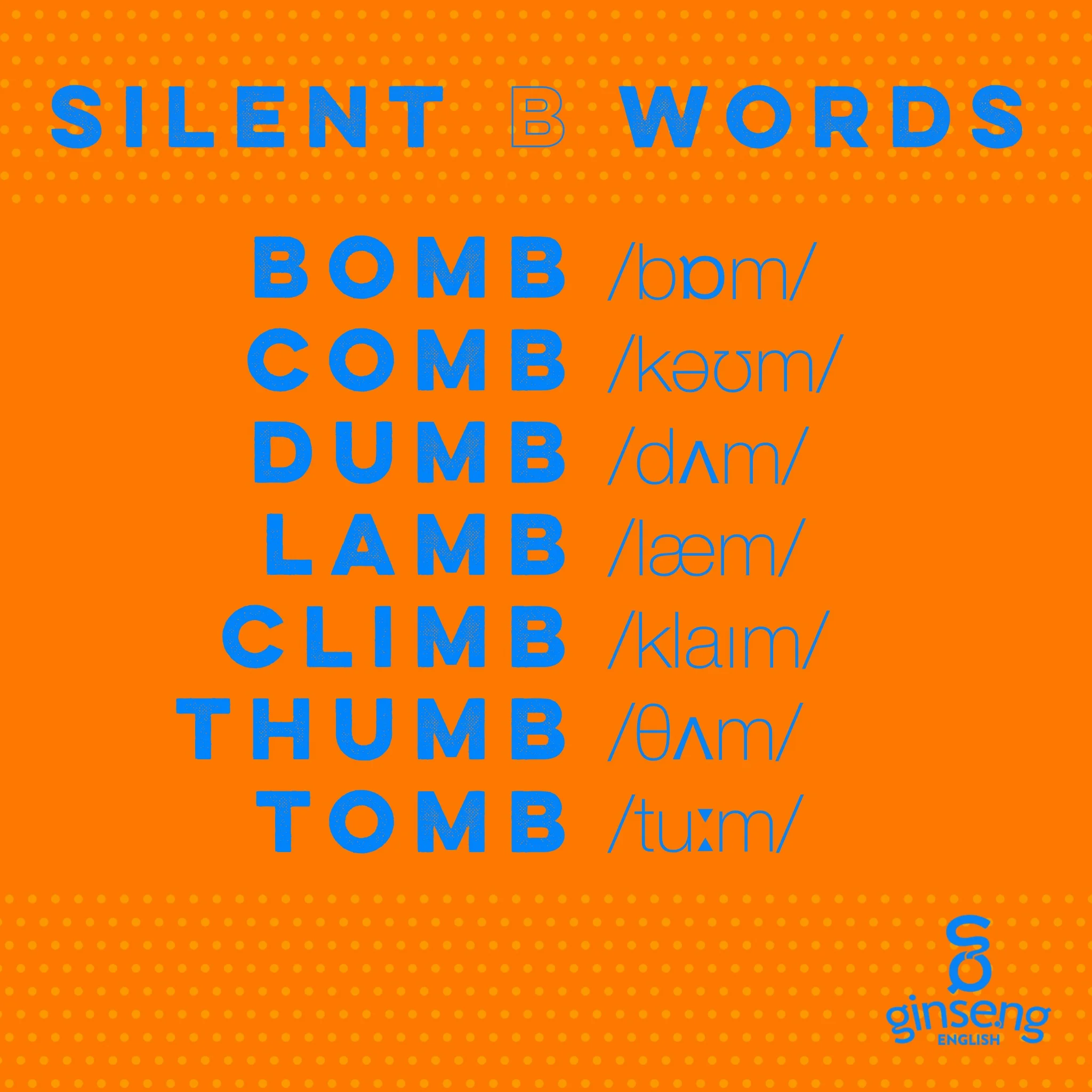
Here is a word list with 17 examples of silent B words:
| Silent B Word List | |||
| Word | IPA | PoS | Definition |
|---|---|---|---|
| bomb | /bɒm/ | n. | a machine that explodes |
| comb | /kəʊm/ | n. | a device for making hair neat |
| dumb | /dʌm/ | adj. | not smart |
| lamb | /læm/ | n. | a young sheep |
| climb | /klaɪm/ | v. | to go up |
| tomb | /tuːm/ | n. | a building for dead bodies |
| thumb | /θʌm/ | n. | finger on the side of the hand |
| crumb | /krʌm/ | n. | a small piece of food |
| limb | /lɪm/ | n. | an arm or leg |
| numb | /nʌm/ | adj. | not feeling |
| plumber | /ˈplʌmər/ | n. | someone who fixed pipes |
| womb | /wuːm/ | n. | the uterus |
| debt | /dɛt/ | n. | owing money |
| doubt | /daʊt/ | n. | uncertainty |
| subtle | /ˈsʌtəl/ | adj. | delicate; not obvious |
| jamb | /dʒam/ | n. | the side of a doorway |
Notice that the silent B doesn't tell us anything about the vowel in the word. The vowel sounds can be very different, for example in bomb, comb, and tomb.
Please share the picture with #ginsenglish if you find this helpful!
Why is B Silent Sometimes?
In the past, the B in these words was not silent. Over time, pronunciation changes. For example, bomb comes from the Italian bomba, in which the second B is pronounced, and climb was climban in Old English. By about 1300 C.E., the B had become silent.
Silent B Words in English
Stop pronouncing these words wrong! If you’re looking for explanations and examples of words with silent T, you’ve come to the right place. Charts, definitions, a word list of over 20 examples, and the history of how silent T became silent.